x

Giclée tlač alebo plátno múzeálnej kvality s rýchlou výrobou a flexibilnými možnosťami povrchovej úpravy. ( Kúpiť ručne maľovaný obraz Kúpiť obrázok)





























Vyberte si z našich preddefinovaných rozmerov, ktoré zodpovedajú pôvodným pomeroḿ diela.

Môžete zadať vlastné rozmery, aby sa reprodukcia prispôsobila konkrétnemu rámu alebo priestoru. Ak zvolená veľkosť nebude zodpovedať proporciám originálu, dielo buď orežeme, alebo obraz rozšírime pomocou zrkadlenia či farebného doplnenia okrajov. Pred začatím výroby vám pošleme digitálnu ukážku na schválenie.
Máte na vedomí, že náhľad na obrazovke neodzrkadľuje skutočné orezanie alebo rozšírenie. Len digitálna ukážka presne zobrazí finálnu kompozíciu.
Hoci sú k dispozícii vlastné rozmery, pre zachovanie pôvodných proporcií odporúčame vybrať si rozmer z vopred definovaného zoznamu.
Celosvetová doprava () do 2 týždňov namiesto štandardných 4/5 týždňov. (19 august)


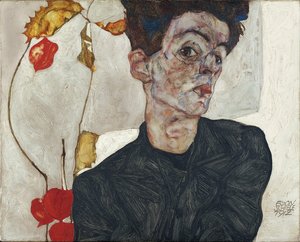
Self-portrait as prisoner
Veľkosť reprodukcie
Egon Schiele's 1912 self-portrait, “Self-Portrait as Prisoner,” is a profoundly unsettling work that encapsulates the artist’s deeply personal and increasingly bleak worldview. Painted during a period of intense emotional turmoil and artistic experimentation, this piece transcends a simple likeness; it becomes a raw expression of isolation, vulnerability, and an almost obsessive preoccupation with mortality – hallmarks of Schiele's oeuvre. The image depicts a young man, rendered in the artist’s signature style, positioned with his arms outstretched in a gesture that is both pleading and desperate. His posture suggests a yearning for connection, perhaps towards a woman absent from the canvas, yet simultaneously evokes a sense of confinement, mirroring the feeling of being trapped within one's own anxieties.
To fully appreciate “Self-Portrait as Prisoner,” it's crucial to understand the historical context in which it was created. 1912 Vienna was a city grappling with rapid social and political change, marked by anxieties surrounding war, industrialization, and the decline of traditional values. Schiele himself was navigating a turbulent personal life, battling illness and struggling with his father’s legacy – a man consumed by syphilis. This backdrop of societal unrest and personal tragedy undoubtedly fueled the artist's exploration of themes related to suffering, death, and the human condition. The influence of Symbolism and early Expressionism were also prevalent at the time, encouraging artists to delve into subjective experience and explore darker aspects of existence.
The outstretched arms are arguably the most compelling element of this self-portrait. They can be interpreted as a desperate plea for salvation, a yearning for love, or perhaps a futile attempt to break free from an unseen constraint. The subtle triangle shape present on the right side of the composition adds another layer of complexity. While its precise meaning remains open to interpretation, it could symbolize instability, danger, or even a fractured sense of self – recurring motifs in Schiele’s work. The overall effect is one of profound vulnerability and isolation, reflecting the artist's own struggles with identity and his acute awareness of human fragility.
"Self-Portrait as Prisoner" remains a powerfully evocative image, resonating with viewers through its unflinching portrayal of emotional distress. Most-Famous-Paintings offers meticulously crafted hand-painted reproductions that faithfully capture the intensity and nuance of Schiele’s original work. Each reproduction is created by skilled artisans using archival quality materials, ensuring lasting beauty and preserving the artwork's integrity for generations to come. This piece would be a striking addition to any collection focused on Expressionism, psychological portraiture, or the works of this tragically short-lived but profoundly influential artist.

1890 - 1918 , Rakúsko

Explore the profound history and technical mastery of woodcut relief printing. From ancient origins to German Expressionism, discover how artists use the subtractive process to create iconic works. A definitive guide for art students, collectors, and historians.

Discover the technical mastery behind Most-Famous-Paintings.com's premium Giclée canvas prints. Our guide for elite collectors explores archival pigment inks, museum-grade substrates, and the science of high-fidelity reproduction to ensure lasting beauty and historical accuracy.

Explore the profound emotional depth of Expressionist portraiture. From Edvard Munch to Francis Bacon, discover how masters used distortion and color to reveal inner truths. Learn about this pivotal movement and find museum-quality oil reproductions for your collection.

Discover the science behind museum-quality Giclée prints. Learn how archival pigment inks, 12-color precision, and museum-grade substrates create high-fidelity art reproductions designed to preserve the soul of historical masterpieces for generations.

Discover the science of perfection with Most-Famous-Paintings.com’s premium art poster prints. Utilizing state-of-the-art giclée technology and archival pigment inks on museum-grade paper, we deliver unparalleled color fidelity and detail for the discerning elite collector.


Zostaňte v obraze s najnovšími správami zo sveta umenia, exkluzívnymi ponukami a nápormi na dekoráciu.
Povedzte nám o svojom projekte a naši odborníci na umenie vám pripravia 3 personalizované návrhy umeleckých diel.
Nechajte si od nás vybrať 3 možnosti priamo pre vás – zadarmo!


 Náhľad
 Odoslať
 Zdieľať
 Podrobnosti o dielo

 Stiahnuť
 Podobné diela
 RTG skúška
 Prezentácia

 Zobraziť viac







 Možnosť skla je dostupná len pri rozmeroch pod 110 cm