x

Ručne maľovaný olej na plátne vo vašej zvolenej veľkosti a v ráme, vyrobený na mieru našimi umelcami. ( Kúpiť tlač Kúpiť obrázok)





























Vyberte si z našich preddefinovaných rozmerov, ktoré zodpovedajú pôvodným pomeroḿ diela.

Môžete zadať vlastné rozmery tak, aby sa hodili do konkrétneho rámu alebo priestoru. Ak sa váš zvolený rozmer nezhoduje s pôvodnými proporciami obrazu, dielo buď orezáme, alebo ho doplníme ručne maľovanými prvkami. Pred začiatkom výroby vám zašleme digitálny náhľad na schválenie.
Upozorňujeme, že ukážka na obrazovke neodráža skutočné orezanie alebo doplnenie. Skutočnú finálnu kompozíciu zobrazuje iba digitálny náhľad.
Hoci sú k dispozícii vlastné rozmery, odporúčame vybrať rozmer z preddefinovaného zoznamu, aby sme zachovali pôvodné proporcie.
Celosvetová doprava () za 3 až 4 týždne namiesto štandardných 5 týždňov. (15 august). Bez kompromisov v kvalite.


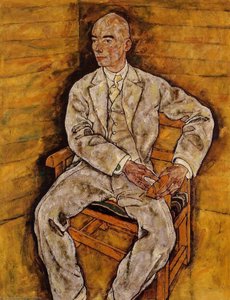
Triple Self Portrait
Veľkosť reprodukcie
Egon Schiele’s “Triple Self Portrait,” painted in 1913, stands as a haunting testament to the anxieties simmering beneath the surface of Expressionist art. More than just a depiction of three figures seated before a chair—though these elements contribute significantly to its visual impact—the painting delves into profound psychological complexities and embodies Schiele’s signature preoccupation with mortality and vulnerability.
Schiele, born in Tulln an der Donau in 1890, experienced early trauma that profoundly shaped his artistic vision. His father's debilitating syphilis illness instilled within him a visceral awareness of disease and decay—themes that would permeate throughout his oeuvre. Raised primarily by his mother and later under the watchful eye of his uncle Leopold Czihaczek, Schiele’s upbringing fostered an independent spirit tempered by intellectual curiosity. Despite familial disapproval regarding his artistic pursuits – deemed frivolous compared to more practical ambitions – he relentlessly pursued drawing, honing his skill with unwavering dedication.
The painting itself is executed in watercolor on paper, a technique Schiele favored for its ability to convey subtle tonal variations and capture the immediacy of emotion. His distinctive style—characterized by angular lines, flattened perspectives, and unsettlingly realistic depictions of human anatomy—is instantly recognizable. The figures are rendered with meticulous detail, their faces pressed together in expressions of anguish and introspection. Notably, the inclusion of two chairs serves as a powerful visual metaphor for confinement and isolation; they represent not merely physical spaces but also psychological barriers hindering self-awareness.
Painted during a period marked by intellectual ferment and societal upheaval—the burgeoning avant-garde movement challenging traditional artistic conventions alongside the looming shadow of World War I— “Triple Self Portrait” reflects the pervasive atmosphere of unease and disillusionment prevalent in Europe at the time. Schiele’s unflinching gaze confronts viewers with uncomfortable truths about human existence, prompting contemplation on themes of suffering, fear, and the inescapable awareness of death.
“Triple Self Portrait” continues to resonate powerfully today as a masterpiece of psychological portraiture. Its haunting beauty lies not in idealized representation but in its courageous articulation of inner turmoil—a testament to Schiele’s enduring legacy as one of Expressionism's most influential figures and a poignant reminder of the artist’s profound engagement with the human condition.
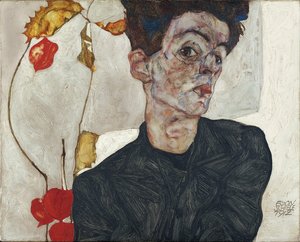
1890 - 1918 , Rakúsko
Objednajte si jedinečné umelecké dielo na mieru! Profesionálni umelci, kvalitné materiály a individuálny prístup. Portréty, reprodukcie a art consulting pre luxusný interiér.

Explore the emotionally charged world of Egon Schiele (1890-1918). Discover his Expressionist masterpieces, psychological themes, and lasting impact on modern art. A comprehensive guide for collectors & enthusiasts.

Explore the fascinating evolution of portraiture from classical masterpieces to digital art! Discover symbolism, techniques & societal impact. Expert insights for collectors & enthusiasts at Most-Famous-Paintings.

Explore the groundbreaking work of Paula Modersohn-Becker, a pioneer of Expressionism. Discover her intimate self-portraits & poignant depictions of motherhood – shaping early 20th-century art with emotional depth and innovation.
Ponorte sa do sveta Egona Schieleho! Objavte top 25 diel expresionistického majstra, jeho portréty a techniku. Luxusné reprodukcie obrazov pre váš interiér na Most-Famous-Paintings.com. Preskúmajte celú kolekciu online.


Zostaňte v obraze s najnovšími správami zo sveta umenia, exkluzívnymi ponukami a nápormi na dekoráciu.
Povedzte nám o svojom projekte a naši odborníci na umenie vám pripravia 3 personalizované návrhy umeleckých diel.
Nechajte si od nás vybrať 3 možnosti priamo pre vás – zadarmo!


 Náhľad
 Odoslať
 Zdieľať
 Podrobnosti o dielo

 Stiahnuť
 Podobné diela
 RTG skúška
 Prezentácia

 Zobraziť viac







 Možnosť skla je dostupná len pri rozmeroch pod 110 cm