x

 Akryl na plátneWallArtMannerizmus
 1608Renaissance
 112.0 x 92.0 cm
 Metropolitné múzeum umenia
Ručne maľovaný olej na plátne vo vašej zvolenej veľkosti a v ráme, vyrobený na mieru našimi umelcami. ( Kúpiť tlač Kúpiť obrázok)





























Vyberte si z našich preddefinovaných rozmerov, ktoré zodpovedajú pôvodným pomeroḿ diela.

Môžete zadať vlastné rozmery tak, aby sa hodili do konkrétneho rámu alebo priestoru. Ak sa váš zvolený rozmer nezhoduje s pôvodnými proporciami obrazu, dielo buď orezáme, alebo ho doplníme ručne maľovanými prvkami. Pred začiatkom výroby vám zašleme digitálny náhľad na schválenie.
Upozorňujeme, že ukážka na obrazovke neodráža skutočné orezanie alebo doplnenie. Skutočnú finálnu kompozíciu zobrazuje iba digitálny náhľad.
Hoci sú k dispozícii vlastné rozmery, odporúčame vybrať rozmer z preddefinovaného zoznamu, aby sme zachovali pôvodné proporcie.
Celosvetová doprava () za 3 až 4 týždne namiesto štandardných 5 týždňov. (19 august). Bez kompromisov v kvalite.


Laškoón (El Greco)
Veľkosť reprodukcie
Doménikos Theotokópoulos, universally known as El Greco – “the Greek” – stands apart from his contemporaries as a painter whose life and artistic output defied easy categorization. Born in Crete in 1541, under Venetian rule, his artistic journey traversed Venice and Rome before ultimately finding its expression in the spiritual heartland of Spain: Toledo. El Greco wasn’t merely a product of these places; he synthesized their influences into something wholly unique—a style that anticipated the emotional intensity of Expressionism and the fragmented forms of Cubism centuries later.
His early training within the Byzantine tradition instilled in him a meticulous attention to detail and a profound understanding of religious iconography. This foundation, however, wouldn’t confine him. He signed his works in Greek, often appending “Krḗs” – Cretan – as a proud declaration of his origins, even as he embraced Mannerism—a stylistic movement that prioritized expressive force over strict realism.
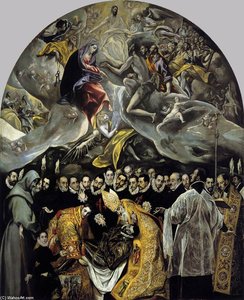
“The Opening of the Fifth Seal,” painted in 1608, exemplifies El Greco’s distinctive Mannerist aesthetic. Measuring 112 x 92 cm and housed at the Metropolitan Museum of Art in New York, this oil on canvas work depicts a scene from Revelation 6:9–11—the apocalypse—where the souls of martyrs cry out to God for justice upon their persecutors on Earth. Unlike Renaissance art’s serene idealism, El Greco's vision pulsates with emotion and spiritual intensity, reflecting a deep engagement with theological themes.
The painting’s central figure is St. John the Evangelist, positioned prominently in the foreground. His arms outstretched in supplication convey an overwhelming sense of yearning and devotion—a gesture that speaks to the core of Christian faith. The artist meticulously rendered each detail, from the folds of drapery to the expressions on the faces of the participants, creating a visual experience rich in symbolism.
St. John’s hands symbolize openness and vulnerability, reaching upwards towards divine grace. Surrounding him are figures representing angels and saints—a complex interplay of light and shadow that underscores the narrative's dramatic tension. The artist skillfully utilized sfumato—a subtle blending of tones—to soften contours and create an ethereal effect, enhancing the painting’s otherworldly beauty.
El Greco’s technique is marked by an extraordinary mastery of oil paint—a medium he skillfully manipulated to achieve unprecedented levels of luminosity and expressive force. His elongated figures defy anatomical realism, prioritizing spiritual impact over precise representation. This stylistic choice aligns perfectly with the painting’s overarching theme: a rejection of earthly constraints in favor of transcendence.
The artist’s use of color—particularly the dominant blue—is equally significant. Blue symbolizes heaven and divine majesty, establishing a visual connection between the earthly realm and the spiritual dimension. Furthermore, El Greco employed a technique known as sfumato—a subtle blending of tones—to soften contours and create an ethereal effect, enhancing the painting’s otherworldly beauty.
Commissioned for the Hospital of St. John the Baptist in Toledo, Spain, “The Opening of the Fifth Seal” reflects the fervent piety of its patrons—Cardinal Juan de Tavera and his successors—who sought solace and inspiration from religious imagery during a turbulent period marked by political instability and social upheaval.
Interestingly, the painting was cut at the top when it was originally conceived as part of a larger altarpiece. The missing portion would have depicted the Throne of God—a powerful symbol of divine authority—further emphasizing the scene’s apocalyptic grandeur. Despite its fragmentary state, “The Opening of the Fifth Seal” remains an enduring testament to El Greco's artistic genius and his ability to capture the essence of spiritual experience.
For those seeking a stunning reproduction of this masterpiece, Most-Famous-Paintings offers meticulously crafted oil paintings that faithfully recreate El Greco’s luminous palette and dramatic composition. Explore our collection today!


1541 - 1614 , Grécko
Explore the dramatic transition from High Renaissance harmony to Mannerist tension. Discover how masters like El Greco redefined art through distortion and spiritual intensity. An expert guide for art enthusiasts seeking deep historical context and museum-quality inspiration.

Explore the dramatic evolution of Mannerism from High Renaissance perfection to El Greco's spiritual intensity. Discover the history, techniques, and enduring legacy of this transformative era through an expert art-history lens.


Zostaňte v obraze s najnovšími správami zo sveta umenia, exkluzívnymi ponukami a nápormi na dekoráciu.
Povedzte nám o svojom projekte a naši odborníci na umenie vám pripravia 3 personalizované návrhy umeleckých diel.
Nechajte si od nás vybrať 3 možnosti priamo pre vás – zadarmo!


 Náhľad
 Odoslať
 Zdieľať
 Podrobnosti o dielo

 Stiahnuť
 Podobné diela
 RTG skúška
 Prezentácia
 Zobraziť viac







 Možnosť skla je dostupná len pri rozmeroch pod 110 cm