


x

Ručne maľovaný olej na plátne vo vašej zvolenej veľkosti a v ráme, vyrobený na mieru našimi umelcami. ( Prejsť na tlač Prepnúť na obrázok)





























Vyberte si z našich preddefinovaných rozmerov, ktoré zodpovedajú pôvodným pomeroḿ diela.

Môžete zadať vlastné rozmery tak, aby sa hodili do konkrétneho rámu alebo priestoru. Ak sa váš zvolený rozmer nezhoduje s pôvodnými proporciami obrazu, dielo buď orezáme, alebo ho doplníme ručne maľovanými prvkami. Pred začiatkom výroby vám zašleme digitálny náhľad na schválenie.
Upozorňujeme, že ukážka na obrazovke neodráža skutočné orezanie alebo doplnenie. Skutočnú finálnu kompozíciu zobrazuje iba digitálny náhľad.
Hoci sú k dispozícii vlastné rozmery, odporúčame vybrať rozmer z preddefinovaného zoznamu, aby sme zachovali pôvodné proporcie.
Celosvetová doprava () za 3 až 4 týždne namiesto štandardných 5 týždňov. (7 august). Bez kompromisov v kvalite.


At the Opera
Veľkosť reprodukcie

Born in the rugged landscape of Aberdeen, Scotland, in 1817, John Phillip would eventually transcend his humble beginnings to become one of the most evocative voices of the Victorian era. Affectionately known by the moniker "Spanish Phillip," his journey was one of profound transformation, moving from the meticulous, somber depictions of Scottish rural life to the sun-drenched, vibrant canvases of Southern Europe. His early years were marked by a burgeoning talent that caught the eye of influential patrons, most notably Lord Panmure, whose generosity provided the essential bridge for Phillip to reach London’s Royal Academy of Arts in 1836. It was within this prestigious institution that Phillip found his artistic tribe, joining the influential group known as The Clique. Led by the eccentric Richard Dadd, this circle of artists shared a deep reverence for the narrative realism of William Hogarth and the dramatic landscapes of David Wilkie, principles that would form the bedrock of Phillip’s early technical mastery.
In his formative years, Phillip’s brush was dedicated to the dignity and hardship of the Scottish people. He captured the quiet, often grueling existence of crofters with a precision that spoke to the soul of his homeland. These early works were characterized by a meticulous attention to detail and a sense of pious domesticity, reflecting the cultural currents of late Victorian Scotland. However, a pivotal shift occurred in 1851, prompted by medical advice to seek warmer climates for his health. This pilgrimage to Spain was not merely a restorative journey but an artistic rebirth. As he wandered through the streets of Seville and Madrid, the shadows of Scotland were replaced by the brilliant light of Andalusia. The influence of Spanish masters Bartolom Tamayo, Bartolomé Esteban Murillo, and Diego Velázquez began to permeate his work, fundamentally altering his palette and his approach to form.
The transition from the detailed, almost documentary style of his Scottish period to a much broader, more painterly technique marks the most fascinating evolution in Phillip’s career. While he initially resisted the burgeoning Pre-Raphaelite movement, his later works, such as The Letter Writer, Seville, began to exhibit a subtle engagement with their luminous qualities. As his travels deepened his connection to the Spanish spirit, his brushwork grew more confident and expressive, mirroring the late-career developments of contemporaries like John Everett Millais. He moved away from rigid outlines toward an exploration of texture and atmosphere, using impasto to capture the heat and dust of the Spanish landscape.
This stylistic maturation reached its zenith in the 1860s, where his compositions became grander and more emotionally resonant. His ability to weave together the following elements defined his mature period:
Major achievements such as The Early Career of Murillo (1864) and La Gloria (1865) stand as testaments to this period of mastery. In these works, Phillip did not just paint subjects; he painted the very history of art itself, paying homage to the masters who had inspired his own metamorphosis. His legacy remains that of a bridge-builder—between the somber traditions of Scottish genre painting and the vibrant, light-filled romanticism of the Mediterranean. Though his life was cut short in 1867, John Phillip left behind a body of work that continues to enchant, inviting viewers to step out of the grey mists of the North and into the eternal, golden glow of his Spanish dreams.

1817 - 1867 , United Kingdom

Explore the exquisite world of Victorian botanical art! Discover the science & artistry behind stunning floral illustrations by Gould, Muckley & more. Learn about collecting, value & investment at Most-Famous-Paintings.

Explore the evocative Victorian paintings of George Goodwin Kilburne. Discover his detailed scenes of domestic life, masterful use of light, and lasting impact on British genre painting. Learn more at Most-Famous-Paintings.
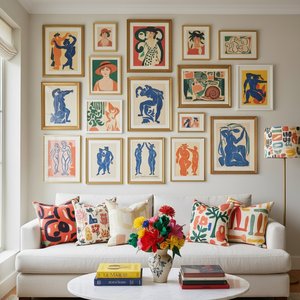
Ponorte sa do sveta Henriho Matissea s našou exkluzívnou kolekciou 25 ikonických diel. Objavte príbehy za fauvizmom, farebnými kompozíciami a moderným umením. Reprodukcie obrazov pre luxusný interiér na Most-Famous-Paintings.com – preskúmajte celý katalóg online!

Explore the captivating Orientalist paintings of John Frederick Lewis! Discover his mastery of detail, genre scenes & influence on 19th-century British art. Learn about his life, techniques & legacy at Most-Famous-Paintings.

Explore the history of elegance in art! Discover Rococo masterpieces & key artists. Expert insights for discerning collectors seeking investment-worthy artworks and custom reproductions at Most-Famous-Paintings.


Zostaňte v obraze s najnovšími správami zo sveta umenia, exkluzívnymi ponukami a nápormi na dekoráciu.
Povedzte nám o svojom projekte a naši odborníci na umenie vám pripravia 3 personalizované návrhy umeleckých diel.
Nechajte si od nás vybrať 3 možnosti priamo pre vás – zadarmo!


 Náhľad
 Odoslať
 Zdieľať
 Podrobnosti o dielo

 Stiahnuť
 Podobné diela
 RTG skúška
 Prezentácia
 Zobraziť viac







 Možnosť skla je dostupná len pri rozmeroch pod 110 cm


