


x

 Acrylic On CanvasWallArtDada Merz Collage
 1919
1919 123.0 x 89.0 cm
 MOMA - Muzeum moderního umenia
Giclée tlač alebo plátno múzeálnej kvality s rýchlou výrobou a flexibilnými možnosťami povrchovej úpravy. ( Kúpiť ručne maľovaný obraz Kúpiť obrázok)





























Vyberte si z našich preddefinovaných rozmerov, ktoré zodpovedajú pôvodným pomeroḿ diela.

Môžete zadať vlastné rozmery, aby sa reprodukcia prispôsobila konkrétnemu rámu alebo priestoru. Ak zvolená veľkosť nebude zodpovedať proporciám originálu, dielo buď orežeme, alebo obraz rozšírime pomocou zrkadlenia či farebného doplnenia okrajov. Pred začatím výroby vám pošleme digitálnu ukážku na schválenie.
Máte na vedomí, že náhľad na obrazovke neodzrkadľuje skutočné orezanie alebo rozšírenie. Len digitálna ukážka presne zobrazí finálnu kompozíciu.
Hoci sú k dispozícii vlastné rozmery, pre zachovanie pôvodných proporcií odporúčame vybrať si rozmer z vopred definovaného zoznamu.
Celosvetová doprava () do 2 týždňov namiesto štandardných 4/5 týždňov. (21 august)


Revolving
Veľkosť reprodukcie
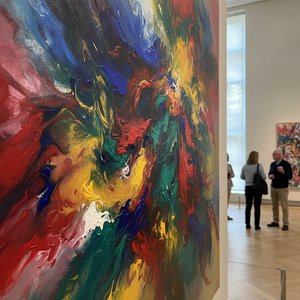
Kurt Schwitters' "Revolving," painted in 1919, isn’t merely a painting; it’s an embodiment of the tumultuous spirit of the post-World War I era. Emerging from the wreckage of established order and grappling with the profound anxieties of a rapidly changing world, Schwitters created a visual language that rejects traditional representation in favor of raw emotion and fragmented experience. This work, executed in oil and mixed media on canvas within a wooden frame, is a cornerstone of his “Merz” project – a lifelong exploration into the possibilities of assemblage and abstraction, born from the debris of war and the desire to forge something new from the remnants of the old.
The painting immediately assaults the senses with its vibrant, almost frenetic energy. Bold circles dominate the composition, swirling and intersecting in a dynamic dance that suggests perpetual motion – hence the title. These aren’t serene, idealized forms; they are rough-hewn, imperfect, and imbued with an unsettling sense of instability. Scattered amongst these central motifs are smaller, more fragmented shapes: triangles, squares, and irregular patches of color—blues, greens, yellows, and oranges—that seem to be caught in a perpetual state of flux. Schwitters deliberately avoids precise lines or defined edges, opting instead for a technique that blends brushstrokes with the application of found materials – cord, wire mesh, cardboard, and even small objects – creating a textured surface that invites tactile exploration.
To understand “Revolving,” one must delve into the context of Schwitters’ artistic development. Prior to 1918, he worked primarily in an expressionist style, influenced by artists like Kandinsky and Munch. However, the devastation of World War I irrevocably shattered his previous aesthetic sensibilities. He felt that traditional academic training was utterly inadequate for confronting the societal collapse and psychological trauma of the time. As Schwitters himself described it, “Everything had broken down and new things had to be made out of the fragments; and this is Merz.”
The term "Merz" – derived from a fragment of text in the phrase “Commerz und Privatbank” (commerce and private bank) – represents Schwitters’ innovative approach to art-making. He began collecting discarded materials—odds and ends, scraps of paper, broken objects—and incorporating them into his paintings, sculptures, and installations. This process wasn't about creating beautiful objects; it was a deliberate act of dismantling and reassembling the world around him, reflecting the fractured state of society and the artist’s own internal turmoil. “Revolving” exemplifies this perfectly – a chaotic yet strangely compelling composition built from the discarded fragments of modern life.
The recurring motif of circles within "Revolving" is particularly significant. Schwitters himself described his fascination with the “wheel,” viewing it as a metaphor for human activity, progress, and even destruction. The large central circle can be interpreted as representing the cyclical nature of time, the relentless turning of events, or perhaps the dizzying speed of modern life. The smaller circles orbiting this dominant form suggest a sense of contained energy, hinting at potential movement and transformation.
Furthermore, the painting’s title – “Revolving” – is not merely descriptive; it carries a profound symbolic weight. It speaks to the constant state of flux, the perpetual motion of ideas and emotions, and the inescapable feeling that everything is in a state of becoming. The work invites us to contemplate our own place within this dynamic system, questioning notions of stability and permanence.
"Revolving" stands as a pivotal work in Kurt Schwitters’ oeuvre and a crucial document in the development of modern art. It foreshadows the principles of Dadaism and Surrealism, emphasizing abstraction, chance, and the exploration of subconscious imagery. Schwitters' embrace of found objects and his rejection of traditional artistic conventions paved the way for later artists working with assemblage and collage, including Max Ernst and Joseph Cornell.
Today, “Revolving” continues to resonate with viewers, offering a powerful meditation on themes of chaos, transformation, and the enduring human need to find meaning in a world perpetually in motion. Its vibrant colors, dynamic composition, and evocative symbolism make it a captivating work of art that invites repeated contemplation and offers a glimpse into the mind of one of the 20th century’s most innovative artists.


1887 - 1948
Explore the profound emotional depth of Lyrical Abstraction. Discover how masters like Raymond Parker used color and form to bridge Impressionism and Abstract Expressionism. Learn about this pivotal movement through our expert-led art history guide.

Explore the profound emotional depth of Color Field painting. Discover the history of mid-century abstraction, from Rothko to Newman, and learn how pure color transforms the viewer's experience through our expert art history guide.

Explore the transformative history of abstract art, from the mathematical purity of Geometric Abstraction to the visceral energy of Abstract Expressionism. Gain expert insights into the power of form and color through our definitive guide to modern masterpieces.

Discover the profound emotional depth and investment potential of contemporary abstraction. Our expert guide explores how texture, movement, and form create timeless value for discerning art collectors and sophisticated interiors.


Zostaňte v obraze s najnovšími správami zo sveta umenia, exkluzívnymi ponukami a nápormi na dekoráciu.
Povedzte nám o svojom projekte a naši odborníci na umenie vám pripravia 3 personalizované návrhy umeleckých diel.
Nechajte si od nás vybrať 3 možnosti priamo pre vás – zadarmo!


 Náhľad
 Odoslať
 Zdieľať
 Podrobnosti o dielo

 Stiahnuť
 Podobné diela
 RTG skúška
 Prezentácia
 Zobraziť viac







 Možnosť skla je dostupná len pri rozmeroch pod 110 cm


