Predávajte svoje umenie
Žavčekov zoznam Nákupný košík Cart
NáhľadNáhľad AR náhľadAR náhľad Kúpiť tlač Kúpiť tlačKúpiť obrázok Kúpiť obrázok OdoslaťOdoslať
Podrobnosti o dieloPodrobnosti o dielo Pridať do obľúbených Pridať do obľúbených StiahnuťStiahnuť Podobné dielaPodobné diela RTG skúškaRTG skúška PrezentáciaPrezentácia

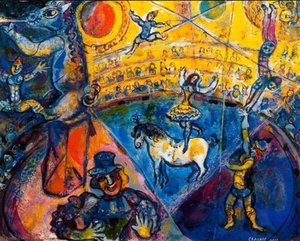
Blue clown

“Blue clown” was created in 1984 by Marc Chagall in Naïve Art (Primitivism) style. Find more prominent pieces of genre painting at WikiArt.org – best visual art database. ### Blue clown ##### [Marc Chagall]

Pozrite si Marc Chagalla – slovenského židovského impresionistu a surrealistu! Jeho tvorba je oslavovaná svojimi fantastickými obrazmi, výraznými farbami a nezabuditeľným životopisom.

Ručne maľovaná olejová reprodukcia

Ručne maľovaný olej na plátne vo vašej zvolenej veľkosti a v ráme, vyrobený na mieru našimi umelcami. (Kúpiť tlač Kúpiť tlačKúpiť obrázok Kúpiť obrázok)

P118B $10
P118H $10
P118W $10
P438Z $10
P508JH $12
P508YH $12
P805H $10
P805Z $10
P919BZ $10
P919G $10
P919XJ $10
P959ZH $10
P968JZ $12
W106C $8
W218G $10
W218JH $8
W218Y $10
W307PJ $10
W316G $10
W316PJ $8
W316Y $10
W398PJ $8
W4111J $10
W500HY $15
W500JH $15
W692G $12
W849H $8
W940BG $15
W953PJ $8

Standard
custom
CM
INCH

Vyberte si z našich preddefinovaných rozmerov, ktoré zodpovedajú pôvodným pomeroḿ diela.

šírka
výška

Môžete zadať vlastné rozmery tak, aby sa hodili do konkrétneho rámu alebo priestoru. Ak sa váš zvolený rozmer nezhoduje s pôvodnými proporciami obrazu, dielo buď orezáme, alebo ho doplníme ručne maľovanými prvkami. Pred začiatkom výroby vám zašleme digitálny náhľad na schválenie.
Upozorňujeme, že ukážka na obrazovke neodráža skutočné orezanie alebo doplnenie. Skutočnú finálnu kompozíciu zobrazuje iba digitálny náhľad.
Hoci sú k dispozícii vlastné rozmery, odporúčame vybrať rozmer z preddefinovaného zoznamu, aby sme zachovali pôvodné proporcie.

Príklady možných zmien: nahradiť tvár fotografiou zákazníka; pridať domáce zviera (napr. nahradiť mačku psom); vložiť skryté posolstvo do pozadia; zmeniť krajinu alebo prvky pozadia.
Po odoslaní objednávky vám tím Most-Famous-Paintings.com pošle e-mail s pokynmi a poskytne náhľad na návrh.

Celosvetová doprava () za 3 až 4 týždne namiesto štandardných 5 týždňov. (21 august). Bez kompromisov v kvalite.

why_choose_icon
Bezplatná expresná doprava po celom svete
why_choose_icon
Prémiové lnianske plátno
why_choose_icon
Kompletné poistenie prepravy
why_choose_icon
Záruka vrátenia colného poplatku
why_choose_icon
Záruka presného farebného zhodnutia
why_choose_icon
60-dňá politika vrátenia (iba pri defektoch)
why_choose_icon
100% záruka vrátenia peňazí
why_choose_icon
Výhodná množstevná zľava

Celková cena

$ 272

reproduction

Blue clown

Technika reprodukcie

Veľkosť reprodukcie

-

Celková cena za vybrané možnosti

$ 272

Základné informácie

  • Medium: Oil on canvas
  • Notable elements or techniques: Flying figures, whimsical animals
  • Subject or theme: Circus scene
  • Influences: Folklore
  • Artist: Marc Chagall
  • Artistic style: Primitivism
  • Title: Blue clown

Kvíz o umení

Pri každej otázke je iba jedna správna odpoveď.

Otázka 1:
What artistic style is “Blue clown” primarily associated with?
Otázka 2:
The painting depicts a circus scene. What prominent element contributes to the lively atmosphere of this setting?
Otázka 3:
Marc Chagall’s Vitebsk upbringing significantly influenced his artistic vision. Which cultural blend is reflected in Vitebsk’s environment?
Otázka 4:
What technique characterizes Chagall’s use of color in “Blue clown”?’
Otázka 5:
The image description mentions flying figures. What does this motif symbolize within Chagall’s artistic universe?

Popis diela

A Dreamscape of Color and Nostalgia

In the twilight of his long and illustrious career, Marc Chagall gifted the world with "Blue Clown," a masterpiece completed in 1984 that serves as a profound window into the artist's subconscious. This work is not merely a depiction of a circus scene; it is a symphony of memory, where the boundaries between reality and dream dissolve into a kaleidoscope of vibrant pigments. As one gazes upon the canvas, the eye is immediately drawn to the ethereal blue tones that anchor the composition, evoking a sense of nocturnal mystery and quiet introspection. Chagall, a poet of the brush, utilizes the Naïve Art style to bypass the rigid constraints of academic realism, opting instead for a flattened perspective and bold, expressive outlines that resonate with the spontaneous joy of childhood.

The composition unfolds like a fragmented memory from a traveling carnival. Within this whimsical space, figures appear suspended in a state of perpetual motion—clowns perched on stools, acrobats navigating ladders, and characters caught in mid-fall. There is a deliberate lack of traditional gravity here; instead, the movement is driven by emotional weight. The presence of various onlookers and even a stray sports ball adds a layer of lived-in texture to the scene, suggesting that this circus is not just a performance, but a microcosm of life itself. For the collector or interior designer, this piece offers a dynamic energy that can transform a room, providing a focal point that invites continuous re-examination and discovery.

The Resonance of History and Symbolism

To understand "Blue Clown," one must look back to the cobblestone streets of Vitebsk, Belarus, where Chagall’s artistic soul was forged. The painting breathes with the spirit of his formative years, echoing the vibrant, multicultural atmosphere of the Jewish marketplaces he once traversed. The use of primary blues and brilliant yellows acts as a visual shorthand for the cultural collision of traditions—a celebration of life amidst the shadows of history. Even as Chagall lived through the immense upheavals of the 20th century, including the profound darkness of World War II, his art remained an act of defiant humanism. In "Blue Clown," the circus becomes a metaphor for resilience; despite the chaos and the potential for falling, there is a persistent, colorful beauty in the performance of existence.

Every element within the frame carries a symbolic weight that transcends its literal form. The clown, often a figure of both laughter and sorrow, represents the duality of the human condition—the mask we wear to face the world versus the vulnerability beneath. The floating figures and tilted landscapes suggest a realm where the spirit is free from the burdens of the physical world. For those seeking to adorn a space with art that possesses depth, this reproduction offers more than just aesthetic appeal; it provides an emotional anchor. It is a piece that speaks of the enduring power of imagination and the ability to find magic in the most unexpected places, making it an exquisite choice for any curated collection or sophisticated interior design project.

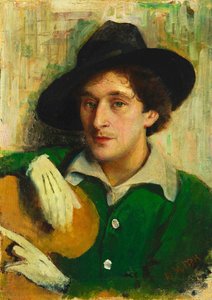
Biografia umelca

A Life Painted in Dreams: The World of Marc Chagall

Marc Chagall, born Moishe Shagal in 1887 in the small Belarussian town of Liozna near Vitebsk, wasn’t merely a painter; he was a poet of color, a weaver of dreams, and a chronicler of memory. His life, spanning nearly a century, mirrored the tumultuous currents of the 20th century, yet his art remained steadfastly rooted in a deeply personal vision—one infused with the folklore of his Hasidic Jewish upbringing and an unwavering belief in the power of imagination. Vitebsk itself was more than just a birthplace; it became the emotional core of his artistic universe, a recurring motif populated by flying figures, whimsical animals, and the vibrant hues of remembered landscapes. The town’s unique blend of cultures—Russian Orthodox churches alongside bustling Jewish marketplaces—forged an aesthetic sensibility that would defy easy categorization throughout his long career. Though he sought formal training first with a local sign painter and later in St. Petersburg under Léon Bakst, and then in Paris at the Académie de la Grande Chaumière, Chagall never fully embraced any single artistic movement. He absorbed elements of Cubism, Symbolism, and Fauvism, but always filtered them through his own intensely personal lens, creating a style that was uniquely, unmistakably Chagall.

Early Years and Artistic Formation

Chagall’s formative years were marked by hardship and displacement. Born into a Jewish family in Vitebsk—a town steeped in Orthodox tradition—he experienced firsthand the challenges faced by Jews living under Tsarist rule. Despite limited formal education, he possessed an innate artistic talent that quickly blossomed. His initial training began with a local sign painter, honing his skills in draftsmanship and color theory. Subsequently, he pursued studies at St. Petersburg’s Zvantseva School of Drawing and Painting, where he encountered the influential teachings of Léon Bakst—a pioneer of theatrical design who championed avant-garde aesthetics. This exposure to Bakst's ideas profoundly shaped Chagall’s artistic sensibilities, introducing him to the principles of Cubism and fostering his fascination with geometric abstraction. Recognizing the importance of broadening his horizons, he traveled to Paris in 1908, immersing himself in the vibrant intellectual and artistic milieu of the École de Paris—a collective of artists who rejected academic conventions and embraced experimentation. During this period, he befriended fellow artists like Pablo Picasso and André Derain, absorbing their stylistic innovations and refining his own visual language.

The Symbolist Vision

Chagall’s early paintings—such as I and the Village (1911)—demonstrate a distinctive preoccupation with symbolism and memory. Unlike traditional landscapes that strive for objective representation, Chagall's depictions of Vitebsk are fragmented recollections imbued with emotional significance. Figures float amidst stylized forms, conveying feelings of longing and nostalgia—a characteristic trait that would define his artistic style throughout his career. The artist’s palette is bold and expressive, employing vibrant hues to communicate emotion rather than literal accuracy. This stylistic approach reflects Chagall's deep connection to Jewish folklore and mythology, as well as his profound engagement with the spiritual traditions of his upbringing. His use of color—particularly yellows, blues, and reds—is deliberately unconventional, creating a dreamlike atmosphere that transcends rational perception.

The Turbulent Years: Revolution and Exile

The Russian Revolution dramatically altered Chagall’s life trajectory. Returning to Vitebsk in 1917 amidst the upheaval of Bolshevik rule, he became involved in cultural initiatives aimed at revitalizing Belarusian art and culture. He established an Art School in Vitebsk—a bold experiment in artistic education that briefly flourished before succumbing to political pressures. During this period, Chagall wrestled with conflicting ideological impulses—embracing socialist ideals while simultaneously cherishing his Jewish heritage. The outbreak of World War I forced him into exile, disrupting his creative pursuits and propelling him back to Paris. Despite the hardships endured during wartime, Chagall continued to produce artwork that reflected the anxieties and uncertainties of the era. His painting White Crucifixion (1938)—a poignant meditation on suffering and persecution—stands as a testament to this period’s emotional intensity.

International Recognition and Artistic Legacy

Chagall achieved international acclaim during World War II, escaping occupied France with his wife in May 1941. He found refuge in New York City, where he resided for seven years, fostering collaborations with fellow artists and engaging in prolific creative activity. His work gained prominence during the Abstract Expressionist movement, cementing his reputation as one of the most influential figures in modern art. Following the war, Chagall returned to France, continuing to paint until his death in 1985 at Saint-Paul-de-Vence—a picturesque Provençal village that served as his artistic sanctuary for decades. His enduring legacy resides not only in his stunning paintings and stained glass windows but also in his unwavering commitment to artistic integrity and imaginative vision—a vision that continues to inspire artists and audiences alike. Chagall’s art transcends cultural boundaries, conveying universal themes of love, loss, faith, and remembrance—a testament to the transformative power of creativity and the enduring beauty of dreams.
Marc Chagall

Marc Chagall

1887 - 1985 , Bielorusko

Základné informácie

  • Artistic Movement Or Style: Modernizmus, Kubizmus
  • Artists Or Movements Influenced By This Artist:
    • Surrealizmus
    • Cubizmus
  • Artists Who Influenced This Artist:
    • Leon Bakst
    • Pablo Picasso
    • Jean Metzinger
  • Date Of Birth: 7. júl 1887
  • Date Of Death: 28. marec 1985
  • Full Name: Marc Chagall
  • Nationality: Rusínsky-Francúzsky
  • Notable Artworks:
    • I a dedina
    • Žltý osol
    • Kôň s tiennikom
  • Place Of Birth: Ľozna, Bielorusko
Preskúmajte umelecká diela usporiadané podľa tém, štýlov a charakteristík.