x

 Oil On CanvasWallArtCubist Style
 1913Early Medieval
 188.0 x 158.0 cm
Kúpte si digitálnu snímku vo vysokom rozlíšení s vylepšenými detailmi, ktorá je oveľa kvalitnejšia než online náhľad.
Každý súbor starostlivo pripravujú naši interní špecialisti pomocou pokročilých nástrojov a odborného manuálneho retušovania. Zabezpečujeme, aby každý obrázok disponoval výnimočnou čistotou, presnou farebnou vernosťou a jemnými detailmi.
Konečný súbor vám bude doručený e-mailom do 72 hodín, optimalizovaný pre okamžité použitie v profesionálnom, redakčnom aj tlačovom prostredí. Ide o rovnakú kvalitu, ktorej dôverajú špičkové dizajnérske štúdiá, vydavateľstvá a galérie.
Stiahnite si vysokorozlíšený súbor na osobné zobrazovanie, tlačenie a kreatívne projekty. ( Kúpiť tlač Kúpiť ručne maľovaný obraz)
Keď si vyberiete Most-Famous-Paintings.com, nedostávate len obrázok – získate profesionálne upravené digitálne umenie, vytvorené s precíznosťou a so zárukou vašej maximálnej spokojnosti. Tu je všetko, čo je súčasťou vašej objednávky automaticky:

Vaša vysokorozlíšená digitálna súprava obrázkov vám bude zaslaná e-mailom do 72 hodín od objednávky – pripravená na okamžité použitie.

Vaše dielo je profesionálne optimalizované pomocou pokročilých nástrojov umelej inteligencie a manuálnej editácie, čo zaručuje maximálnu úroveň detailov, čistotu a presnosť farieb.

Náhodou ste zmazali alebo ste stratili svoj súbor? Nebavžte sa – pošleme vám ho kedykoľvek znova, úplne bez poplatkov.

Užite si svoje umelodelo okamžite bez colných poplatkov, daní alebo nákladov na dopravu – digitálne stiahnutia sú vždy oslobodené od dane.

Pomocou profesionálnych nástrojov a farebného manažmentu zabezpečujeme, aby vaša digitálna fotografia čo najpresnejšie odrážala pôvodné farby.

Ak nebudete spokojní so svojou digitálnou fotografiou, upravíme ju alebo vám vrátime 100% v priebehu 60 dní – bez zbytočných otázok.

Nie ste spokojní? Získajte plnú náhradu peňazí do 60 dní od prijatia vášho digitálneho súboru – bez zbytočných otázok.

Kúpte si 3 obrazy, ušetrite 10% - Kúpte si 5, ušetrite 15% - Kúpte si 10+, ušetrite 20%. Ideálne pre kreatívne projekty, galérie a agentúry.
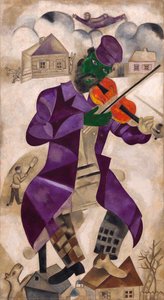
Marc Chagall's "The Fiddler," painted in 1913, isn’t merely a depiction of a man playing his instrument; it’s an immersion into a world brimming with personal mythology and the vibrant spirit of Eastern European Jewish life. This oil on canvas, measuring 188 x 158 cm, stands as a cornerstone of Chagall's early Cubist explorations, seamlessly blending fantastical elements with poignant realism. The painting immediately captivates with its explosion of color – deep blues, fiery oranges, and earthy greens—a palette that evokes both the twilight skies of Vitebsk and the warmth of family gatherings. It’s a scene plucked from memory, rendered not as a literal representation but as a potent distillation of feeling and experience.
At first glance, the composition appears deceptively simple: a man, identified by his distinctive white coat and flowing beard, stands perched atop a table, lost in the melody of his violin. Yet, this seemingly straightforward arrangement is layered with symbolic weight. The inclusion of an umbrella, tilted at a whimsical angle, hints at the unpredictable nature of life – a subtle acknowledgment of both joy and hardship. The other figures surrounding him—a woman gazing intently, a child reaching out, and a group engaged in various activities—suggest a community bound together by shared heritage and traditions. This isn’t just a portrait; it's a snapshot of a world, a testament to the enduring power of collective memory.
“The Fiddler” firmly establishes Chagall within the burgeoning movement of Cubism, though he quickly developed his own distinctive style. While influenced by Picasso and Braque’s exploration of fragmented forms and multiple perspectives, Chagall injects a deeply personal element into the technique. The figures are not rendered with photographic accuracy; instead, they are stylized and abstracted, their bodies flattened and rearranged to emphasize emotional impact over strict spatial representation. The use of bold, intersecting planes creates a dynamic sense of movement, as if the scene is perpetually shifting between moments in time. This deliberate distortion isn’t an exercise in deconstruction but rather a means of conveying the subjective experience of memory—a process where details blur and perspectives shift.
Chagall's masterful use of color further enhances this effect. He employs vibrant hues not to mimic reality, but to amplify the emotional resonance of each element. The deep blues evoke a sense of melancholy and nostalgia, while the fiery oranges represent passion and vitality. The interplay between these colors creates a dreamlike atmosphere, transporting the viewer into Chagall’s inner world.
Delving deeper reveals a rich tapestry of symbolism deeply rooted in Chagall's Hasidic Jewish upbringing. The fiddle itself is a potent symbol—a vehicle for spiritual expression and communal celebration within Jewish tradition. The setting, reminiscent of Vitebsk, the artist’s birthplace, immediately anchors the painting in a specific cultural context. The inclusion of elements like the table, a common gathering place, reinforces this sense of community and shared experience. Even the posture of the fiddler—his head tilted back as if lost in contemplation—suggests a connection to something beyond the earthly realm.
Furthermore, the painting’s overall composition echoes themes prevalent in Jewish folklore – stories of wandering, exile, and the enduring spirit of faith. The floating figures, a recurring motif in Chagall's work, represent a yearning for transcendence and a belief in the power of imagination. “The Fiddler” is therefore not simply a portrait; it’s an allegory—a visual poem exploring universal themes through the lens of personal memory and cultural heritage.
“The Fiddler” stands as one of Chagall's most beloved works, a testament to his unique artistic vision. Its influence extends far beyond the confines of Cubism, inspiring generations of artists with its dreamlike atmosphere and evocative symbolism. Works like “The Betrothed” and “Eiffel Tower,” also available through Most-Famous-Paintings.com, demonstrate the breadth of Chagall’s creative exploration. The painting's enduring appeal lies in its ability to transport viewers to a world where reality and fantasy intertwine, inviting us to contemplate the complexities of memory, faith, and the human spirit. Reproductions offer a remarkable opportunity to bring this captivating masterpiece into your home or studio, allowing you to experience the magic of Chagall’s vision firsthand.

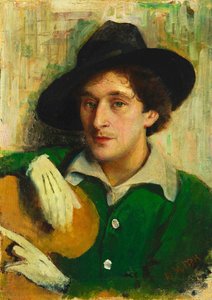
1887 - 1985 , Bielorusko


Zostaňte v obraze s najnovšími správami zo sveta umenia, exkluzívnymi ponukami a nápormi na dekoráciu.
Povedzte nám o svojom projekte a naši odborníci na umenie vám pripravia 3 personalizované návrhy umeleckých diel.
Nechajte si od nás vybrať 3 možnosti priamo pre vás – zadarmo!


 Náhľad
 Odoslať
 Zdieľať
 Podrobnosti o dielo

 Stiahnuť
 Podobné diela
 RTG skúška
 Prezentácia
 Zobraziť viac