


x

Ručne maľovaný olej na plátne vo vašej zvolenej veľkosti a v ráme, vyrobený na mieru našimi umelcami. ( Kúpiť tlač Kúpiť obrázok)
Vyberte si z našich preddefinovaných rozmerov, ktoré zodpovedajú pôvodným pomeroḿ diela.

Môžete zadať vlastné rozmery tak, aby sa hodili do konkrétneho rámu alebo priestoru. Ak sa váš zvolený rozmer nezhoduje s pôvodnými proporciami obrazu, dielo buď orezáme, alebo ho doplníme ručne maľovanými prvkami. Pred začiatkom výroby vám zašleme digitálny náhľad na schválenie.
Upozorňujeme, že ukážka na obrazovke neodráža skutočné orezanie alebo doplnenie. Skutočnú finálnu kompozíciu zobrazuje iba digitálny náhľad.
Hoci sú k dispozícii vlastné rozmery, odporúčame vybrať rozmer z preddefinovaného zoznamu, aby sme zachovali pôvodné proporcie.
Celosvetová doprava () za 3 až 4 týždne namiesto štandardných 5 týždňov. (16 august). Bez kompromisov v kvalite.


Annunciation
Veľkosť reprodukcie
Melozzo da Forlì (c. 1438 – 8 November 1494) remains a figure shrouded in mystery within the annals of Renaissance art, yet his contribution to artistic innovation—particularly the masterful application of perspective—is undeniable. Born around 1438 in Forlì, Italy, he ascended from humble beginnings as a journeyman and color-grinder to become one of the foremost fresco painters of his era, profoundly influencing artists like Raphael and Andrea Mantegna.
Details surrounding Melozzo’s early life are scarce; it is believed he hailed from a prosperous family named Ambrosi, and likely received his initial artistic training within the Forlivese school, absorbing stylistic currents shaped by masters such as Ansuino da Forlì—himself deeply impacted by Andrea Mantegna's groundbreaking explorations of spatial illusion. Some accounts even suggest a formative period spent mastering techniques alongside Antoniazzo Romano, fostering a collaborative spirit that propelled artistic experimentation.
His career blossomed in Urbino between 1465 and 1474, where he encountered Piero della Francesca—a pivotal encounter that cemented Melozzo’s stylistic allegiance to linear perspective and imbued his work with an unwavering commitment to realism. Furthermore, he studied architecture alongside Bramante and the Flemish painters working for Federico da Montefeltro, broadening his artistic horizons and enriching his understanding of visual representation.
Melozzo’s genius lay primarily in his unparalleled skill at fresco painting—a technique demanding meticulous planning and execution. Unlike tempera or oil paint, fresco utilizes pigments mixed with lime plaster applied directly onto wet masonry walls, resulting in durable, luminous images that withstand the test of time. Melozzo's mastery extended beyond mere replication; he skillfully manipulated tonal gradations and shading to create astonishingly convincing three-dimensional effects—a feat unheard of at the time.
His most celebrated achievement is undoubtedly his monumental decoration of the Pantheon in Rome, where he undertook a commission that would solidify his reputation as one of the foremost artists of his generation. The fresco cycle depicts scenes from biblical narratives with remarkable detail and psychological depth, showcasing Melozzo’s ability to convey emotion and narrative complexity within a constrained spatial framework.
Melozzo's artistic vision was characterized by an unwavering dedication to observation and anatomical accuracy—traits that mirrored the humanist ideals prevalent during the Renaissance. He meticulously studied human anatomy, striving to depict figures with lifelike realism, reflecting a burgeoning interest in scientific inquiry alongside aesthetic beauty.
Perhaps his most significant contribution was the pioneering use of foreshortening—a technique that dramatically alters perspective to create an illusion of depth and space. This innovation revolutionized painting practice, influencing subsequent generations of artists and establishing Melozzo da Forlì as a cornerstone of Renaissance artistic achievement. His frescoes stand as enduring testament to his genius and the transformative power of visual representation.
Melozzo’s influence extended far beyond his immediate contemporaries. Raphael, Andrea Mantegna, and countless other artists acknowledged his profound impact on their own stylistic development—a legacy that continues to inspire admiration and scholarly study today. Melozzo da Forlì's unwavering pursuit of artistic excellence cemented his place as a pivotal figure in the history of art, ensuring that his groundbreaking techniques and visionary aesthetic would resonate through centuries.


1438 - 1494
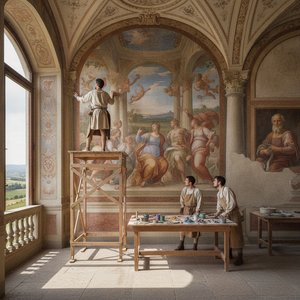
Explore the profound history and technical mastery of fresco painting. From ancient Roman murals to Michelangelo's Sistine Chapel, discover the enduring chemistry and artistry behind this timeless wall painting technique used by the world's greatest masters.


Zostaňte v obraze s najnovšími správami zo sveta umenia, exkluzívnymi ponukami a nápormi na dekoráciu.
Povedzte nám o svojom projekte a naši odborníci na umenie vám pripravia 3 personalizované návrhy umeleckých diel.
Nechajte si od nás vybrať 3 možnosti priamo pre vás – zadarmo!


 Odoslať
 Zdieľať
 Podrobnosti o dielo

 Stiahnuť
 Podobné diela
 Prezentácia


 Zobraziť viac




































 Možnosť skla je dostupná len pri rozmeroch pod 110 cm


![Scrovegni - Last Judgment (detail) [01] — Giotto Di Bondone, Proto-renaissance](/media/artworks/images/thumbnails/bc/d0/bcd0b6f1b5274c808b0801509d350235.jpg)


