Predávajte svoje umenie
Žavčekov zoznam Nákupný košík Cart
NáhľadNáhľad AR náhľadAR náhľad Kúpiť ručne maľovaný obraz Kúpiť ručne maľovaný obrazKúpiť obrázok Kúpiť obrázok OdoslaťOdoslať
Podrobnosti o dieloPodrobnosti o dielo Pridať do obľúbených Pridať do obľúbených StiahnuťStiahnuť Podobné dielaPodobné diela RTG skúškaRTG skúška PrezentáciaPrezentácia

Digger

Vincent van Gogh - Digger: Výrazné obrazovanie zobrazujúce tvrdú prácu agrárnych robotníkov v holandskom prostredí roku 1881. Pozrite si viac ikonických diel na Most-Famous-Paintings!

Vincent van Gogh (1853-1890): Holandský expresionista, známy svojimi emotívnymi maľbami ako Hviezdičná noc a Kvetinové ruže. Jeho život bol plný bolesti, ale aj nevíriteľného umenia.

Giclée / Umenotlač

Giclée tlač alebo plátno múzeálnej kvality s rýchlou výrobou a flexibilnými možnosťami povrchovej úpravy. (Kúpiť ručne maľovaný obraz Kúpiť ručne maľovaný obrazKúpiť obrázok Kúpiť obrázok)

P118B $10
P118H $10
P118W $10
P438Z $10
P508JH $12
P508YH $12
P805H $10
P805Z $10
P919BZ $10
P919G $10
P919XJ $10
P959ZH $10
P968JZ $12
W106C $8
W218G $10
W218JH $8
W218Y $10
W307PJ $10
W316G $10
W316PJ $8
W316Y $10
W398PJ $8
W4111J $10
W500HY $15
W500JH $15
W692G $12
W849H $8
W940BG $15
W953PJ $8

Standard
custom
CM
INCH

Vyberte si z našich preddefinovaných rozmerov, ktoré zodpovedajú pôvodným pomeroḿ diela.

šírka
výška

Môžete zadať vlastné rozmery, aby sa reprodukcia prispôsobila konkrétnemu rámu alebo priestoru. Ak zvolená veľkosť nebude zodpovedať proporciám originálu, dielo buď orežeme, alebo obraz rozšírime pomocou zrkadlenia či farebného doplnenia okrajov. Pred začatím výroby vám pošleme digitálnu ukážku na schválenie.
Máte na vedomí, že náhľad na obrazovke neodzrkadľuje skutočné orezanie alebo rozšírenie. Len digitálna ukážka presne zobrazí finálnu kompozíciu.
Hoci sú k dispozícii vlastné rozmery, pre zachovanie pôvodných proporcií odporúčame vybrať si rozmer z vopred definovaného zoznamu.

Celosvetová doprava () do 2 týždňov namiesto štandardných 4/5 týždňov. (21 august)

why_choose_icon
Bezplatná expresná doprava po celom svete
why_choose_icon
Prémiové lnianske plátno
why_choose_icon
Kompletné poistenie prepravy
why_choose_icon
Záruka vrátenia colného poplatku
why_choose_icon
Záruka presného farebného zhodnutia
why_choose_icon
60-dňá politika vrátenia (iba pri defektoch)
why_choose_icon
100% záruka vrátenia peňazí
why_choose_icon
Výhodná množstevná zľava

Celková cena

$ 68

reproduction

Digger

Giclée / Umenotlač

Veľkosť reprodukcie

-

Celková cena za vybrané možnosti

$ 68

Základné informácie

  • Medium: chalk, grey wash and opaque watercolour
  • Artist: Vincent van Gogh
  • Notable elements or techniques: Bold lines; expressive brushwork; depiction of manual labor.
  • Movement: Realism
  • Year: 1881
  • Dimensions: 44,5 × 33,7 cm

Kvíz o umení

Pri každej otázke je iba jedna správna odpoveď.

Otázka 1:
What artistic style is Vincent van Gogh’s ‘Digger’ primarily characterized by?
Otázka 2:
In what year was ‘Digger’ created?
Otázka 3:
What medium did Vincent van Gogh use to create ‘Digger’?
Otázka 4:
The painting depicts a man engaged in what activity?
Otázka 5:
What is one of the main themes conveyed by ‘Digger’ regarding its historical context?

Popis predmetu

Vincent van Gogh: A Pioneer of Emotional Expression

Vincent Willem van Gogh (1853–1890), arguably one of the most recognizable figures in Dutch art history, transcends mere painterly skill; he embodies an unparalleled commitment to conveying profound emotion onto canvas. Born in Groot-Zundert, Netherlands, his artistic journey began humbly, marked by explorations of various professions before he decisively embraced painting as his true vocation—a decision that would irrevocably alter the course of modern art. Influenced deeply by Dutch Masters like Rembrandt and Frans Hals, alongside the revolutionary aesthetic principles emanating from Japanese woodblock prints (Ukiyo-e), Van Gogh’s artistic sensibilities were shaped by a fervent desire to depict reality with uncompromising honesty and visual dynamism—a characteristic that distinguishes him from many of his contemporaries.

The Significance of “Digger”

“Digger,” created in 1881, exemplifies this ethos perfectly. This chalk drawing isn't merely an observation of rural labor; it’s a visceral rendering of the human condition amidst hardship—a theme recurrent throughout Van Gogh’s oeuvre and resonating powerfully with the broader artistic currents of Impressionism and Post-Impressionism. The composition is deceptively simple: a solitary man against a muted landscape backdrop dominated by shades of grey and brown, yet brimming with symbolic weight. He wears a hat, conveying a sense of quiet contemplation amidst physical exertion—a posture that speaks to dignity and resilience.

Technique and Detail

Van Gogh’s technique—bold lines combined with expressive brushwork—is central to the artwork's impact. The artist meticulously captures the texture of the soil and the contours of the man’s body, demonstrating a dedication to realism that distinguishes him from many Impressionists who prioritized capturing fleeting impressions of light. Chalk lends a subtle tonal variation to the drawing, enhancing its depth and creating an atmosphere of contemplative melancholy. Notice how the brushstrokes aren't merely delineating form; they are conveying emotion—a hallmark of Post-Impressionism’s ambition to delve beyond surface appearances into the psychological realm.

Historical Context and Artistic Influence

“Digger” emerged during a pivotal moment in European art history—the burgeoning influence of Impressionism and its challenge to academic conventions. Van Gogh's stylistic choices—his bold lines, expressive brushwork, and tonal modulation—directly responded to these developments, forging a path toward artistic innovation that would inspire generations of artists. The artwork’s depiction of rural labor reflects the socio-economic realities of Holland during the Victorian era, prompting viewers to consider themes of dignity, perseverance, and the human connection to nature. Its enduring appeal lies in its ability to communicate profound emotion without resorting to explicit narrative—a testament to Van Gogh's mastery of visual language.

Experience “Digger” Through Most-Famous-Paintings

At Most-Famous-Paintings, we offer exceptional reproductions of iconic artworks like “Digger” by Vincent van Gogh. Our handmade oil paintings are meticulously crafted using traditional techniques and materials—sourced responsibly—ensuring that each piece is a faithful representation of the original masterpiece. Discover more about Vincent van Gogh’s extraordinary artistic output by visiting our website today!
For more information on handmade oil reproductions, visit Hand Made Oil Reproductions Options and Customization.
You can also explore other artworks by Vincent van Gogh, such as “Digger in a Potato Field: February” and “Diggers,” on our website.
  • Visit the Vincent Van Gogh page to learn more about the artist.
  • Browse our collection of handmade oil paintings to find your favorite artwork.

Biografia umelca

A Life Painted in Emotion: The World of Vincent van Gogh

Vincent Willem van Gogh, a name synonymous with artistic passion and turbulent genius, remains one of the most recognizable and beloved figures in Western art history. Born on March 30, 1853, in Groot-Zundert, Netherlands, his journey was not one of immediate acclaim but rather a slow burn of dedication, struggle, and ultimately, profound influence. The eldest of six children born to a Protestant minister, Theodorus van Gogh, Vincent’s early life was steeped in religious contemplation, a sensibility that would subtly permeate much of his later work. Though he displayed an inclination towards drawing from a young age, his path wasn't immediately clear; he explored various vocations – art dealer, teacher, and missionary – before fully embracing the artist’s life. These experiences, though seemingly disparate, proved formative, instilling in him a deep empathy for the working class and a profound sense of spiritual seeking that would become hallmarks of his artistic vision. Early influences included the Dutch Masters like Rembrandt van Rijn and Frans Hals, whose masterful use of light and shadow resonated with young Vincent, as well as contemporary French painters Jean-François Millet and Camille Corot, who depicted scenes of rural life with a poignant realism.

From Darkness to Light: Artistic Development and Style

Van Gogh’s serious engagement with painting began around 1880, largely self-taught, driven by an inner compulsion to express the world as he perceived it. His initial works reflected his compassion for the marginalized, focusing on the lives of peasants and laborers – exemplified in pieces like The Potato Eaters. These early paintings are characterized by dark, earthy tones and a raw, almost brutal honesty that sought to capture the hardship and dignity of rural existence. The figures aren’t idealized; they're depicted with unflinching realism, conveying their weariness and toil. A pivotal moment arrived with his move to Paris in 1886, where he was exposed to the vibrant world of Impressionism and Post-Impressionism. This encounter proved transformative, injecting brighter colors into his palette and encouraging experimentation with new techniques. He absorbed the lessons of artists like Monet, Renoir, and Pissarro, but never fully adopted their style; instead, he forged a path uniquely his own. His distinctive style rapidly evolved, becoming instantly recognizable for its bold colors, expressive brushwork, and emotional intensity. Van Gogh didn’t merely *represent* reality; he sought to convey the feeling of being within it, utilizing impasto – thick layers of paint – to create texture and imbue his canvases with a palpable energy. This technique wasn't simply aesthetic; it was an integral part of his expressive language, allowing him to translate inner turmoil and ecstatic joy onto the canvas.

Periods of Intensity: Key Works and Artistic Phases

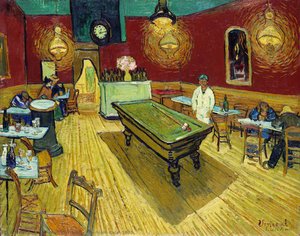
Van Gogh’s artistic journey can be broadly divided into distinct periods, each marked by unique characteristics and significant works. The Dutch Period (1880-1886), as mentioned, was defined by somber tones and depictions of peasant life. These paintings often featured muted colors and a focus on the dignity of labor. The subsequent Parisian Period (1886-1888) saw a dramatic shift towards brighter colors and experimentation with Impressionist techniques. He studied the effects of light and color, attempting to capture fleeting moments and atmospheric conditions. However, it was during the Arles Period (1888-1889), in the south of France, that Van Gogh reached a peak of creative intensity. Surrounded by the radiant light and vibrant landscapes of Provence, he produced some of his most iconic works: Sunflowers, a series celebrating the beauty of simple subjects; The Night Café, a claustrophobic depiction of a late-night Parisian scene filled with unsettling energy; and Starry Night Over the Rhône, capturing the shimmering reflections of city lights on the water. These paintings are not merely depictions of scenes; they are emotional landscapes, pulsating with life and imbued with a sense of longing. His use of color became increasingly expressive, employing vibrant yellows, blues, and greens to convey his subjective experience of the world. His final years, spent in Saint-Rémy and Auvers-sur-Oise (1889-1890), were marked by continued artistic output despite increasing mental distress. Confined to an asylum at Saint-Rémy following a breakdown, he found solace in painting the surrounding countryside, resulting in masterpieces like The Starry Night, a swirling vortex of color and emotion that continues to captivate viewers today. Even during this period of profound suffering, his portraits – particularly those of Dr. Gachet – reveal an extraordinary sensitivity and psychological depth.

A Legacy Forged in Suffering: Achievements and Historical Significance

Despite facing rejection and struggling with mental illness throughout his life, Van Gogh created over 2,100 artworks in just over a decade—approximately 860 oil paintings and 1,100 drawings. This astonishing output is testament to his unwavering dedication and relentless creative drive. Remarkably, during his lifetime, only one painting – The Red Vineyard – was sold. Recognition came posthumously, slowly at first, then with increasing momentum in the early 20th century. His work profoundly influenced the development of modern art, particularly Expressionism and Fauvism, inspiring artists to prioritize emotional expression over realistic representation. His bold use of color, distorted forms, and expressive brushwork paved the way for new artistic possibilities. Today, Van Gogh’s paintings are among the most recognizable and valuable artworks in the world, commanding record prices at auction and drawing millions of visitors to museums worldwide. But his legacy extends far beyond monetary value; he remains a cultural icon, representing the archetype of the “tortured artist” – though this narrative often overshadows his skill, dedication, and artistic vision. The Van Gogh Museum in Amsterdam stands as a testament to his enduring influence, showcasing his work and celebrating his life for generations to come. His art continues to resonate with audiences because it speaks to universal human experiences—love, loss, hope, despair—with an honesty and vulnerability that transcends time and culture.
  • Major Influences: Dutch Masters (Rembrandt, Hals), Millet, Corot.
  • Key Periods: Dutch, Parisian, Arles, Saint-Rémy/Auvers-sur-Oise.
  • Notable Works: The Potato Eaters, Sunflowers, Starry Night, The Night Café.
vincent willem van gogh

vincent willem van gogh

1853 - 1890 , Nemecko

Základné informácie

  • Artistic Movement Or Style: Postimpresionizmus
  • Artists Or Movements Influenced By This Artist:
    • Expresionizmus
    • Fauvizmus
  • Artists Who Influenced This Artist:
    • Rembrandt
    • Millet
  • Date Of Birth: 30. marec 1853
  • Date Of Death: 29. júl 1890
  • Full Name: Vincent Willem van Gogh
  • Nationality: Holanďan
  • Notable Artworks:
    • Slnečnice
    • Hviezdičná noc
    • Nočná kaviareň
  • Place Of Birth: Zundert, Holandsko
Preskúmajte umelecká diela usporiadané podľa tém, štýlov a charakteristík.