


x

由我们的艺术家按需定制,为您提供您所选尺寸及画框的布面手工油画。 ( Switch to Print Switch to Image)





























从与原作比例一致的预设尺寸中进行选择。

您可以输入自定义尺寸,以适配特定的画框或空间。如果所选尺寸与原图比例不符,我们将通过裁剪作品或添加手绘元素来扩展画面。数字样稿将在制作开始前发送给您确认。
请注意,屏幕预览无法准确反映实际的裁剪或扩展效果,只有样稿才能真实呈现最终的构图。
虽然我们提供定制尺寸服务,但为了保留原作比例,建议您从预设列表中选择尺寸。

(45)
复制品尺寸
Alphonse Maria Mucha (1860 – 1939), born in Ivanačice, Moravia, stands as a towering figure within the Art Nouveau movement—a stylistic revolution that swept across Europe between 1890 and 1910. Rejecting academic conventions, Mucha forged his own path toward an aesthetic rooted in organic forms, flowing lines, and meticulous ornamentation, establishing himself as arguably the most prolific and influential illustrator of his era.
Early Life and Artistic Aspirations
From a young age, Mucha demonstrated exceptional artistic talent. Despite facing challenges securing acceptance into the Academy of Fine Arts in Prague—where he felt stifled by rigid rules—he persevered, honing his skills independently before relocating to Paris in 1887. This decisive move proved pivotal, immersing him in the vibrant intellectual and artistic milieu of the Belle Époque and propelling him toward the realization of his distinctive vision.
The Art Nouveau Style: A Symphony of Line and Form
Mucha’s artistic style is instantly recognizable—a mesmerizing blend of curvilinear lines, stylized floral motifs, and graceful curves that embody the movement's core principles. Heavily influenced by artists like Pierre-Auguste Renoir and Gustave Moreau, Mucha skillfully incorporated elements from Japanese art and Celtic symbolism into his compositions.
Notable Illustrations: Capturing Beauty and Myth
Mucha’s prolific output yielded a remarkable body of work—primarily illustrations for theater posters and advertising campaigns—that cemented his reputation as the “Poet of Decorative Art.” His celebrated images include “The Slavonic Uprising,” which deftly combines Czech nationalistic themes with Art Nouveau aesthetics; “Salon des Cent,” showcasing collaborations with fellow artists like Piero Dorazio; and evocative depictions inspired by works such as Gustave Moreau’s “The Daughters of Tespio” and Sir Hubert von Herkomer's "Young Farmers Breaking Flax." These pieces transcend mere visual representation, conveying profound narratives imbued with mythological references and psychological depth.
Technique and Symbolism: Craftsmanship Meets Imagination
Mucha’s technique involved painstaking hand-painting—primarily utilizing oil paints—with meticulous attention to detail and layering. He embraced innovative printing methods, experimenting with chromolithography and halftone printing to achieve stunning color reproductions. Recurring motifs—such as irises, lilies, and stylized female figures—carried symbolic significance, reflecting themes of femininity, spirituality, and the harmonious relationship between humanity and nature.
Emotional Impact: A Legacy of Elegance and Enchantment
Ultimately, Mucha’s art possesses an enduring emotional resonance—capturing a sense of romanticism, elegance, and enchantment that continues to inspire artists and designers today. His masterful manipulation of line and color creates images that are both visually captivating and psychologically stimulating, transporting viewers into worlds of beauty and wonder. Alphonse Maria Mucha remains not merely an artist but a cultural icon—a testament to the transformative power of artistic vision.


1860 - 1939 , 捷克共和国

Explore 10 famous paintings bathed in 'Pale Goldenrod' tones! From Van Gogh’s sunflowers to Monet’s haystacks, discover the stories & artistry behind these iconic artworks. Find museum-quality reproductions and curated decor ideas at Most-Famous-Paintings.com.
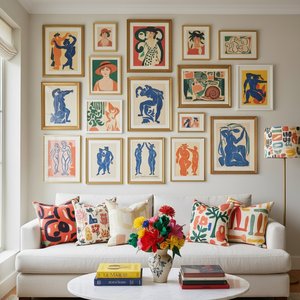
探索亨利·马蒂斯25幅杰作,感受野兽派色彩的魅力!从《舞蹈》到《红色和谐》,揭秘大师背后的故事与艺术灵感。Most-Famous-Paintings.com提供博物馆级高质量油画复制品,为您的家居增添奢华艺术气息。立即在线探索完整系列!

Explore the rich history of illustration! From ancient cave paintings to Art Nouveau masterpieces, discover how visual storytelling has shaped culture. Expert insights & stunning examples.

Explore 10 iconic artworks – from Monet to Matisse – that masterfully use color! Discover the stories behind these vibrant paintings, their techniques & emotional impact. Find museum-quality art reproductions and inspiring decor ideas on Most-Famous-Paintings.com.

探索艺术新潮的十个杰作!高更、慕夏、克里姆特等大师作品,揭秘其背后的故事与精湛技艺。从优雅曲线到绚丽色彩,感受现代艺术的魅力。Most-Famous-Paintings.com为您提供博物馆品质的艺术品复制和家居装饰灵感。在线探索完整系列!


第一时间获取最新的艺术新闻、独家优惠及装饰灵感。
向我们介绍您的项目需求,我们的艺术专家将为您提供 3 个个性化的艺术品推荐。
由我们的专家为您精选 3 款心仪之作 —— 完全免费!


 Preview
 分享
分享 分享
分享
 详情
详情

 下载
下载
 相似作品
相似作品 X射线
X射线 幻灯片播放
幻灯片播放
 展开详情
展开详情









 玻璃选项仅适用于110厘米以下的尺寸。


