x
从与原作比例一致的预设尺寸中进行选择。

您可以输入自定义尺寸,以适配特定的画框或空间。如果所选尺寸与原图比例不符,我们将通过裁剪作品或添加手绘元素来扩展画面。数字样稿将在制作开始前发送给您确认。
请注意,屏幕预览无法准确反映实际的裁剪或扩展效果,只有样稿才能真实呈现最终的构图。
虽然我们提供定制尺寸服务,但为了保留原作比例,建议您从预设列表中选择尺寸。

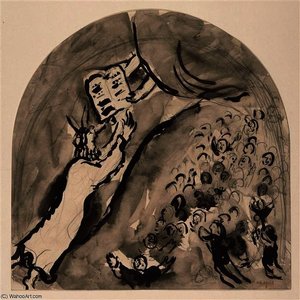
Moses
复制品尺寸

Armando Spadini emerged from the vibrant artistic milieu of Florence at the turn of the century, a young man deeply attuned to both tradition and innovation. Born in July 1883, he descended from a craftsman's lineage—his father a skilled artisan and his mother a seamstress—shaping an early life amidst practical realities that would later inform his artistic sensibilities. His formative years were spent studying at Santa Croce, absorbing the aesthetic principles of Florentine Neoclassicism before enrolling in the prestigious Free School of Nude at the Academy of Fine Arts. It was within these hallowed halls that he forged enduring connections with pivotal figures such as Ardengo Soffici and Adolfo De Carolis, mentors and peers who would help shape his burgeoning artistic trajectory.
This encounter proved transformative, propelling him into the orbit of Leonardo, the Symbolist magazine that championed avant-garde experimentation and fostered a dialogue between established masters and emerging voices. Spadini’s participation in the 59th Esposizione Annuale Della Società Delle Belle Arti Di Firenze in 1906 marked his debut on the Florentine art scene—a moment of considerable significance as he presented works that signaled a nascent inclination toward Impressionistic techniques, mirroring the stylistic trends gaining momentum across Europe. He swiftly established himself within a cohort of artists who sought to redefine expression, embracing the challenge posed by the Symbolist movement while simultaneously grounding his vision in the rich heritage of Italian painting history.
In 1910, Spadini moved to Rome, a transition that would solidify his commitment to exploring new creative horizons. The city's atmosphere—characterized by intellectual ferment and a palpable yearning for aesthetic renewal—provided fertile ground for his endeavors. His move was not merely geographical but deeply personal; he traveled with his wife, Pasqualina Cervone, whom he had met at the school of Giovanni Fattori. Pasqualina was more than a companion; she was a talented pupil herself and became Spadini's most enduring muse, appearing frequently in works that captured the quiet, tender moments of domestic life.
Spadini’s painting style is often described as being driven by instinct rather than rigid academic will. He possessed a unique ability to assimilate the joy of color, drawing inspiration from the transparent clarity of the Venetians and the luminous qualities of the French Impressionists. His work avoids the tormenting, heavy research found in many of his contemporaries, opting instead for an open, laughing, and summarizing approach. This "solar luminosity" became a hallmark of his oeuvre, allowing him to translate the familiar aspects of domestic intimacy into compositions that feel both abundant and light-filled.
As a representative of the so-called Scuola Romana, Spadini occupied a vital space in the transition between the 19th and 20th centuries. His talent was recognized early through prestigious accolades, such as winning the competition for the Pensionato artistico nazionale in 1909. Throughout his career, he maintained a profound connection to family intimacy, often imbuing his portraits and landscapes with a sense of warmth and "happy temperament" that resonated with viewers.
Though his life was tragically short, ending in Rome in 1925, the impact of his vision remains palpable. His contributions can be summarized through several key artistic pillars:
Today, Spadini is remembered not just as a painter of landscapes and portraits, but as an artist who captured the very essence of light and life, leaving behind a legacy of beauty that continues to illuminate the history of Italian modernism.

1883 - 1925 , Italy


第一时间获取最新的艺术新闻、独家优惠及装饰灵感。
向我们介绍您的项目需求,我们的艺术专家将为您提供 3 个个性化的艺术品推荐。
由我们的专家为您精选 3 款心仪之作 —— 完全免费!


 效果预览
效果预览
 购买印刷品
购买印刷品 分享
分享 分享
分享
 详情
详情

 下载
下载
 相似作品
相似作品 X射线
X射线 幻灯片播放
幻灯片播放 展开详情
展开详情






































 玻璃选项仅适用于110厘米以下的尺寸。