x





























从与原作比例一致的预设尺寸中进行选择。

您可以输入自定义尺寸,以适配特定的画框或空间。如果您选择的尺寸与原图比例不符,我们将对作品进行裁剪,或通过镜像填充/纯色填充边缘的方式来扩展图像。在开始制作之前,我们会向您发送一份数字效果图供您确认。
请注意,屏幕上的预览并不能反映实际的裁剪或扩展效果。只有效果图才能准确展示最终的构图。
虽然我们提供定制尺寸,但为了保持原图比例,我们建议您从预设列表中选择尺寸。

Kairuan III
复制品尺寸
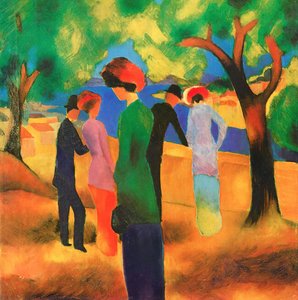
August Macke’s “Kairouan III,” painted in 1914, isn't merely a cityscape; it’s a fleeting moment captured with an almost feverish intensity. Created during a pivotal period of artistic experimentation – a time when German Expressionism was grappling with new forms and the burgeoning influence of movements like Orphism – this watercolor offers a glimpse into Macke’s evolving vision, a synthesis of observation and deeply felt emotion. The painting depicts a bustling street scene in Kairouan, Tunisia, a location that profoundly impacted Macke's artistic sensibilities during his travels. It’s a place he described as “a paradise,” a vibrant hub of color and life that served as a crucial catalyst for his later work.
Macke’s style at this time is characterized by a remarkable blend of influences. While rooted in the Impressionist techniques he initially absorbed, particularly the use of broken brushstrokes to capture light and atmosphere, “Kairouan III” demonstrates a clear shift towards a more expressive and simplified approach. The forms are not meticulously rendered but rather suggested with bold, confident strokes, prioritizing color and composition over photographic realism. This is evident in the flattened perspective, the exaggerated scale of certain buildings, and the almost dreamlike quality of the scene. The painting’s energy isn't derived from detailed observation, but from Macke’s subjective experience of the place – a distillation of its essence into a vibrant, emotionally charged composition.
“Kairouan III” is deeply intertwined with the principles of Orphism, a movement pioneered by Robert Delaunay and Sonia Delaunay. Orphism sought to liberate color from its traditional role as a descriptive element, instead using it purely for its aesthetic qualities – its ability to evoke emotion and create visual harmony. Macke embraced this approach wholeheartedly, employing a dazzling array of colors that seem almost luminous against the paper’s surface. The palette is dominated by intense blues, greens, yellows, and reds, layered in overlapping planes and creating a dynamic sense of movement and depth. Notice how he uses complementary colors – blue and orange, yellow and violet – to intensify each hue and generate visual excitement.
The technique itself contributes significantly to the painting’s effect. Macke employs loose, gestural brushstrokes, often applying paint directly from the tube with minimal blending. This creates a sense of immediacy and spontaneity, as if he were capturing the scene in real-time. The layering of colors is also crucial; each hue builds upon the previous one, creating a shimmering surface that seems to vibrate with energy. This technique isn’t about precise representation but rather about conveying the *feeling* of being immersed in this vibrant urban landscape.
While “Kairouan III” is primarily concerned with color and composition, it also subtly hints at deeper symbolic meanings. The densely packed buildings, rendered with a sense of both dynamism and claustrophobia, suggest the complexities of modern urban life. The figures – though largely indistinct – represent the human element within this environment, adding scale and suggesting activity without explicitly defining their roles or relationships. Macke’s focus is less on individual portraits and more on capturing the collective experience of a place.
Furthermore, the painting's title itself—Kairouan—references an ancient city in Tunisia, steeped in history and religious significance. This connection adds another layer of meaning to the work, suggesting a dialogue between the past and the present, tradition and modernity. Macke’s choice of subject matter reflects his interest in exploring themes of cultural exchange and the transformative power of travel.
August Macke's “Kairouan III” is more than just a beautiful painting; it’s a poignant testament to a brilliant artist whose life was tragically cut short during World War I. Painted in the midst of his most innovative period, this work encapsulates his evolving artistic vision and his profound engagement with color, form, and symbolism. It offers a rare glimpse into a world brimming with energy, emotion, and a deep appreciation for the beauty of everyday life – a world that vanished all too soon. Reproductions of “Kairouan III” capture not only its visual splendor but also the artist’s unique spirit, making it a compelling addition to any collection or a captivating focal point in any interior space.


1887 - 1914 , 德国

Journey through 10 legendary watercolor masterpieces by Sargent, Turner & Homer! Explore iconic landscapes, portraits & floral art that redefined history. Find museum-quality reproductions and curated decor ideas at Most-Famous-Paintings.com.

Explore the captivating world of watercolor painting! Discover its rich history, essential techniques, influential artists & collecting tips. A comprehensive guide for art enthusiasts from Most-Famous-Paintings.

探索雷诺阿25幅经典之作,感受印象派大师的光影魅力与色彩诗意。从《舞会》到《煎饼磨坊》,Most-Famous-Paintings为您呈现艺术背后的故事与技巧。高品质艺术复制品,点亮您的家居空间!立即在Most-Famous-Paintings.com探索完整系列。

探索水彩艺术的流光溢彩!深入了解其历史渊源、大师技法与现代实践。提供专业的艺术咨询、定制油画服务,助您收藏和鉴赏优秀作品。Most-Famous-Paintings.com – 您的艺术之选。

Explore the captivating world of watercolor painting! Discover its rich history, essential techniques, influential artists & collecting tips from art experts. A comprehensive guide for enthusiasts.


第一时间获取最新的艺术新闻、独家优惠及装饰灵感。
向我们介绍您的项目需求,我们的艺术专家将为您提供 3 个个性化的艺术品推荐。
由我们的专家为您精选 3 款心仪之作 —— 完全免费!


 效果预览
效果预览
 购买手绘画作
 分享
分享 分享
分享
 详情
详情

 下载
下载
 相似作品
相似作品 X射线
X射线 幻灯片播放
幻灯片播放


 展开详情
展开详情









 玻璃选项仅适用于110厘米以下的尺寸。