x
购买高分辨率增强版数字图像,其品质远超在线预览。
每一份文件都由我们的内部专家使用先进工具与专业的后期润色技术精心打造。我们确保每一张图像都具备卓越的清晰度、精准的色彩还原度以及细腻的细节表现。
最终文件将在 72 小时内通过电子邮件交付,并针对专业、编辑及印刷用途进行了优化。其品质与顶级设计工作室、出版社和画廊所信赖的标准完全一致。
选择 Most-Famous-Paintings.com,您获得的不仅仅是一张图像——您收到的是经过专业级增强、精雕细琢的数字艺术作品,并享有满意保证。以下是您的订单中自动包含的所有内容:

您的高分辨率数字图像文件将在下单后 72 小时内通过电子邮件发送给您 —— 即可立即使用。

您的艺术品经过专业优化,结合先进的 AI 技术与人工修饰,确保呈现极致的细节、清晰度与色彩准确度。

不小心删除了文件或找不到了?没关系——我们将随时为您免费重发。

即刻拥有您的艺术作品,无需支付任何关税、税费或运费——数字下载始终免税。

我们通过专业工具与色彩管理技术,确保您的数字图像尽可能真实地还原原作色彩。

如果您对所购买的数字图像不满意,我们将在60天内为您进行修改或退还100%的款项——无需任何解释。

如果不满意?在收到数字文件后的60天内,我们为您提供全额退款——无需任何理由。

购买 3 张图片可享 10% 折扣 - 购买 5 张可享 15% 折扣 - 购买 10+ 张可享 20% 折扣。非常适合创意项目、画廊和机构使用。

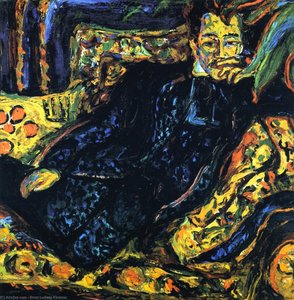
Béla Czóbel (1883-1976) stands as a pivotal figure in the development of 20th-century art, particularly within Hungary. More than simply a painter, he was a key instigator of artistic innovation, bridging the gap between traditional European styles and the burgeoning avant-garde movements of his time. His work, characterized by intense emotion, dramatic lighting, and a haunting atmosphere, reflects both personal turmoil and a profound engagement with the changing social landscape of early 20th-century Europe. Czóbel’s legacy lies not only in his distinctive artistic style but also in his role as a catalyst for artistic experimentation within Hungary, shaping the course of modern Hungarian art.
Born in Budapest to a Jewish-Hungarian family, Béla Czóbel’s early life was marked by an appreciation for the arts fostered by his grandfather, a decorative painter. This familial influence ignited a passion within him, leading him to pursue formal artistic training. He initially studied at the Nagybánya Free School of Painting in Romania (now Baia Mare), under Béla Iványi Grünwald, where he was exposed to the principles of naturalism and the burgeoning Hungarian art scene. This early environment emphasized a direct observation of reality, a foundation that would later be dramatically transformed by his encounters with European avant-garde movements.
A pivotal moment in Czóbel’s artistic development occurred when he traveled to Munich in 1902. There, he immersed himself in the vibrant art world of the German Empire, studying at the Academy of Fine Arts and forging connections with fellow artists like Jules Pascin, Rudolf Lévy, and Walter Bondy. These encounters proved crucial, exposing him to new ideas and techniques – particularly the influence of Fauvism – that would fundamentally alter his artistic approach.
Czóbel’s exposure to Fauvism in Paris during 1905 proved transformative. The bold, non-naturalistic use of color, championed by Matisse and Derain, resonated deeply with his artistic sensibilities. He began incorporating these vibrant hues into his work, moving away from the muted tones of naturalism towards a more expressive and emotionally charged palette. This shift was not merely stylistic; it represented a deliberate rejection of academic conventions and an embrace of subjective experience.
In 1909, Czóbel became a founding member of “The Eight” (Nyolcak), a group of Hungarian artists who sought to break free from the established artistic traditions of Hungary. This collective, comprised of figures like Károly Kernstok and Róbert Berény, aimed to introduce new ideas and styles – including Fauvism, Cubism, and Expressionism – into the Hungarian art world. “The Eight” staged their first exhibition in 1911, marking a significant moment in the history of modern Hungarian art.
Following World War I, Czóbel’s artistic style continued to evolve, incorporating elements of German Expressionism while retaining his distinctive use of color and dramatic lighting. His paintings often depict scenes of urban life, interiors, and portraits, but they are imbued with a sense of unease and psychological intensity. He frequently explored themes of isolation, alienation, and the darker aspects of human experience. His work is characterized by a palpable atmosphere—a feeling of melancholy, mystery, and even dread.
During his time in Paris (1925-1939), Czóbel produced some of his most celebrated works, including *Kislány ágy előtt* (“Little Girl in Front of a Bed”) and *Ülő akt* (“Sitting Nude”). These paintings exemplify his mastery of color, composition, and psychological expression. His later work often featured stark contrasts between light and shadow, creating a dramatic and unsettling effect.
Béla Czóbel’s impact on Hungarian art is undeniable. He played a crucial role in introducing modern European movements – particularly Fauvism and Expressionism – to Hungary, challenging the established artistic norms of the time. His work paved the way for subsequent generations of Hungarian artists, influencing their approach to color, composition, and subject matter. Despite facing challenges during World War II and the subsequent communist era, Czóbel’s legacy endures as a testament to his artistic vision and his contribution to the development of modern art.
He was awarded the Kossuth Prize in 1948, recognizing his significant contributions to Hungarian culture. Today, his works are exhibited in museums throughout Hungary and beyond, ensuring that his unique artistic voice continues to resonate with audiences worldwide.

1883 - 1976 , Hungary


第一时间获取最新的艺术新闻、独家优惠及装饰灵感。
向我们介绍您的项目需求,我们的艺术专家将为您提供 3 个个性化的艺术品推荐。
由我们的专家为您精选 3 款心仪之作 —— 完全免费!


 效果预览
效果预览
 购买印刷品
购买印刷品 分享
分享 分享
分享
 详情
详情

 下载
下载
 相似作品
相似作品 X射线
X射线 幻灯片播放
幻灯片播放 展开详情
展开详情