Michelangelo Merisi Da Caravaggio: A Master of Light and Emotion
Caravaggio’s “Boy Peeling a Fruit,” painted circa 1592–1593, stands as an emblem of Baroque art—a testament to its profound ability to capture the immediacy of everyday life while simultaneously elevating it to a realm of spiritual contemplation. This seemingly simple depiction of a young man meticulously removing the skin from an apple or orange transcends mere genre painting; it embodies Caravaggio’s revolutionary approach to artistic expression, characterized by dramatic chiaroscuro and an unparalleled sensitivity to human psychology.
The Painting in Detail
The composition centers around a boy positioned before a table laden with assorted fruits—apples and oranges dominate the visual field. Caravaggio's masterful use of light is immediately apparent: a radiant beam originating from outside the canvas illuminates the boy’s face and hands, casting deep shadows that sculpt his form and imbue the scene with an atmosphere of quiet intensity. This technique isn’t merely decorative; it serves as a conduit for conveying emotion—the boy's focused gaze speaks volumes about his concentration and determination. The subtle gradations of light and dark create a palpable sense of volume, drawing the viewer into the intimate space of the tableau. Notice also the partially visible figure in the background, adding depth to the composition and hinting at an unspoken narrative.
Artistic Significance
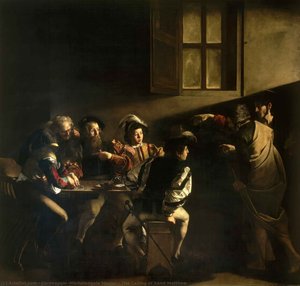
“Boy Peeling Fruit” marks Caravaggio’s transition from Renaissance conventions toward his distinctive Baroque style—a stylistic shift that would define his entire oeuvre. Unlike many artists of his time who adhered to idealized representations of human form, Caravaggio opted for realism, portraying the boy with unflinching honesty and capturing the nuances of human emotion. This approach aligns perfectly with the Baroque preoccupation with psychological depth and dramatic expression, mirroring themes explored in works like *The Calling of Saint Matthew* and *David and Goliath*. Caravaggio’s influence extended far beyond his immediate contemporaries; he fundamentally altered artistic practice, inspiring generations of painters to embrace chiaroscuro and explore the expressive potential of light and shadow.
Location and Preservation
Currently housed at the Fondazione di Studi di Storia dell'Arte Roberto Longhi in Florence, Italy, “Boy Peeling Fruit” benefits from meticulous conservation efforts aimed at preserving its fragile surface and ensuring its continued accessibility to scholars and art enthusiasts alike. The museum’s dedication to safeguarding Italian artistic heritage underscores the importance of protecting masterpieces like Caravaggio’s for future generations.
Reproductions Available
For those seeking to experience the beauty and power of Caravaggio's vision without the constraints of ownership,
handmade oil painting reproductions are available at Most-Famous-Paintings. These high-quality reproductions faithfully recreate the original artwork's luminous palette and textural nuances, allowing art lovers to bring Caravaggio’s masterpiece into their homes—a tangible connection to one of history’s most influential artistic voices.
For more information on Caravaggio and his works, visit
Michelangelo Merisi Da Caravaggio at Most-Famous-Paintings.