


x





























从与原作比例一致的预设尺寸中进行选择。

您可以输入自定义尺寸,以适配特定的画框或空间。如果您选择的尺寸与原图比例不符,我们将对作品进行裁剪,或通过镜像填充/纯色填充边缘的方式来扩展图像。在开始制作之前,我们会向您发送一份数字效果图供您确认。
请注意,屏幕上的预览并不能反映实际的裁剪或扩展效果。只有效果图才能准确展示最终的构图。
虽然我们提供定制尺寸,但为了保持原图比例,我们建议您从预设列表中选择尺寸。

Spring - a triptych
复制品尺寸

Clarence Hudson White (April 8, 1871 – July 8, 1925) was an American photographer, teacher, and a founding member of the Photo-Secession movement. He emerged from humble beginnings in small towns in Ohio—a formative experience that instilled within him a deep appreciation for rural life and its inherent beauty. Unlike many artists of his time who pursued grand narratives or celebrated heroic figures, White focused on capturing the quiet dignity and tenderness of everyday scenes, establishing himself as one of America’s foremost practitioners of Pictorialism.
His early artistic inclinations began with a fascination for music—specifically the violin—which profoundly shaped his sensibilities. Encouraged by his maternal uncle Ira Billman, White cultivated his creative pursuits diligently, producing sketchbooks filled with pencil drawings and watercolors that foreshadowed his later photographic style. Notably, he sketched a nude female figure seated on a large sphere, surrounded by floating spheres – an image that would reappear repeatedly in his photographs, reflecting his belief in the transformative power of art.
White’s formal education included studies at Denison University and Oberlin Conservatory, where he honed his artistic skills alongside fellow musicians. However, it was photography—discovered during a visit to the World's Columbian Exposition in Chicago—that truly captivated him. Recognizing its potential as an expressive medium, White embraced the challenge of mastering the craft, quickly gaining international acclaim for his evocative images that conveyed emotion and sentimentality.
He established the Clarence H. White School of Photography in 1914, attracting a cohort of talented students who would become prominent figures in American photography. Among them were Dorothea Lange, Gertrude Kasebier, and Ralph Steiner—artists whose work would continue White’s legacy of capturing the human spirit through visual storytelling.
White's photographic style was characterized by meticulous attention to detail and a masterful use of light—techniques he learned from Alfred Stieglitz, whom he considered a mentor. He championed the Photo-Secession movement, advocating for photography as an art form alongside painting and sculpture. His photographs explored themes of domesticity, childhood innocence, and rural landscapes with remarkable sensitivity, reflecting his profound connection to the American countryside.
White’s influence extended beyond his artistic output; he served as a respected teacher and instilled in his students a commitment to artistic integrity. He died unexpectedly in Mexico City in 1925 at the age of fifty-four, leaving behind a body of work that continues to inspire admiration for its beauty and emotional depth.
His grandson and biographer Maynard Pressley White Jr. noted that among his grandfather’s sketches of this time was a drawing of a female nude seated on a large sphere, blowing bubbles from a pipe and surrounded by many floating spheres in the air. This same imagery later appeared repeatedly in White's photography.
White’s legacy resides not only in his stunning photographs but also in his role as a pioneer who elevated photography to the status of fine art—a distinction that remains relevant today.

Explore the art of multi-panel arrangements for impactful interiors. Expert guidance on spatial harmony, visual storytelling & psychological impact – perfect for luxury hotels and discerning collectors. Elevate your space with curated artwork.

Most-Famous-Paintings.com 提供专业的艺术白标定制解决方案,赋能精英收藏家品牌价值。个性化油画、奢华体验与商业策略相结合,助力您提升艺术品市场影响力。值得信赖的合作伙伴,开启您的专属艺术之旅!

Delve into the power of 'Ivory Black' with 10 iconic paintings by masters like Rembrandt & Caravaggio. Explore dramatic chiaroscuro, gothic moods & timeless art history. Find museum-quality reproductions and elevate your home decor at
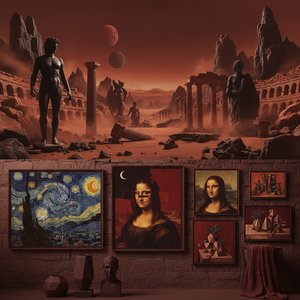
Delve into the power of 'Mars Black' with 10 iconic paintings by masters like Rembrandt & Caravaggio. Explore dramatic chiaroscuro, gothic art, and timeless beauty. Find museum-quality reproductions & elevate your home decor on .

Explore 10 iconic paintings dominated by black tones, from Rembrandt’s chiaroscuro to Goya's dark expressions. Discover the stories behind these masterpieces & find museum-quality art reproductions for your home at .


第一时间获取最新的艺术新闻、独家优惠及装饰灵感。
向我们介绍您的项目需求,我们的艺术专家将为您提供 3 个个性化的艺术品推荐。
由我们的专家为您精选 3 款心仪之作 —— 完全免费!


 效果预览
效果预览
 购买手绘画作
 分享
分享 分享
分享
 详情
详情

 下载
下载
 相似作品
相似作品 X射线
X射线 幻灯片播放
幻灯片播放
 展开详情
展开详情









 玻璃选项仅适用于110厘米以下的尺寸。


