x





























从与原作比例一致的预设尺寸中进行选择。

您可以输入自定义尺寸,以适配特定的画框或空间。如果您选择的尺寸与原图比例不符,我们将对作品进行裁剪,或通过镜像填充/纯色填充边缘的方式来扩展图像。在开始制作之前,我们会向您发送一份数字效果图供您确认。
请注意,屏幕上的预览并不能反映实际的裁剪或扩展效果。只有效果图才能准确展示最终的构图。
虽然我们提供定制尺寸,但为了保持原图比例,我们建议您从预设列表中选择尺寸。

The Murderess
复制品尺寸
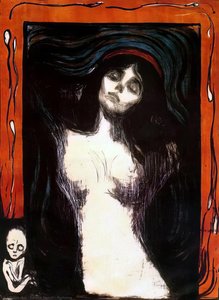
In the hauntingly evocative masterpiece “The Murderess,” completed in 1906, Edvard Munch invites the viewer into a psychological landscape where the boundaries between reality and nightmare begin to dissolve. This work stands as a profound pillar of the Symbolist movement, transcending mere portraiture to become an embodiment of existential dread. Rather than capturing a fleeting moment of light or a simple social gathering, Munch delves into the pervasive darkness that lurks beneath the surface of everyday existence. The painting serves as a visual distillation of his own deep-seated anxieties regarding mortality and the fragility of the human psyche, making it a captivating piece for those who appreciate art that challenges the soul.
The composition is masterfully arranged to evoke a sense of profound unease. At the heart of the scene sits a woman, her figure rendered in profile with a gaze deliberately averted from the observer. This subtle gesture creates an immediate sense of isolation and vulnerability, as if she is trapped within her own unspoken secrets. Flanking her are two other figures, positioned near chairs arranged for a social gathering, yet their presence feels heavy with silent complicity. The room itself, bathed in a jarring, sickly yellowish hue, creates a visual dissonance that mirrors the psychological turmoil of the subjects. A pristine white vase stands prominently near the center, its stark clarity contrasting sharply with the surrounding shadows, adding an unsettling layer of tension to the domestic setting.
Munch’s technical execution in “The Murderess” is a triumph of early Expressionism. Eschewing the delicate, light-filled brushwork of the Impressionists, Munch utilized a much more visceral approach. He employed thick impasto—a heavy, tactile application of paint—to create a surface that feels physically palpable and emotionally charged. The texture of the canvas itself seems to vibrate with the artist's agitation. His palette is intentionally discordant; bold, aggressive strokes of yellow dominate the background, clashing against muted browns and deep blacks. This use of color is not decorative but functional, designed to trigger a visceral emotional response in the viewer.
For collectors and interior designers, this painting offers a powerful focal point that commands attention through its sheer emotional weight. The distorted forms and heavy textures provide a sophisticated depth that elevates any space, turning a room into a gallery of contemplation. To possess a reproduction of such a work is to bring a piece of art history’s most profound psychological explorations into one's personal environment.
To understand the gravity of “The Murderess,” one must look to the intellectual ferment of early 20th-century Europe. The painting emerged during an era defined by the shattering of traditional certainties, most notably following Nietzsche’s provocative declaration that "God is dead." This cultural shift toward uncertainty and the questioning of established moral frameworks is etched into every stroke of Munch's brush. The artist himself was a man haunted by personal demons—the loss of his mother and sister to tuberculosis, and the shadow of mental illness within his family—all of which informed his preoccupation with themes of guilt, repression, and the darker aspects of human nature.
Every element in the room serves as a symbol for the unseen. The way the figures are positioned suggests a world of suppressed emotions and unspoken truths, where the domestic sphere is not a place of comfort, but a stage for psychological drama. For the discerning art lover, “The Murderess” is more than a painting; it is an invitation to explore the complexities of the human condition, making it an enduringly relevant and breathtaking addition to any serious collection.

1863 - 1944 , 瑞典

Explore the profound history and technical mastery of woodcut relief printing. From ancient origins to German Expressionism, discover how artists use the subtractive process to create iconic works. A definitive guide for art students, collectors, and historians.


第一时间获取最新的艺术新闻、独家优惠及装饰灵感。
向我们介绍您的项目需求,我们的艺术专家将为您提供 3 个个性化的艺术品推荐。
由我们的专家为您精选 3 款心仪之作 —— 完全免费!


 效果预览
效果预览
 购买手绘画作
 分享
分享 分享
分享
 详情
详情

 下载
下载
 相似作品
相似作品 X射线
X射线 幻灯片播放
幻灯片播放

 展开详情
展开详情









 玻璃选项仅适用于110厘米以下的尺寸。