x





























从与原作比例一致的预设尺寸中进行选择。

您可以输入自定义尺寸,以适配特定的画框或空间。如果您选择的尺寸与原图比例不符,我们将对作品进行裁剪,或通过镜像填充/纯色填充边缘的方式来扩展图像。在开始制作之前,我们会向您发送一份数字效果图供您确认。
请注意,屏幕上的预览并不能反映实际的裁剪或扩展效果。只有效果图才能准确展示最终的构图。
虽然我们提供定制尺寸,但为了保持原图比例,我们建议您从预设列表中选择尺寸。

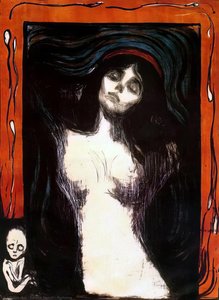
untitled (3881)
复制品尺寸
Edvard Munch's "Untitled (3881)," a haunting portrait emerging from the depths of his intensely personal and psychologically charged artistic vision, stands as a cornerstone of Expressionism. Painted in 1893, during a period of profound upheaval in his life and a burgeoning awareness of the anxieties permeating modern existence, this work transcends mere representation; it’s an embodiment of raw emotion, a visceral exploration of fear, isolation, and the unsettling fragility of the human psyche. The painting depicts three figures set within a dense, almost claustrophobic forest, yet its power lies not in detailed depiction but in the palpable sense of unease that radiates from every brushstroke.
At the heart of the composition stands a woman, her posture suggesting both vulnerability and a strange, unsettling dance. Her back is turned to the viewer, creating an immediate sense of distance and withholding – she’s not inviting connection but presenting herself as a figure caught in a private torment. Behind her, a man raises his hands in what could be interpreted as supplication or perhaps even a desperate plea for help. The third figure remains shrouded in shadow, adding to the overall atmosphere of mystery and ambiguity. Munch masterfully employs a limited palette dominated by deep blues, greens, and browns, colors traditionally associated with melancholy, darkness, and decay. These hues are not blended smoothly; instead, they’re applied in thick, agitated strokes that contribute significantly to the painting's turbulent emotional landscape.
Understanding “Untitled (3881)” requires delving into the context of Edvard Munch’s life. The late 19th century was a time of rapid social and technological change, marked by increasing urbanization, industrialization, and a growing sense of alienation. Simultaneously, philosophical currents like Nietzsche's proclamation of "God is dead" challenged traditional values and beliefs, leaving many grappling with existential questions. Munch himself experienced immense personal tragedy – the early deaths of his mother and sister from tuberculosis, coupled with his own struggles with mental illness—which profoundly shaped his artistic output. These experiences weren’t simply biographical details; they formed the bedrock of his symbolic language, fueling a relentless exploration of mortality, sickness, and the darker recesses of the human soul.
Munch's artistic journey began with Symbolism, influenced by artists like James McNeill Whistler, but he quickly developed a uniquely personal style. He experimented extensively with various media – oil paint, tempera, pastel, woodcut—each chosen to convey specific emotional nuances. “Untitled (3881)” exemplifies his mastery of color and texture. The brushstrokes are deliberately uneven and expressive, mirroring the turbulent emotions depicted within the scene. Notice how the figures seem almost to dissolve into the surrounding forest, blurring the boundaries between self and environment – a common motif in Munch’s work reflecting the feeling of being overwhelmed by one's surroundings.
The symbolism embedded within “Untitled (3881)” is layered and open to interpretation. The woman’s back turned can be seen as representing a rejection of connection, a withdrawal from the world. The man’s raised hands suggest a desperate need for solace or perhaps an acknowledgment of shared suffering. The forest itself acts as a metaphor for the unconscious mind—a dark, impenetrable space filled with hidden dangers and unresolved anxieties. Some art historians have linked the painting to Munch's own experiences with mental illness, suggesting that it represents his struggle with inner demons.
The most striking element of the work is undoubtedly the central figure’s posture – a strange, almost ritualistic dance that evokes both fascination and unease. This gesture has been interpreted as representing a confrontation with mortality, a surrender to the forces of fate, or even a descent into madness. The painting's emotional impact is undeniably powerful, triggering feelings of anxiety, dread, and profound loneliness in the viewer. It’s not a comfortable image; it demands engagement and invites contemplation on the darker aspects of human existence.
“Untitled (3881)” remains one of Edvard Munch's most enduringly captivating works, resonating with audiences across generations. Most-Famous-Paintings offers meticulously crafted reproductions that faithfully capture the painting’s original intensity and emotional depth. These high-quality prints are available in a range of sizes and materials, allowing you to bring this iconic masterpiece into your home or office. Whether you're an art enthusiast, a collector seeking a significant addition to your collection, or simply someone drawn to evocative imagery, “Untitled (3881)” offers a profound glimpse into the mind of one of history’s most influential artists.
Explore more about this artwork and other masterpieces by Edvard Munch on our website: https://www.Most-Famous-Paintings.com/en/art/edvard-munch-untitled-3881-9GEU39-en/
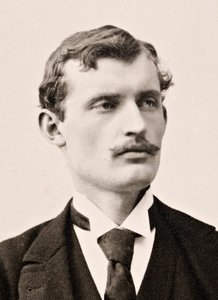
1863 - 1944 , 瑞典

Explore the profound history of Expressionism. From Edvard Munch to Jackson Pollock, discover how artists used distortion and color to convey raw emotion. A definitive guide for art lovers seeking deep historical context and mastery in fine art reproductions.
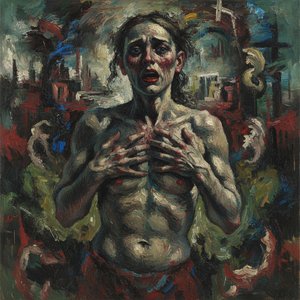
Explore the profound depth of Figurative Expressionism. From Edvard Munch to William H. Johnson, learn how masters use the human form to capture raw emotion through color and distortion in this expert art history guide.


第一时间获取最新的艺术新闻、独家优惠及装饰灵感。
向我们介绍您的项目需求,我们的艺术专家将为您提供 3 个个性化的艺术品推荐。
由我们的专家为您精选 3 款心仪之作 —— 完全免费!


 效果预览
效果预览
 购买手绘画作
 分享
分享 分享
分享
 详情
详情

 下载
下载
 相似作品
相似作品 X射线
X射线 幻灯片播放
幻灯片播放

 展开详情
展开详情









 玻璃选项仅适用于110厘米以下的尺寸。