El Greco’s Saint Peter and Paul: A Synthesis of Faith and Vision
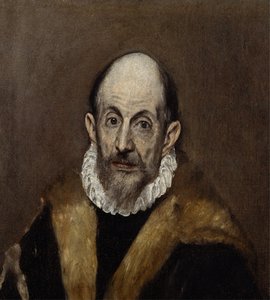
Doménikos Theotokópoulos, universally known as El Greco – “the Greek” – stands apart from his contemporaries not merely as a painter but as an artist who wrestled with the very essence of spirituality. Born in 1541 on Crete, then under Venetian dominion, his artistic odyssey traversed Venice and Rome before anchoring him firmly in Toledo, Spain—a city steeped in religious fervor that profoundly shaped his oeuvre. El Greco’s legacy transcends stylistic categorization; he anticipated the emotive power of Expressionism and foreshadowed the fractured aesthetic of Cubism decades ahead of their time, establishing himself as a visionary whose influence reverberates through art history.
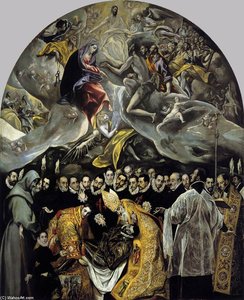
His formative years within the Byzantine tradition instilled in him an unwavering dedication to meticulous detail and a profound grasp of religious iconography—a foundation that wouldn’t constrain his exploration of new artistic horizons. He embraced experimentation with bold color palettes and elongated figures, rejecting academic conventions in favor of conveying inner experience rather than mere representation. This stylistic rebellion wasn't born from defiance but from conviction: El Greco believed that art could illuminate the divine realm, striving to capture not just what was seen but what was felt—a pursuit reflected in every brushstroke.
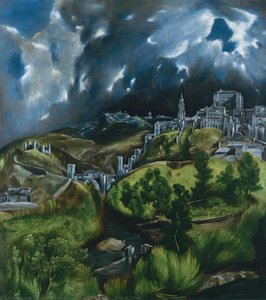
- Style: El Greco’s distinctive style is characterized by elongated figures, dramatic poses, and vibrant hues—a departure from the naturalistic tendencies prevalent during his time. He eschewed perspective, prioritizing emotional impact over accurate depiction of space.
- Technique: Primarily employing oil paint on canvas, El Greco utilized a glazing technique—applying thin layers of translucent pigment upon opaque undercoats—to achieve luminous effects and imbue his paintings with an ethereal quality.
The historical context surrounding El Greco’s work is crucial to understanding its significance. Toledo served as Spain's ecclesiastical capital during the Counter-Reformation, a period marked by intense religious zealotry and papal decrees aimed at combating Protestantism. This atmosphere fueled El Greco’s artistic impulse—he sought to express the fervor of faith through visual language, mirroring the spiritual dynamism of his surroundings. His depictions of saints and biblical figures weren't simply illustrations; they were conduits for conveying theological concepts and evoking profound emotional responses in viewers.
Symbolism: The elongated figures embody spiritual transcendence—representing humanity striving to ascend beyond earthly limitations toward divine grace. The radiant halos surrounding the saints symbolize holiness and illumination, underscoring their connection to God’s light. Furthermore, the dramatic poses convey a sense of urgency and pathos—reflecting the struggles inherent in the pursuit of faith.
Emotional Impact: El Greco's paintings elicit a visceral response from audiences—inspiring awe and contemplation as viewers confront representations of sacred figures imbued with palpable emotion. The luminous colors and expressive gestures communicate spiritual fervor, prompting introspection and fostering a connection to the divine—a testament to El Greco’s unparalleled ability to translate inner experience into visual form. His Saint Peter and Paul exemplifies this enduring legacy—a masterpiece that continues to captivate art lovers and collectors alike.