x





























从与原作比例一致的预设尺寸中进行选择。

您可以输入自定义尺寸,以适配特定的画框或空间。如果所选尺寸与原图比例不符,我们将通过裁剪作品或添加手绘元素来扩展画面。数字样稿将在制作开始前发送给您确认。
请注意,屏幕预览无法准确反映实际的裁剪或扩展效果,只有样稿才能真实呈现最终的构图。
虽然我们提供定制尺寸服务,但为了保留原作比例,建议您从预设列表中选择尺寸。

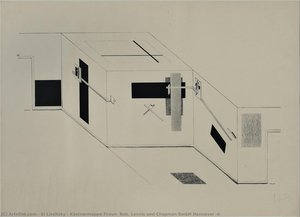
Four (arithmetic) actions
复制品尺寸
El Lissitzky's "Four (Arithmetic) Actions," painted in 1928, is more than just a depiction of four stacked figures; it’s a potent distillation of the core tenets of Russian Constructivism. This striking black-and-white image, born from Lissitzky’s revolutionary vision, embodies his belief that art could be a tool for social and intellectual transformation – a concept deeply rooted in the burgeoning modernist movement of the time. The painting's stark simplicity belies its complex engagement with mathematical principles, presenting them not as abstract concepts but as tangible forms demanding rigorous investigation.
Created during a period of intense artistic experimentation following the Russian Revolution, “Four (Arithmetic) Actions)” exemplifies Constructivism’s rejection of traditional representational art. Lissitzky, along with other key figures like Vladimir Tatlin, sought to build a new visual language based on geometric abstraction and industrial forms. The painting's composition – the deliberate layering of the red figures – is a direct manifestation of this approach. Each figure isn't merely a representation of an action; it’s a carefully constructed element contributing to a larger, dynamic whole. The use of bold, primary colors—a conscious choice reflecting the era’s embrace of industrial materials and machine aesthetics—further emphasizes this geometric sensibility.
The numerical markings associated with each figure are crucial to understanding the artwork's deeper meaning. These aren’t arbitrary additions; they represent fundamental mathematical operations – addition, subtraction, multiplication, and division. Lissitzky was interested in exploring how visual forms could embody abstract concepts, transforming mathematics from a theoretical discipline into an accessible and engaging aesthetic experience. The larger figure, visually dominant, can be interpreted as representing the culmination of these actions—the result or outcome of the mathematical process. This layering creates a sense of progression and hierarchy, mirroring the sequential nature of calculation itself.
"Four (Arithmetic) Actions)" was created in 1928, a pivotal year for Lissitzky’s career. It reflects his growing interest in exploring the relationship between art, architecture, and technology – themes that would become central to his later work. The painting's influence extends far beyond its immediate historical context. Lissitzky’s pioneering use of geometric abstraction paved the way for subsequent developments in modern art, including Suprematism and De Stijl. Today, “Four (Arithmetic) Actions)” remains a powerful example of Constructivism’s ambition – a testament to the idea that art can be both intellectually stimulating and profoundly beautiful.

1890 - 1941 , 俄罗斯

Explore the opulent world of Erté and Art Deco. Discover how Romain de Tirtoff defined an era through geometric elegance, fashion illustration, and theatrical design. A deep dive into the history of 20th-century glamour for art lovers and collectors.
Explore the sophisticated world of Art Deco. Discover the history, geometric precision, and enduring glamour of this iconic 20th-century movement through an expert art-historical lens.

Explore the radical world of Constructivism. Discover how pioneers like Tatlin and Rodchenko used geometric abstraction to redefine modern art through industrial form and social purpose. A deep dive into the Russian avant-garde for students and collectors alike.
Explore the dramatic transition from High Renaissance harmony to Mannerist tension. Discover how masters like El Greco redefined art through distortion and spiritual intensity. An expert guide for art enthusiasts seeking deep historical context and museum-quality inspiration.


第一时间获取最新的艺术新闻、独家优惠及装饰灵感。
向我们介绍您的项目需求,我们的艺术专家将为您提供 3 个个性化的艺术品推荐。
由我们的专家为您精选 3 款心仪之作 —— 完全免费!


 效果预览
效果预览
 购买印刷品
购买印刷品 分享
分享 分享
分享
 详情
详情

 下载
下载
 相似作品
相似作品 X射线
X射线 幻灯片播放
幻灯片播放

 展开详情
展开详情









 玻璃选项仅适用于110厘米以下的尺寸。