


x





























从与原作比例一致的预设尺寸中进行选择。

您可以输入自定义尺寸,以适配特定的画框或空间。如果您选择的尺寸与原图比例不符,我们将对作品进行裁剪,或通过镜像填充/纯色填充边缘的方式来扩展图像。在开始制作之前,我们会向您发送一份数字效果图供您确认。
请注意,屏幕上的预览并不能反映实际的裁剪或扩展效果。只有效果图才能准确展示最终的构图。
虽然我们提供定制尺寸,但为了保持原图比例,我们建议您从预设列表中选择尺寸。

Still Life with key
复制品尺寸
Fernand Léger's Still Life with Key is more than just a depiction of musical instruments; it’s a profound meditation on the burgeoning relationship between humanity and machinery, rendered in his signature “Tubism” style. Painted by this pivotal figure of the early 20th century, the artwork captures a moment of quiet contemplation amidst a carefully orchestrated tableau of objects – a violin, cello, piano, books, and a bowl – each imbued with a sense of deliberate arrangement that speaks to Léger’s fascination with geometric forms and industrial aesthetics. The painting's power lies not just in its subject matter but in the way Léger translates observed reality into an intensely abstract language, anticipating the radical shifts occurring within the art world at the time.
Created between 1920 and 1930, Still Life with Key firmly establishes Léger’s groundbreaking approach known as “Tubism.” Emerging from his earlier work, particularly the "Dynamic Cubes," Tubism sought to represent objects not as single, unified forms but as a series of interlocking geometric volumes – cylinders, cones, and cubes – reflecting the fragmented perspectives offered by modern urban life and the mechanized world. Léger was deeply influenced by the industrial landscape of Paris, witnessing firsthand the rise of factories, trains, and other machines that were reshaping society. This fascination is vividly expressed in the painting’s fractured representation of the instruments, suggesting their construction as a complex assembly of parts rather than a seamless whole.
Beyond its purely formal concerns, Still Life with Key carries significant symbolic weight. The musical instruments themselves – violin, cello, and piano – represent the enduring power of human creativity and expression in an increasingly mechanized world. Their placement within the composition is deliberate, creating a visual dialogue between organic forms (the instruments) and geometric ones (Léger’s fragmented representation). The books scattered throughout the scene could symbolize knowledge, tradition, or perhaps a yearning for stability amidst the rapid changes brought about by industrialization. Even the key, subtly integrated into the artwork, hints at unlocking new possibilities, accessing hidden structures, or controlling the forces of modernity.
Léger’s technique is characterized by bold brushstrokes, a vibrant palette dominated by blues, greens, and ochres, and a meticulous attention to detail within his abstracted forms. He employed a layering technique, building up the composition through multiple applications of paint, creating a textured surface that adds depth and dynamism to the work. The overall effect is one of controlled chaos – a visual representation of the energy and movement inherent in the machine age. Still Life with Key evokes a sense of both fascination and unease, inviting viewers to contemplate the complex relationship between humanity and technology, a theme that remains remarkably relevant today. This reproduction offers an exceptional opportunity to experience Léger’s revolutionary vision firsthand.
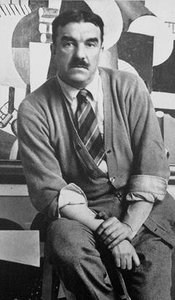
1881 - 1955 , 法国
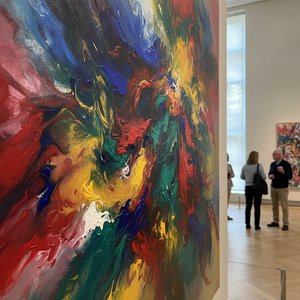
Explore the profound emotional depth of Lyrical Abstraction. Discover how masters like Raymond Parker used color and form to bridge Impressionism and Abstract Expressionism. Learn about this pivotal movement through our expert-led art history guide.

Explore the profound emotional depth of Color Field painting. Discover the history of mid-century abstraction, from Rothko to Newman, and learn how pure color transforms the viewer's experience through our expert art history guide.


第一时间获取最新的艺术新闻、独家优惠及装饰灵感。
向我们介绍您的项目需求,我们的艺术专家将为您提供 3 个个性化的艺术品推荐。
由我们的专家为您精选 3 款心仪之作 —— 完全免费!


 效果预览
效果预览
 购买手绘画作
 分享
分享 分享
分享
 详情
详情

 下载
下载
 相似作品
相似作品 X射线
X射线 幻灯片播放
幻灯片播放

 展开详情
展开详情









 玻璃选项仅适用于110厘米以下的尺寸。


