


x





























从与原作比例一致的预设尺寸中进行选择。

您可以输入自定义尺寸,以适配特定的画框或空间。如果您选择的尺寸与原图比例不符,我们将对作品进行裁剪,或通过镜像填充/纯色填充边缘的方式来扩展图像。在开始制作之前,我们会向您发送一份数字效果图供您确认。
请注意,屏幕上的预览并不能反映实际的裁剪或扩展效果。只有效果图才能准确展示最终的构图。
虽然我们提供定制尺寸,但为了保持原图比例,我们建议您从预设列表中选择尺寸。

Three figures and three portraits Study
复制品尺寸
Fernand Léger’s “Three Figures and Three Portraits Study” isn't merely a painting; it’s a manifesto of artistic engagement with the burgeoning industrial landscape of the early 20th century. Born Joseph Fernand Henri Léger in Argentan, Normandy, in 1881, Léger possessed an innate fascination for form—a preoccupation that would define his entire oeuvre and propel him to become one of the most influential artists of his generation.
Unlike many artists who sought refuge from realism within pure abstraction, Léger championed a method he termed “constructive painting.” He believed in retaining visual references to the tangible world while simultaneously stripping away superfluous detail. This approach is brilliantly exemplified in "Three Figures and Three Portraits Study," where six individuals are depicted amidst scattered bottles and bowls—objects that serve as both compositional anchors and symbolic representations of everyday life.
Léger’s distinctive style is characterized by bold geometric shapes – cubes, cylinders, spheres – arranged with meticulous precision. However, these forms aren't presented in a sterile manner; they are overlaid with textured surfaces achieved through a technique known as “impasto.” Thick layers of paint create palpable physicality, conveying the energy and dynamism of industrial processes while simultaneously hinting at underlying organic rhythms.
"Three Figures and Three Portraits Study" emerged during a period of profound societal transformation—the dawn of the machine age. Léger witnessed firsthand the rapid urbanization and mechanization sweeping across Europe, fueled by advancements in engineering and manufacturing. His artwork reflects this zeitgeist, capturing not only the visual aesthetic but also the psychological impact of confronting the relentless march of progress.
The bottles scattered throughout the composition aren’t simply decorative elements; they symbolize containment—the bottled-up anxieties and aspirations of humanity amidst an increasingly complex world. Similarly, the figures themselves embody a tension between human presence and mechanical influence. Léger deliberately disrupts traditional notions of portraiture, presenting faces as fragmented geometric shapes, suggesting that identity itself is subject to constant reconfiguration.
Despite its abstract style, “Three Figures and Three Portraits Study” possesses a remarkable emotional resonance. The painting exudes a subtle vibrancy—a quiet assertion of vitality—that speaks to Léger’s belief in the transformative power of art. It invites viewers to contemplate not only the visual spectacle but also the deeper questions about human experience within the context of an evolving world.

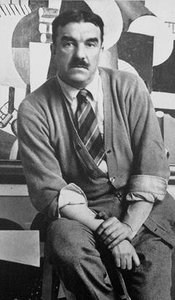
1881 - 1955 , 法国

Explore the profound impact of Minimalism and Geometric Abstraction. From Mondrian to Malevich, discover how stripping art to its essential forms revolutionized modern aesthetics through our expert-led historical guide.

Master the complexities of Geometric Abstraction. Our expert guide explores the evolution from Cubist deconstruction to Bauhaus precision, decoding the power of shape and form. Perfect for art students seeking deep historical context and academic insight into modern masterpieces.


第一时间获取最新的艺术新闻、独家优惠及装饰灵感。
向我们介绍您的项目需求,我们的艺术专家将为您提供 3 个个性化的艺术品推荐。
由我们的专家为您精选 3 款心仪之作 —— 完全免费!


 效果预览
效果预览
 购买手绘画作
 分享
分享 分享
分享
 详情
详情

 下载
下载
 相似作品
相似作品 X射线
X射线 幻灯片播放
幻灯片播放

 展开详情
展开详情









 玻璃选项仅适用于110厘米以下的尺寸。


