x
从与原作比例一致的预设尺寸中进行选择。

您可以输入自定义尺寸,以适配特定的画框或空间。如果所选尺寸与原图比例不符,我们将通过裁剪作品或添加手绘元素来扩展画面。数字样稿将在制作开始前发送给您确认。
请注意,屏幕预览无法准确反映实际的裁剪或扩展效果,只有样稿才能真实呈现最终的构图。
虽然我们提供定制尺寸服务,但为了保留原作比例,建议您从预设列表中选择尺寸。

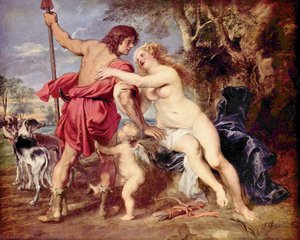
Venus and Adonis
复制品尺寸
Filippo Lauri (August 25, 1623 – December 12, 1694) stands as a prominent figure within the Roman Baroque artistic landscape. Though largely overshadowed by contemporaries like Caravaggio and Bernini, Lauri’s distinctive style—characterized by luminous color palettes and masterful depictions of serene landscapes interwoven with mythological narratives—earned him recognition and enduring admiration.
Born in Rome to Balthasar Lauwers, a Flemish landscape painter who had emigrated from Antwerp under the patronage of Paul Bril, Lauri’s artistic lineage instilled in him an early appreciation for atmospheric perspective and tonal modulation. His formative years were spent studying under his father and subsequently with Francesco Lauri, whose own brother, Andrea Sacchi—a celebrated artist himself—served as a crucial mentor.
Joining the Accademia di San Luca in 1654 marked a pivotal moment in Lauri’s career. This prestigious institution fostered intellectual discourse and artistic experimentation, propelling him to positions of leadership where he championed innovation and oversaw the training of future generations of painters. Notably, Lauri collaborated closely with Filippo Gagliardi on “Celebrations for Christine of Sweden at Palazzo Barberini,” a monumental canvas that vividly captures the grandeur and theatricality of Baroque court celebrations.
Lauri’s artistic output spanned numerous genres, including religious paintings—particularly depictions of saints and biblical scenes—and landscapes imbued with classical ideals. He possessed an exceptional talent for capturing the subtle nuances of light and shadow, a technique honed through his collaborations with Claude Lorraine, whose influence is evident in Lauri's tranquil compositions.
His prolific output included numerous engravings, demonstrating his understanding of printmaking techniques and expanding the reach of his artistic vision. Lauri’s legacy resides not only in his individual masterpieces but also in his role as a catalyst for artistic development within Rome—a testament to his enduring contribution to the Baroque aesthetic.
Lauri’s style distinguishes itself through its emphasis on luminous color palettes—particularly blues and golds—and a meticulous attention to detail in landscape compositions. He skillfully employed atmospheric perspective, creating depth and realism that mirrored the artistic conventions of his time. His works embody the ideals of Renaissance Italy blended with Baroque dynamism.
Filippo Lauri’s contribution to Roman art history is significant as he represents a crucial link between Flemish landscape painting traditions and the burgeoning Baroque aesthetic in Rome. He upheld the Accademia di San Luca's role as a center for artistic excellence, shaping the future of Roman painting.

1623 - 1694 , Italy

Explore the profound elegance of Baroque Classicism. Discover how 17th-century masters synthesized dramatic emotion with classical order through the lens of the Counter-Reformation and the works of legends like Carlo Maratta and Andrea Sacchi.

Explore the dramatic power of Baroque art through an expert guide to light, shadow, and emotion. Discover how the Counter-Reformation shaped 17th-century masterpieces and learn about the profound techniques used by the Old Masters to inspire awe.

Explore the dramatic world of Baroque portraiture. Discover how masters used chiaroscuro and light to evoke profound emotion during the Counter-Reformation. A definitive guide for art enthusiasts seeking to understand the power of 17th-century masterpieces.

Explore the dramatic evolution from Mannerist distortion to Baroque grandeur. Discover how light, shadow, and emotion redefined art history through a masterclass in technical mastery and religious fervor.

Explore the dramatic world of Italian Baroque art. Discover how masters like Caravaggio used chiaroscuro and tenebrism to revolutionize painting through light, shadow, and profound realism. A definitive guide for history lovers and art collectors.


第一时间获取最新的艺术新闻、独家优惠及装饰灵感。
向我们介绍您的项目需求,我们的艺术专家将为您提供 3 个个性化的艺术品推荐。
由我们的专家为您精选 3 款心仪之作 —— 完全免费!


 效果预览
效果预览
 购买印刷品
购买印刷品 分享
分享 分享
分享
 详情
详情

 下载
下载
 相似作品
相似作品 X射线
X射线 幻灯片播放
幻灯片播放


 展开详情
展开详情






































 玻璃选项仅适用于110厘米以下的尺寸。