


x
从与原作比例一致的预设尺寸中进行选择。

您可以输入自定义尺寸,以适配特定的画框或空间。如果您选择的尺寸与原图比例不符,我们将对作品进行裁剪,或通过镜像填充/纯色填充边缘的方式来扩展图像。在开始制作之前,我们会向您发送一份数字效果图供您确认。
请注意,屏幕上的预览并不能反映实际的裁剪或扩展效果。只有效果图才能准确展示最终的构图。
虽然我们提供定制尺寸,但为了保持原图比例,我们建议您从预设列表中选择尺寸。

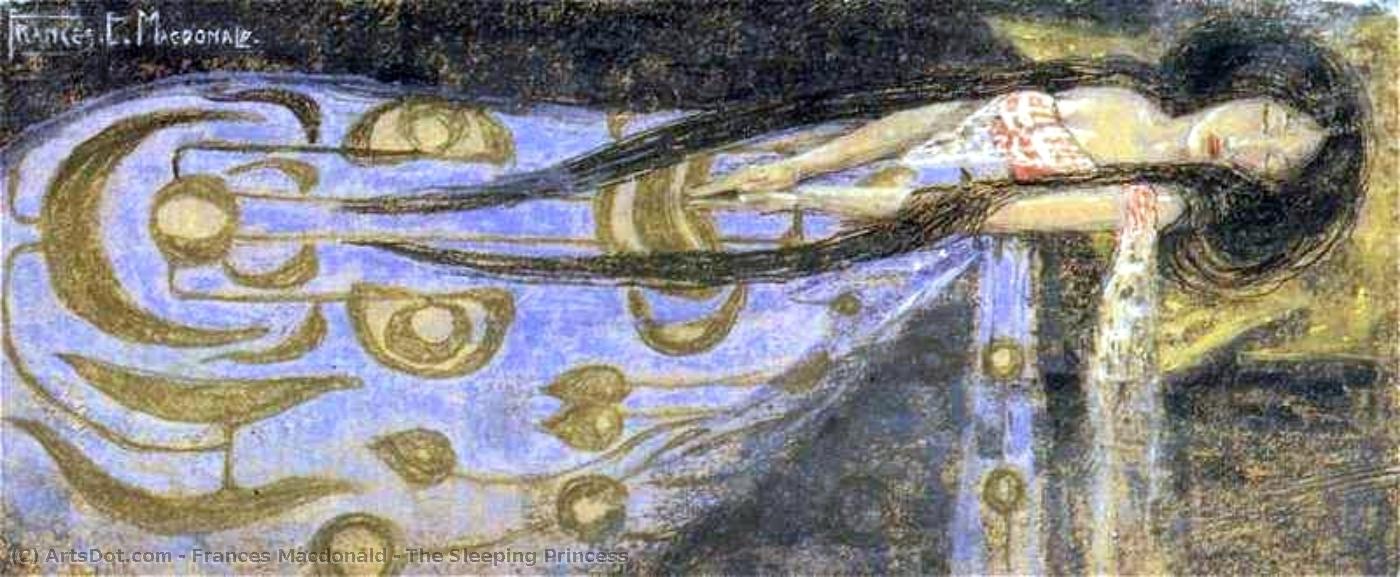
The Sleeping Princess
复制品尺寸

The story of Frances Macdonald is one of profound creative synergy and the ethereal beauty of the Glasgow Style. Born in 1873 in the industrial landscape of Wolverhampton, England, her life took a transformative turn when she moved to Glasgow in 1890. It was within the hallowed halls of the Glasgow School of Art that her destiny intertwined with a group of artists who would redefine British Art Nouveau. Alongside her sister, Margaret Macdonald Mackintosh, and the architects Charles Rennie Mackintosh and Herbert Macnair, Frances became a vital pillar of "The Four." This legendary quartet shared a singular aesthetic vision, blending the organic fluidity of nature with a haunting, symbolic mysticism that would leave an indelible mark on the dawn of Modernism.
Her artistic development was never a solitary pursuit but rather a beautiful, collaborative dance. In the mid-1990s, the Macdonald sisters established their own independent studio, a sanctuary where they could experiment with diverse media. Frances’s hand was visible across a breathtaking spectrum of crafts, from delicate textile designs and intricate embroidery to evocative metalwork panels. Her work often breathed with the spirit of Celtic imagery and folklore, utilizing elongated, stylized forms that seemed to float between reality and dreamscape. This period of intense creativity saw her influence spread far beyond Scotland, as her collaborative efforts reached prestigious exhibitions in London, Liverpool, Venice, and even Vienna.
Beyond the structural elegance of design, Frances Macdonald possessed a rare ability to capture the ephemeral essence of emotion through painting. Her watercolor works, such as the poignant “Ophelia” and “The Sleeping Princess,” serve as windows into a soul deeply moved by the symbolic movements of her era. Drawing inspiration from the visionary intensity of William Blake and the decadent, fine-lined precision of Aubrey Beardsley, she mastered the art of atmosphere. Her paintings were not merely depictions of subjects but explorations of mood, where soft washes of color and delicate linework evoked a sense of spiritual resonance and quiet melancholy.
The significance of her contribution lies in how she bridged the gap between fine art and decorative craft. In the eyes of Frances, there was no hierarchy between a beautifully rendered watercolor and a meticulously designed book illustration or metalwork piece; both were vessels for the same symbolic truth. This holistic approach to design—where every element of an interior or an object could be infused with meaning—became the hallmark of the Glasgow Style. Even as her personal circumstances shifted following her marriage to Herbert Macnair and their move to Liverpool, her commitment to this integrated aesthetic remained a testament to her artistic integrity.
Though the later years of her life were marked by the decline of the great Glasgow studios and personal hardships, the historical significance of Frances Macdonald remains undiminished. She was a pioneer for women in the arts, proving that female artists could be architects of a new visual language rather than mere observers of it. Her work helped to establish a uniquely Scottish contribution to the international Art Nouveau movement, characterized by a restraint and spiritual depth that set it apart from its more flamboyant continental counterparts.
Today, when we look upon the flowing lines and mystical motifs of the Glasgow Style, we see the enduring spirit of Frances Macdonald. Her legacy is found in:

1873 - 1921 , United Kingdom


第一时间获取最新的艺术新闻、独家优惠及装饰灵感。
向我们介绍您的项目需求,我们的艺术专家将为您提供 3 个个性化的艺术品推荐。
由我们的专家为您精选 3 款心仪之作 —— 完全免费!


 效果预览
效果预览
 切换至手工绘画版
 分享
分享 分享
分享
 详情
详情

 下载
下载
 相似作品
相似作品 X射线
X射线 幻灯片播放
幻灯片播放

 展开详情
展开详情






































 玻璃选项仅适用于110厘米以下的尺寸。


