x
 Oil On CanvasWallArtExpressionist Abstraction
 1950
1950 198.0 x 132.0 cm
 利兹美术馆
利兹美术馆




























从与原作比例一致的预设尺寸中进行选择。

您可以输入自定义尺寸,以适配特定的画框或空间。如果您选择的尺寸与原图比例不符,我们将对作品进行裁剪,或通过镜像填充/纯色填充边缘的方式来扩展图像。在开始制作之前,我们会向您发送一份数字效果图供您确认。
请注意,屏幕上的预览并不能反映实际的裁剪或扩展效果。只有效果图才能准确展示最终的构图。
虽然我们提供定制尺寸,但为了保持原图比例,我们建议您从预设列表中选择尺寸。

Painting
复制品尺寸
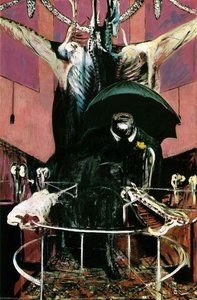
Francis Bacon's "Painting," created in 1950 and currently residing at the Leeds Art Gallery, isn’t merely a depiction of a figure; it’s an excavation of raw emotion, a primal scream rendered in oil on canvas. The image presents a naked man, caught in a moment of intense scrutiny, positioned before what appears to be a weathered fence or gate – a barrier both physical and psychological. His posture, subtly turned towards the viewer over his shoulder, suggests a confrontation with something unseen, something profoundly unsettling lurking just beyond our perception. This isn’t a portrait intended for aesthetic pleasure; it's an exploration of anxiety, isolation, and the inescapable awareness of mortality—themes that would come to define Bacon’s entire oeuvre.
Bacon’s style in this period is powerfully characterized by distortion and fragmentation. The figure isn't rendered with anatomical precision; instead, it’s a grotesque amalgamation of shapes—elongated limbs, bulbous heads, and contorted features – all contributing to an overwhelming sense of unease. This deliberate departure from realism serves not to misrepresent the subject but to amplify its emotional state. The brushstrokes themselves are frenetic and agitated, applied with a thick impasto that adds texture and physicality to the canvas. Notice how the red and blue pigments dominate, creating a jarring yet compelling visual rhythm. Bacon’s technique wasn't about replicating reality; it was about channeling an internal experience onto the surface of the painting.
To understand “Painting,” we must consider the turbulent backdrop of post-war Britain. Bacon’s early life, marked by instability and a strained relationship with his father, undoubtedly informed his artistic vision. The shadow of World War II loomed large, leaving a residue of trauma and uncertainty in its wake. Bacon was deeply influenced by Surrealism, particularly the work of artists like Max Ernst and Salvador Dalí, who explored subconscious anxieties through dreamlike imagery and distorted forms. However, Bacon’s work transcends mere imitation; he distilled these influences into something uniquely his own—a brutally honest portrayal of the human condition.
The nakedness of the figure is a crucial element. It strips away any pretense, exposing vulnerability and primal instinct. He’s not a heroic or idealized subject; he's simply human, confronting an unknown horror. The act of looking over his shoulder suggests a recognition of something sinister—a fear that has taken root within him. The fence or gate itself can be interpreted as a barrier against this dread, yet it offers no protection. It’s a futile attempt to contain the overwhelming anxieties of existence. Bacon frequently used such imagery – figures trapped, isolated, and confronted with forces beyond their control – reflecting a broader sense of existential unease prevalent in the mid-20th century.
Most-Famous-Paintings is proud to offer high-quality reproductions of Francis Bacon’s “Painting,” allowing you to bring this powerful and emotionally resonant artwork into your home or office. Our hand-painted reproductions capture the essence of Bacon's style with meticulous detail, ensuring an authentic representation of this seminal work of art.

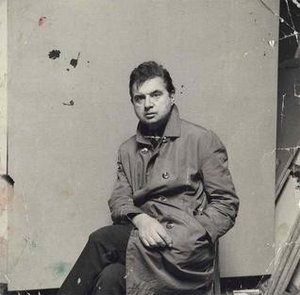
1909 - 1992 , 爱尔兰

Explore the profound emotional depth of Expressionist portraiture. From Edvard Munch to Francis Bacon, discover how masters used distortion and color to reveal inner truths. Learn about this pivotal movement and find museum-quality oil reproductions for your collection.


第一时间获取最新的艺术新闻、独家优惠及装饰灵感。
向我们介绍您的项目需求,我们的艺术专家将为您提供 3 个个性化的艺术品推荐。
由我们的专家为您精选 3 款心仪之作 —— 完全免费!


 效果预览
效果预览
 购买手绘画作
 分享
分享 分享
分享
 详情
详情

 下载
下载
 相似作品
相似作品 X射线
X射线 幻灯片播放
幻灯片播放 展开详情
展开详情









 玻璃选项仅适用于110厘米以下的尺寸。