


x





























从与原作比例一致的预设尺寸中进行选择。

您可以输入自定义尺寸,以适配特定的画框或空间。如果所选尺寸与原图比例不符,我们将通过裁剪作品或添加手绘元素来扩展画面。数字样稿将在制作开始前发送给您确认。
请注意,屏幕预览无法准确反映实际的裁剪或扩展效果,只有样稿才能真实呈现最终的构图。
虽然我们提供定制尺寸服务,但为了保留原作比例,建议您从预设列表中选择尺寸。

Islip Chapel
复制品尺寸

The history of nineteenth-century art is often told through the sweeping gestures of Romanticism, yet there exists a parallel narrative found in the meticulous, quiet brilliance of architectural draughtsmanship. Frederick Mackenzie stands as a profound figure within this tradition, embodying the Victorian era's deep reverence for structure, detail, and historical continuity. Born in Montreal in 1841, Mackenzie’s life was a tapestry woven from the threads of North American heritage and British artistic refinement. As the son of John Gordon Mackenzie, a prosperous dry goods merchant, his upbringing provided the stability and intellectual foundation necessary to pursue a career that would bridge the gap between technical precision and aesthetic grace.
While his early life was rooted in the burgeoning landscape of Canada, his artistic soul was deeply connected to the established traditions of the United Kingdom. This duality allowed him to approach his subjects with both a fresh perspective and a profound respect for classical forms. His education at McGill University provided him with a disciplined mind, a trait that would later manifest in the unwavering accuracy of his watercolour compositions. In an era where the world was rapidly changing due to industrialization, Mackenzie’s work served as a vital record of permanence, capturing the architectural grandeur and topographical truth of a landscape in transition.
To observe a Mackenzie watercolour is to enter a world where light and shadow perform a delicate dance upon stone and mortar. His technique was characterized by an extraordinary command over the medium of watercolour, using pigments not merely for color, but to evoke the very texture of the surfaces he depicted. He possessed a rare ability to translate the cold, hard reality of masonry into something breathing and atmospheric. Through subtle washes and precise linework, he could convey the weathered patina of ancient walls or the sharp, clean edges of contemporary Victorian design.
His artistic development was heavily informed by the architectural principles of his time, drawing inspiration from the monumental styles championed by figures such as John Nash and Auguste Pugin. This influence is evident in the way he approached composition; his works were never merely sketches, but rather thoughtful explorations of space and proportion. He understood that architecture is the skeleton of history, and through his drawings, he sought to give that skeleton a soul. His mastery lay in the balance between the scientific accuracy required for architectural draughtsmanship and the emotive power of fine art, ensuring that every structure he rendered possessed both structural integrity and poetic resonance.
The significance of Frederick Mackenzie extends beyond the mere documentation of buildings; his work represents a cultural bridge between the Old World and the New. In the context of the nineteenth century, his ability to capture the essence of architectural beauty helped foster a sense of identity and continuity during a period of immense social upheaval. His contributions to the visual record of his era remain invaluable to historians and art enthusiasts alike, offering a window into the aesthetic values of the Victorian age.
Though his life was relatively brief, ending in 1889, the impact of his meticulous vision remains etched in the annals of watercolour history. His legacy is defined by:
Today, as we look back upon his oeuvre, we see more than just drawings of buildings; we see the heartbeat of an era captured through the eyes of a man who found divinity in the details.

1841 - 1889 , Canada

探索定制室内壁画的力量,从文艺复兴艺术史到现代空间设计。Most-Famous-Paintings提供专业艺术家手绘、个性化定制服务,打造独一无二的艺术品,提升家居品味与文化价值。

Discover how custom paintings transform interior spaces. Expert art curation & site-specific commissions for luxury homes & commercial projects. Elevate your design with Most-Famous-Paintings.

Elevate your interior design with bespoke art! Discover custom canvas sizes & museum-quality reproductions tailored to your vision. Expert consultations, original commissions & professional installation. Transform your space today.
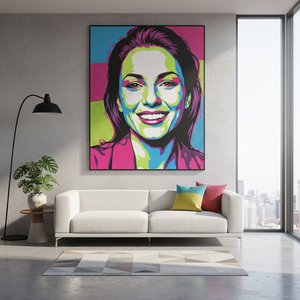
Most-Famous-Paintings将您的珍贵照片转化为独一无二的波普艺术定制油画。匠心手绘,品质保证,打造专属家庭艺术遗产。专业艺术家团队,全程透明流程,投资品味生活!立即咨询。

Explore the life & work of Henry William Pickersgill, a leading Victorian portrait artist. Discover his narrative style, realistic depictions of society, and lasting influence on British art history. Fine art reproductions available at Most-Famous-Paintings.


第一时间获取最新的艺术新闻、独家优惠及装饰灵感。
向我们介绍您的项目需求,我们的艺术专家将为您提供 3 个个性化的艺术品推荐。
由我们的专家为您精选 3 款心仪之作 —— 完全免费!


 效果预览
效果预览
 切换至印刷版
 分享
分享 分享
分享
 详情
详情

 下载
下载
 相似作品
相似作品 X射线
X射线 幻灯片播放
幻灯片播放
 展开详情
展开详情









 玻璃选项仅适用于110厘米以下的尺寸。


