x
从与原作比例一致的预设尺寸中进行选择。

您可以输入自定义尺寸,以适配特定的画框或空间。如果所选尺寸与原图比例不符,我们将通过裁剪作品或添加手绘元素来扩展画面。数字样稿将在制作开始前发送给您确认。
请注意,屏幕预览无法准确反映实际的裁剪或扩展效果,只有样稿才能真实呈现最终的构图。
虽然我们提供定制尺寸服务,但为了保留原作比例,建议您从预设列表中选择尺寸。

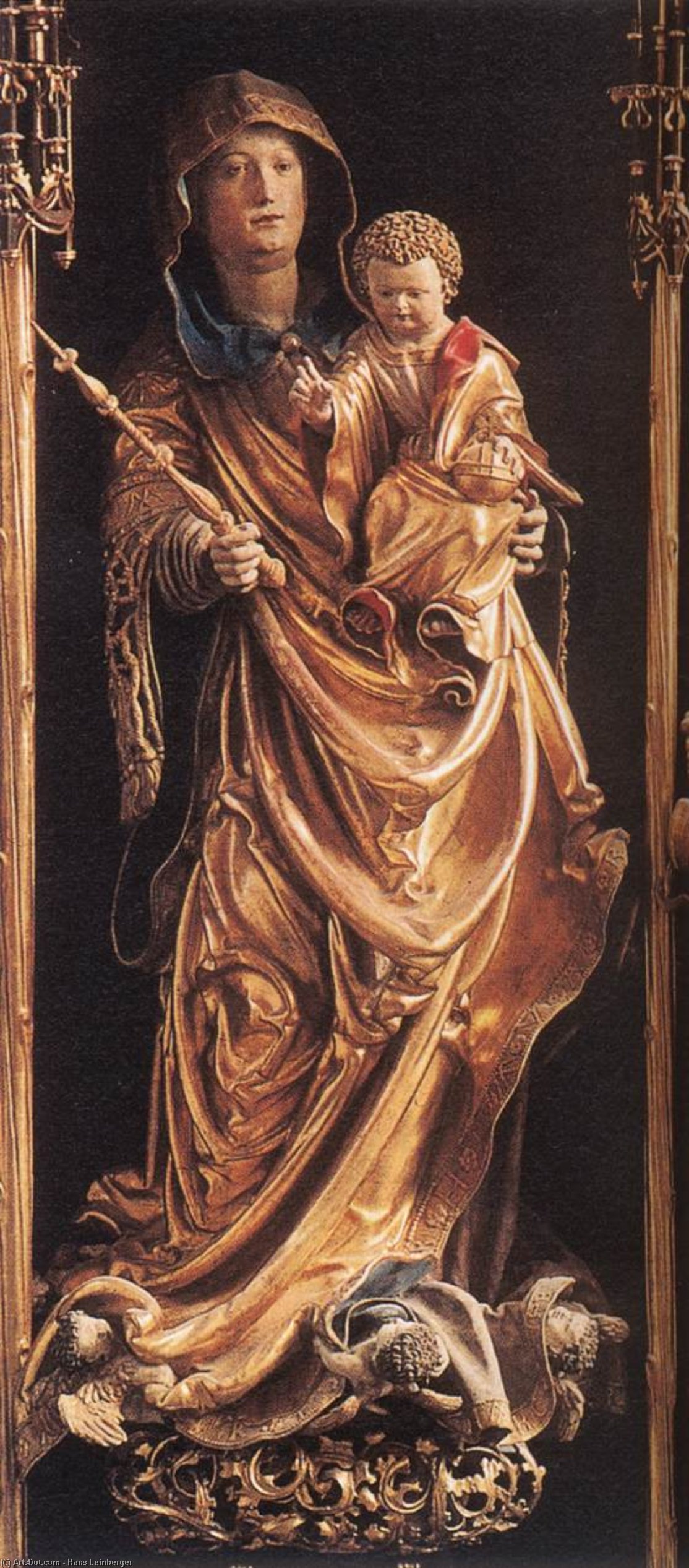
Virgin and Child
复制品尺寸

Hans Leinberger (c.1475/1480 – after 1531) remains a figure shrouded in some mystery, yet his legacy endures as one of Altbayern’s most prominent sculptors of the Early Renaissance. While biographical details are scarce—his birthplace and precise artistic education remain elusive—scholarly research has illuminated his remarkable career and contribution to German art history.
Leinberger emerged onto the artistic scene around 1510 in Landshut, Bavaria, where he established a workshop that would become synonymous with innovation and stylistic refinement. His patron, Louis X, Duke of Bavaria, recognized Leinberger’s talent and commissioned significant projects, notably the monumental statue of Albert IV for Innsbruck’s Hofkirche—a testament to Dürer's influence and Leinberger’s ability to capture regal dignity.
Leinberger's artistic style is characterized by its sensitivity to detail and its ability to convey psychological depth—qualities that distinguish him from earlier Gothic sculptors. His work embodies the humanist impulse to represent human form accurately, while simultaneously honoring religious dogma. Leinberger’s enduring influence can be seen in subsequent generations of Bavarian sculptors who adopted his techniques and aesthetic sensibilities.
Despite the paucity of surviving sculptures—only two Madonna figures remain—Leinberger's contribution to German Renaissance art is undeniable. He stands as a symbol of Altbayern’s artistic flourishing during Louis X’s reign, securing his place among the masters of his time and cementing his legacy as a sculptor who seamlessly blended Gothic tradition with humanist innovation.

1478 - 1531 , Germany


第一时间获取最新的艺术新闻、独家优惠及装饰灵感。
向我们介绍您的项目需求,我们的艺术专家将为您提供 3 个个性化的艺术品推荐。
由我们的专家为您精选 3 款心仪之作 —— 完全免费!


 效果预览
效果预览
 购买印刷品
购买印刷品 分享
分享 分享
分享
 详情
详情

 下载
下载
 相似作品
相似作品 X射线
X射线 幻灯片播放
幻灯片播放

 展开详情
展开详情






































 玻璃选项仅适用于110厘米以下的尺寸。