x


 1973
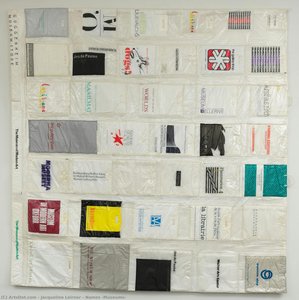
1973 73.0 x 102.0 cm
 THAT'S CONTEMPORARY
购买高分辨率增强版数字图像,其品质远超在线预览。
每一份文件都由我们的内部专家使用先进工具与专业的后期润色技术精心打造。我们确保每一张图像都具备卓越的清晰度、精准的色彩还原度以及细腻的细节表现。
最终文件将在 72 小时内通过电子邮件交付,并针对专业、编辑及印刷用途进行了优化。其品质与顶级设计工作室、出版社和画廊所信赖的标准完全一致。
选择 Most-Famous-Paintings.com,您获得的不仅仅是一张图像——您收到的是经过专业级增强、精雕细琢的数字艺术作品,并享有满意保证。以下是您的订单中自动包含的所有内容:

您的高分辨率数字图像文件将在下单后 72 小时内通过电子邮件发送给您 —— 即可立即使用。

您的艺术品经过专业优化,结合先进的 AI 技术与人工修饰,确保呈现极致的细节、清晰度与色彩准确度。

不小心删除了文件或找不到了?没关系——我们将随时为您免费重发。

即刻拥有您的艺术作品,无需支付任何关税、税费或运费——数字下载始终免税。

我们通过专业工具与色彩管理技术,确保您的数字图像尽可能真实地还原原作色彩。

如果您对所购买的数字图像不满意,我们将在60天内为您进行修改或退还100%的款项——无需任何解释。

如果不满意?在收到数字文件后的60天内,我们为您提供全额退款——无需任何理由。

购买 3 张图片可享 10% 折扣 - 购买 5 张可享 15% 折扣 - 购买 10+ 张可享 20% 折扣。非常适合创意项目、画廊和机构使用。

Born in Alkmaar, Netherlands, in 1931, Herman de Vries’s artistic journey is inextricably linked to a profound reverence for the natural world. From his early beginnings exploring the intricacies of plants and seeds – a fascination that began in 1953 – he embarked on a lifelong pursuit to translate the silent eloquence of nature into meticulously crafted visual narratives. De Vries wasn't merely an artist; he was, as he himself described it, a ‘translator,’ seeking to reveal the hidden order within seemingly chaotic natural forms. His work stands apart not just for its technical precision but for its quiet insistence on recognizing the inherent beauty and intelligence embedded in even the smallest botanical detail.
De Vries’s early career was marked by experimentation with various media, including drawing and collage, reflecting a broader engagement with artistic movements of his time. The influence of the Zero group – a collective of Dutch artists pushing boundaries in the late 1950s and early 1960s – is evident in his commitment to simplicity and economy of form. This minimalist approach, coupled with a desire to capture the essence of natural phenomena, became a defining characteristic of his later work. He famously adopted a lowercase style for his name on his artwork, a deliberate choice intended to diminish hierarchy and emphasize the equal importance of the artist and the subject matter – a subtle yet powerful statement about his artistic philosophy.
Moving into the 1970s, De Vries shifted his focus towards directly engaging with natural materials. He began collecting soil samples from around the globe, transforming them into vibrant areas of color that revealed the astonishing diversity hidden beneath our feet. This period marked a significant evolution in his work, moving beyond representation to explore the very materiality of nature itself. His pieces became less about depicting specific plants and more about conveying their fundamental qualities – texture, form, and color – through carefully arranged collections.
De Vries’s technical skill is undeniable. He possessed an almost obsessive attention to detail, meticulously rendering the textures of seeds, the veins of leaves, and the intricate patterns of dried flowers. His works are characterized by a remarkable level of precision, achieved through painstaking observation and patient execution. However, this technical mastery never overshadows the underlying conceptual framework of his art. It’s not simply about accurate representation; it's about revealing the inherent geometry and order within seemingly random natural arrangements.
Consider “Prunus Persica,” a captivating study of twelve nuts and seeds rendered in exquisite detail. The arrangement isn’t arbitrary; it follows a precise geometric pattern, mirroring the underlying structure of the botanical specimens themselves. Similarly, "An Afternoon Under a Cherry Tree" showcases dried leaves arranged in meticulously crafted diptychs – a testament to De Vries's ability to transform ephemeral natural elements into enduring works of art. These pieces demonstrate his mastery of composition and his deep understanding of how form and space interact.
In 1980, De Vries relocated to Eschenau, near Knetzgau, Germany, where he continues to live and work today. This move marked a deepening connection with the landscape and a continued exploration of his core themes. His studio has become a repository for collected natural materials – soil, seeds, leaves, and fragments of wood – each carefully selected and arranged to evoke a sense of wonder and contemplation.
His current work often focuses on disrupted relationships between humanity and nature, reflecting a growing concern about environmental issues. He continues to collect and arrange these elements, not as static representations but as dynamic expressions of the interconnectedness of all things. The artist’s choice to live in Germany has undoubtedly influenced his perspective, allowing him to immerse himself in the rich cultural heritage of the region while maintaining a steadfast commitment to his artistic vision.
Herman de Vries's work has garnered significant recognition within the international art community. His pieces are held in prestigious collections including The Museum of Modern Art in New York, the Stedelijk Museum Schiedam in the Netherlands, and the Victoria and Albert Museum in London. In 2015, he was included in the Venice Biennale, a testament to his enduring influence and artistic merit.
Beyond individual accolades, De Vries’s legacy lies in his profound respect for nature and his ability to translate its complexities into visually arresting works of art. He demonstrated that beauty could be found not only in grand landscapes but also in the smallest details – a single seed, a dried leaf, or a handful of soil. His work serves as a constant reminder of our connection to the natural world and the importance of appreciating its inherent value.

1931 - , Netherlands


第一时间获取最新的艺术新闻、独家优惠及装饰灵感。
向我们介绍您的项目需求,我们的艺术专家将为您提供 3 个个性化的艺术品推荐。
由我们的专家为您精选 3 款心仪之作 —— 完全免费!


 Preview
 购买版画
购买版画 分享
分享 分享
分享
 详情
详情

 下载
下载
 相似作品
相似作品 X射线
X射线 幻灯片播放
幻灯片播放 展开详情
展开详情