x
 66.0 x 97.0 cm
从与原作比例一致的预设尺寸中进行选择。

您可以输入自定义尺寸,以适配特定的画框或空间。如果所选尺寸与原图比例不符,我们将通过裁剪作品或添加手绘元素来扩展画面。数字样稿将在制作开始前发送给您确认。
请注意,屏幕预览无法准确反映实际的裁剪或扩展效果,只有样稿才能真实呈现最终的构图。
虽然我们提供定制尺寸服务,但为了保留原作比例,建议您从预设列表中选择尺寸。

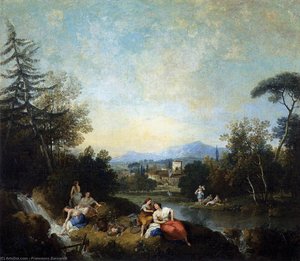
River Landscape
复制品尺寸

In the grand, salt-sprayed tapestry of the Dutch Golden Age, certain names shine with a brilliance that obscures the subtle, masterful strokes of others. Jacobus Storck (1641–1692) is such a figure—a painter whose legacy, while occasionally overshadowed by his more famous brother Abraham, remains an essential chronicle of seventeenth-century maritime life. Born in the bustling heart of Amsterdam, Storck was immersed from birth in an environment where the rhythm of the tides and the commerce of the sea dictated the pulse of the nation. His artistic lineage was one of profound nautical significance; as the son of the accomplished marine painter Johannes Sturckenburgh, he was raised within a tradition that viewed the sea not merely as a backdrop, but as a living, breathing protagonist in the story of Dutch prosperity.
The development of Storck’s artistry was deeply rooted in this familial apprenticeship. Growing up amidst the artistic milieu of his father’s studio, he honed a remarkable ability to capture the ephemeral qualities of the maritime atmosphere. He possessed a rare sensitivity to the way light dances upon turbulent waters and how heavy, low-hanging clouds cast dramatic shadows across a harbor. His early training allowed him to master the technical complexities of marine painting—specifically the challenge of rendering movement, from the rhythmic swell of the waves to the sudden, violent spray of a breaking crest. This commitment to naturalistic observation ensured that his works were more than mere depictions; they were immersive experiences that transported the viewer to the very docks of Haarlem and Rotterdam.
Storck’s technical prowess is most evident in his sophisticated use of chiaroscuro, the dramatic interplay of light and shadow. Drawing inspiration from the monumental techniques perfected by masters like Rembrandt and Caravaggio, he utilized deep shadows to create depth and a sense of impending drama within his compositions. This was particularly effective in his depictions of harbor scenes, where the dark, weathered hulls of ships would emerge from the gloom, illuminated by sudden shafts of sunlight. His brushwork displayed an unwavering dedication to texture; one can almost feel the rough, salt-encrusted grain of a ship's wooden planks or the slick, glistening surface of a receding tide.
His oeuvre is defined by several notable achievements that showcase his versatility as a landscape and marine artist:
While biographical records regarding his personal life remain somewhat sparse, the historical significance of Jacobus Storck is undeniable. His work serves as a vital visual record of the Dutch Republic at the height of its maritime power. Through his eyes, we witness the bustling commercial vitality of the era's great ports and the technical sophistication of the vessels that drove global trade. Though some scholars have historically debated the attribution of certain works signed "ja storck"—often weighing them between Jacobus and his brother Abraham—the intrinsic quality of his hand is unmistakable.
Ultimately, Storck’s contribution to art history lies in his ability to act as a silent witness to a bygone era. He did not merely paint ships; he painted the very spirit of a nation defined by its relationship with the sea. His paintings remain enduring windows into the seventeenth century, preserving the light, the motion, and the monumental ambition of the Dutch Golden Age for all eternity.

1641 - 1692 , Netherlands


第一时间获取最新的艺术新闻、独家优惠及装饰灵感。
向我们介绍您的项目需求,我们的艺术专家将为您提供 3 个个性化的艺术品推荐。
由我们的专家为您精选 3 款心仪之作 —— 完全免费!


 效果预览
效果预览
 购买印刷品
购买印刷品 分享
分享 分享
分享
 详情
详情

 下载
下载
 相似作品
相似作品 X射线
X射线 幻灯片播放
幻灯片播放 展开详情
展开详情






































 玻璃选项仅适用于110厘米以下的尺寸。