


x
 1988
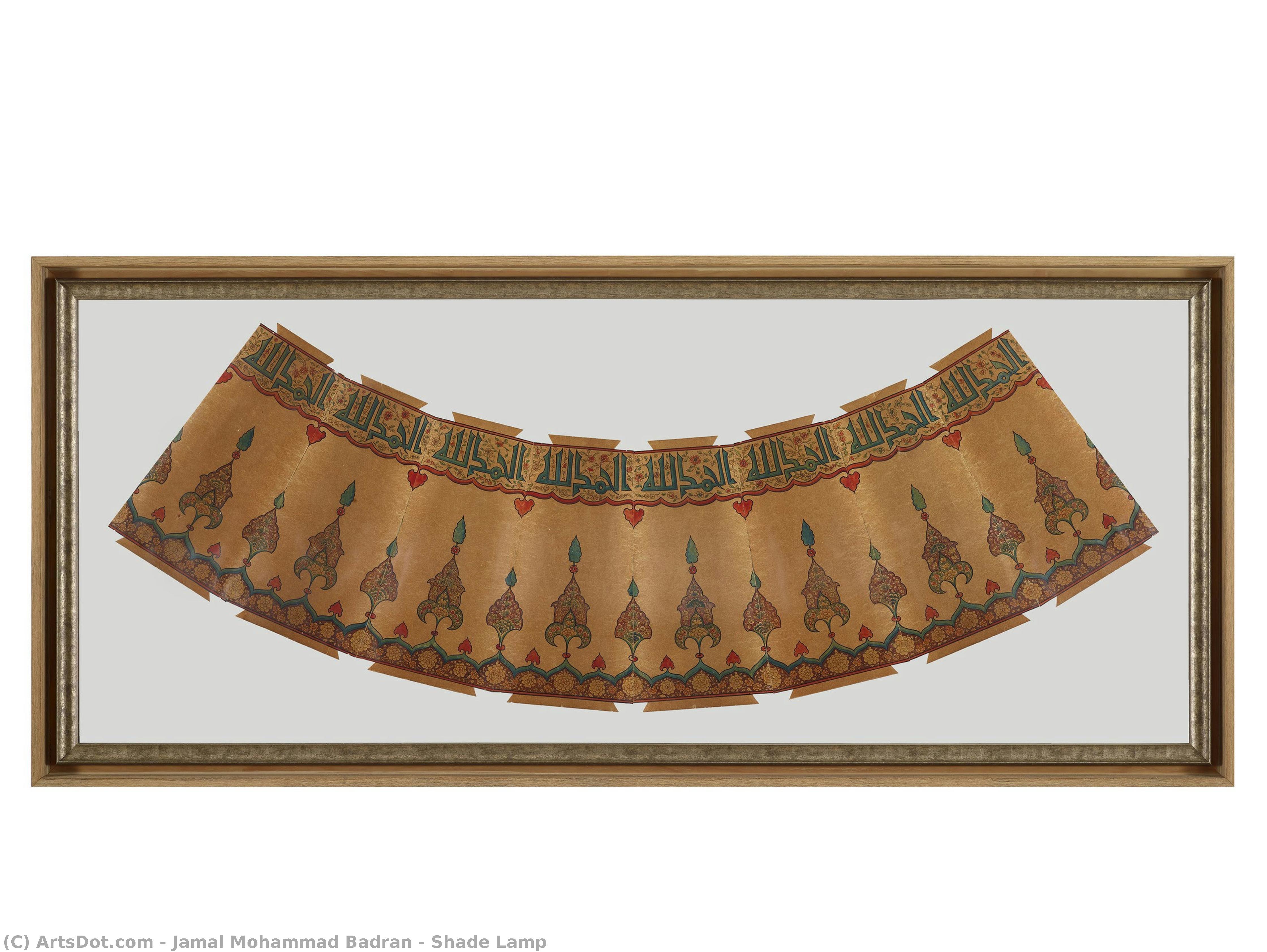
1988 70.0 x 193.0 cm
 The Ramzi and Saeda Dalloul Art Foundation
从与原作比例一致的预设尺寸中进行选择。

您可以输入自定义尺寸,以适配特定的画框或空间。如果您选择的尺寸与原图比例不符,我们将对作品进行裁剪,或通过镜像填充/纯色填充边缘的方式来扩展图像。在开始制作之前,我们会向您发送一份数字效果图供您确认。
请注意,屏幕上的预览并不能反映实际的裁剪或扩展效果。只有效果图才能准确展示最终的构图。
虽然我们提供定制尺寸,但为了保持原图比例,我们建议您从预设列表中选择尺寸。

Shade Lamp
复制品尺寸

Born in the vibrant coastal city of Haifa in 1909, Jamal Mohammad Badran emerged as one of the most profound visual voices of the twentieth century. His life was not merely a journey through time, but a dedicated pilgrimage toward the preservation and celebration of Arab-Islamic aesthetics. From his earliest years, Badran was immersed in an environment where art and spirituality were inextricably linked. He often recalled being captivated by the mahmal—the ceremonial palanquin that traveled from Damascus to Mecca—whose gold-embroidered silks and intricate textures ignited a lifelong passion for the decorative arts. This early fascination with the interplay of light, texture, and sacred geometry would become the cornerstone of his monumental career.
Badran’s artistic development was marked by an extraordinary academic rigor that bridged the traditions of the East with the technical mastery of the West. His education began in Cairo at the Hamzawi School, where he immersed himself in the classical foundations of Islamic art. Seeking to expand his repertoire, he later traveled to London to study at the Central College of Arts and Crafts. This period of intense training allowed him to master a diverse array of disciplines, including ceramics, metalwork, textile design, and bookbinding. By blending the disciplined rules of Arabic calligraphy with Western technical precision, Badran developed a unique language capable of expressing both the ancient soul of Palestine and the evolving modern world.
The true significance of Badran’s work lies in his role as a guardian of cultural memory. Perhaps his most heroic achievement occurred following the tragic arson of the Al-Aqsa Mosque and the Dome of the Rock in 1968. Tasked with the monumental responsibility of restoring these sacred sites, Badran led teams through years of arduous labor to recreate architectural decorations that had been lost to flame. His meticulous hand breathed life back into carved wood, ceramics, and the delicate Kufic calligraphy of the mosque's pulpit, or minbar. Through this work, he did more than repair structures; he restored a sense of continuity and identity to a people facing profound historical upheaval.
Beyond the grand scale of architectural restoration, Badran’s personal oeuvre remains a testament to the beauty of the applied arts. His mastery extended into various media, where he utilized:
Badran’s impact reached far beyond the borders of Palestine. As an educator commissioned by UNESCO, he traveled to Libya to teach art in Tripoli and Benghazi, spreading the principles of Islamic decorative arts across the Arab world. His studio and his classrooms became sanctuaries for a new generation of artists, where he instilled a deep respect for traditional rules while encouraging the technical innovation necessary for modern expression. Whether working on commissions for royal palaces or creating graphics for private homes, his hand was always guided by a sense of duty to his heritage.
When Jamal Mohammad Badran passed away in 1999, he left behind a legacy that is etched into the very stones of Jerusalem’s most sacred monuments and woven into the fabric of Middle Eastern art history. He remains a symbol of resilience—an artist who used the precision of his craft to mend the fractures of history, ensuring that the luminous beauty of Islamic ornamentation would continue to inspire generations to come.

1909 - 1999 , Palestine


第一时间获取最新的艺术新闻、独家优惠及装饰灵感。
向我们介绍您的项目需求,我们的艺术专家将为您提供 3 个个性化的艺术品推荐。
由我们的专家为您精选 3 款心仪之作 —— 完全免费!


 效果预览
效果预览
 购买手绘画作
 分享
分享 分享
分享
 详情
详情

 下载
下载
 相似作品
相似作品 X射线
X射线 幻灯片播放
幻灯片播放 展开详情
展开详情






































 玻璃选项仅适用于110厘米以下的尺寸。





