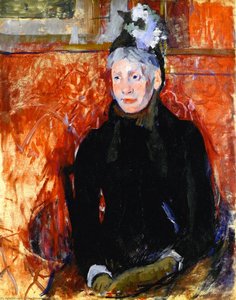
x
 PaintingTransvanguardia
 1984Contemporary
 219.0 x 212.0 cm
 Culturgest - Fundação Caixa Geral de Depósitos




























从与原作比例一致的预设尺寸中进行选择。

您可以输入自定义尺寸,以适配特定的画框或空间。如果您选择的尺寸与原图比例不符,我们将对作品进行裁剪,或通过镜像填充/纯色填充边缘的方式来扩展图像。在开始制作之前,我们会向您发送一份数字效果图供您确认。
请注意,屏幕上的预览并不能反映实际的裁剪或扩展效果。只有效果图才能准确展示最终的构图。
虽然我们提供定制尺寸,但为了保持原图比例,我们建议您从预设列表中选择尺寸。

Cara e Coroa
复制品尺寸

In the landscape of Brazilian contemporary art, few voices resonate with as much profound vulnerability and quiet strength as that of José Leonilson Bezerra Dias. Born in Fortaleza in 1957, Leonilson’s life and work were inextricably linked to the shifting political and social tides of Brazil. Moving to São Paulo as a child, he came of age during the twilight of the military dictatorship, a period that fostered a burgeoning sense of individual expression and a rediscovered "joy of painting" among the 1980s generation. Yet, while his contemporaries often engaged in loud, political critiques, Leonilson chose a different path—one of radical introspection. His art did not shout; it whispered, creating a private diary of existence that was simultaneously deeply personal and universally poignant.
Leonilson’s formal education provided the technical foundation for his later conceptual explorations. Studying at the Fundação Armando Álvares Penteado (FAAP) between 1977 and 1980, he was mentored by titans of Brazilian art such as Julio Plaza and Nelson Leirner. From Plaza, he absorbed the theoretical complexities of new mediums and the conceptual weight behind materiality; from Leirner, he learned the power of allegory. His time at the Aster Art School under Dudi Maia Rosa further refined his sensitivity to watercolor and the delicate interplay of light and form. These influences coalesced into a style that was deceptively simple, characterized by an elegant restraint that masked a turbulent emotional depth.
The trajectory of Leonilson’s career underwent a seismic shift in 1991, following his diagnosis with HIV. This moment of profound personal crisis transformed his artistic language, moving him away from traditional painting toward the more tactile, intimate medium of embroidery and textile work. As he faced the encroaching reality of death, his work became a metaphysical rumination on the body, loss, and the queer experience. He began to use thread as a tool for mapping both physical and emotional landscapes, creating pieces that functioned as body mappings—delicate, stitched chronicles of a life being lived in the shadow of an epidemic.
His use of textiles allowed him to explore themes that were often too fragile for the canvas. Through meticulous embroidery, he wove together a lexicon of symbols and text, turning domestic crafts into high-concept art. These works addressed:
Though his life was tragically short—ending in 1993 at the age of 36—Leonilson’s impact on the global art stage is monumental. He successfully adapted the political discourse of a global epidemic into a deeply personal, existential narrative that transcends borders. His ability to blend Brazilian vernacular traditions with international conceptual practices has earned him a permanent place in the world's most prestigious institutions. Today, his works are held in the collections of the Tate Modern in London, the Museum of Modern Art (MoMA) in New York, and the Centre National d’Art et de Culture Georges-Pompidou in Paris.
Leonilson remains a seminal figure because he dared to make the private public. In an era often defined by grand gestures, his commitment to the small, the delicate, and the intensely personal serves as a testament to the power of the individual spirit. His legacy continues to breathe through his embroideries and drawings, reminding us that even in the face of profound grief, there is a profound beauty to be found in the act of witnessing one's own existence.

1957 - 1993 , Brazil

探索马克·罗斯科25幅杰作,感受抽象表现主义的色彩力量与深刻情感。从经典色域绘画到无题系列,了解艺术史上的大师及其作品背后的故事。Most-Famous-Paintings.com提供博物馆级高质量复制品,为您的家居装饰带来艺术灵感!立即探索完整收藏。

Explore the rich symbolism of the red dress in art history! From ancient power displays to iconic portraits like Cézanne’s 'Madame Cezanne', discover the cultural and artistic significance behind this captivating color. Expert analysis & insights.
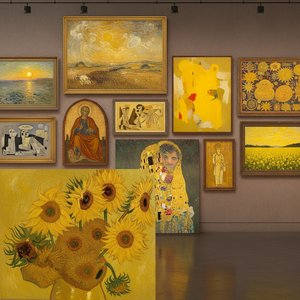
Immerse yourself in golden light! Explore 10 famous paintings dominated by 'Chrome Yellow', from Van Gogh’s Sunflowers to Monet's Haystacks. Discover the stories behind these iconic Impressionist & Post-Impressionist masterpieces and find museum-quality art reproductions at Most-Famous-Paintings.com.

Explore the rich symbolism & emotional power of yellow in art history! From Van Gogh to Kandinsky, discover how artists used this vibrant hue. Expert analysis & high-quality reproductions at Most-Famous-Paintings.
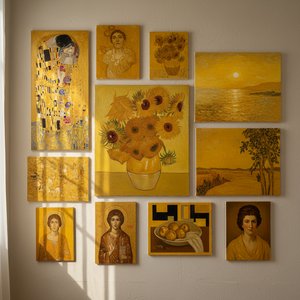
Explore 10 iconic paintings bathed in golden yellow ochre! From Van Gogh's sunflowers to Monet’s haystacks, discover the stories behind these masterpieces. Find museum-quality art reproductions & elevate your home decor on .


第一时间获取最新的艺术新闻、独家优惠及装饰灵感。
向我们介绍您的项目需求,我们的艺术专家将为您提供 3 个个性化的艺术品推荐。
由我们的专家为您精选 3 款心仪之作 —— 完全免费!


 效果预览
效果预览
 购买手绘画作
 分享
分享 分享
分享
 详情
详情

 下载
下载
 相似作品
相似作品 X射线
X射线 幻灯片播放
幻灯片播放 展开详情
展开详情









 玻璃选项仅适用于110厘米以下的尺寸。