x
从与原作比例一致的预设尺寸中进行选择。

您可以输入自定义尺寸,以适配特定的画框或空间。如果您选择的尺寸与原图比例不符,我们将对作品进行裁剪,或通过镜像填充/纯色填充边缘的方式来扩展图像。在开始制作之前,我们会向您发送一份数字效果图供您确认。
请注意,屏幕上的预览并不能反映实际的裁剪或扩展效果。只有效果图才能准确展示最终的构图。
虽然我们提供定制尺寸,但为了保持原图比例,我们建议您从预设列表中选择尺寸。

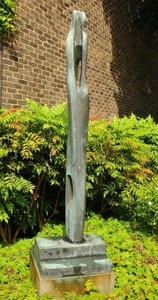
Revealed
复制品尺寸

In the quiet, deliberate arrangements of Kishio Suga, one finds a profound meditation on the very essence of existence. Born in 1944 in Morioka, Japan, Suga emerged as a pivotal figure in the transformative landscape of post-war Japanese art. His practice is not merely about the creation of objects, but rather about orchestrating an encounter between the viewer, the material, and the void. As a central protagonist of the Mono-ha movement, which rose to prominence in the late 1960s and 1970s, Suga’s work serves as a bridge between the tangible world of raw matter and the intangible realm of spatial perception.
The philosophy underpinning his work is deeply rooted in the concept of "not-making." Unlike traditional sculptors who seek to impose their will upon clay or stone to create representational forms, Suga approaches his medium with a sense of radical humility. He engages with the interdependency of elements, allowing materials to speak through their inherent properties. His practice involves a delicate choreography of natural and industrial substances—stone, steel plates, glass, wood, wire, and water—arranged in states that feel both ephemeral and eternally grounded. Through this method, he invites us to witness the tension and harmony that exist when disparate forces meet within a shared space.
To understand Kishio Suga is to understand the seismic shift brought about by the Mono-ha (School of Things) movement. During a period of intense social and political upheaval in Japan, Suga and his contemporaries sought to strip away the layers of Western-centric abstraction and sculptural ego. Instead, they turned their gaze toward the "thingness" of the world. In Suga’s installations, there is no hierarchy between a heavy slab of granite and a delicate strand of cotton; each element is granted equal importance, contributing to a larger, site-specific dialogue.
His mastery lies in his ability to manipulate the perceptual boundaries of a room. By placing a steel plate atop a wooden block or allowing light to interact with glass and oil, he creates a sense of "site-specificity" that transcends mere placement. The work is never finished until it is integrated into its environment; the surrounding air, the floor, and even the viewer's movement become essential components of the piece. This approach challenges the traditional notion of art as a portable commodity, instead presenting it as an experiential event that exists in a delicate balance with its surroundings.
Throughout his long and distinguished career, Suga has continued to refine this language of minimal intervention. His achievements are marked by a consistent ability to evoke deep emotional responses through seemingly simple gestures. He does not demand attention through spectacle; rather, he commands it through a quiet, undeniable presence. His work remains a cornerstone of contemporary installation art, influencing generations of artists who seek to explore the boundaries between the physical and the metaphysical.
The historical significance of Kishio Suga resides in his contribution to a new way of seeing. He has taught us that:

1944 - , Japan
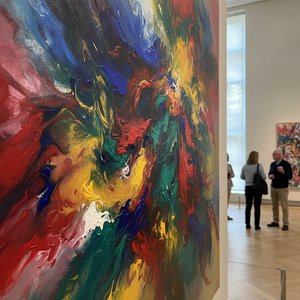
Explore the profound emotional depth of Lyrical Abstraction. Discover how masters like Raymond Parker used color and form to bridge Impressionism and Abstract Expressionism. Learn about this pivotal movement through our expert-led art history guide.

Explore the profound emotional depth of Color Field painting. Discover the history of mid-century abstraction, from Rothko to Newman, and learn how pure color transforms the viewer's experience through our expert art history guide.


第一时间获取最新的艺术新闻、独家优惠及装饰灵感。
向我们介绍您的项目需求,我们的艺术专家将为您提供 3 个个性化的艺术品推荐。
由我们的专家为您精选 3 款心仪之作 —— 完全免费!


 效果预览
效果预览
 购买手绘画作
 分享
分享 分享
分享
 详情
详情

 下载
下载
 相似作品
相似作品 X射线
X射线 幻灯片播放
幻灯片播放

 展开详情
展开详情






































 玻璃选项仅适用于110厘米以下的尺寸。