


x
购买高分辨率增强版数字图像,其品质远超在线预览。
每一份文件都由我们的内部专家使用先进工具与专业的后期润色技术精心打造。我们确保每一张图像都具备卓越的清晰度、精准的色彩还原度以及细腻的细节表现。
最终文件将在 72 小时内通过电子邮件交付,并针对专业、编辑及印刷用途进行了优化。其品质与顶级设计工作室、出版社和画廊所信赖的标准完全一致。
选择 Most-Famous-Paintings.com,您获得的不仅仅是一张图像——您收到的是经过专业级增强、精雕细琢的数字艺术作品,并享有满意保证。以下是您的订单中自动包含的所有内容:

您的高分辨率数字图像文件将在下单后 72 小时内通过电子邮件发送给您 —— 即可立即使用。

您的艺术品经过专业优化,结合先进的 AI 技术与人工修饰,确保呈现极致的细节、清晰度与色彩准确度。

不小心删除了文件或找不到了?没关系——我们将随时为您免费重发。

即刻拥有您的艺术作品,无需支付任何关税、税费或运费——数字下载始终免税。

我们通过专业工具与色彩管理技术,确保您的数字图像尽可能真实地还原原作色彩。

如果您对所购买的数字图像不满意,我们将在60天内为您进行修改或退还100%的款项——无需任何解释。

如果不满意?在收到数字文件后的60天内,我们为您提供全额退款——无需任何理由。

购买 3 张图片可享 10% 折扣 - 购买 5 张可享 15% 折扣 - 购买 10+ 张可享 20% 折扣。非常适合创意项目、画廊和机构使用。
The image presented here—a seemingly simple sheet of aged parchment—holds within it the tantalizing whisper of Leonardo da Vinci's boundless intellect. This “Additional Dossier,” as it’s known, from the Codex Trivulzianus, a collection of Leonardo’s personal notes and sketches, offers a rare glimpse into his working process, a moment captured outside the finished grandeur of his paintings or the meticulously documented pages of his notebooks. The paper itself speaks volumes: its yellowed hue hints at years spent tucked away, perhaps forgotten, yet retaining an undeniable aura of importance. It's not a polished treatise; rather, it’s a raw, intimate record—a testament to the ceaseless flow of ideas that defined Leonardo’s extraordinary life.
The handwriting is deliberately obscured, suggesting it may be in a language other than Italian or Latin – languages frequently employed by Leonardo for his scientific observations and anatomical studies. This deliberate ambiguity adds another layer of intrigue, prompting us to consider the nature of these notes: were they preliminary sketches for a commission, detailed observations on human anatomy, perhaps even cryptic reflections on philosophical concepts? The lack of discernible words invites speculation, reinforcing the notion that this document represents a private, internal dialogue—a crucial element in understanding Leonardo’s creative process. It's a reminder that genius rarely emerges from sterile perfection but often from the messy, iterative stages of exploration and experimentation.
The Codex Trivulzianus itself is a remarkable artifact, assembled primarily during the 16th century by Cardinal Ludovico Sforza’s librarian, Giovanni Battista Gaddi. It comprises over 200 sheets, meticulously compiled from Leonardo's personal papers, drawings, and writings accumulated throughout his career. The “Additional Dossier” we examine here is a fragment of this larger collection, offering a window into the breadth of Leonardo’s interests – a convergence of art, science, engineering, and anatomy. Leonardo wasn’t simply an artist; he was a relentless investigator, driven by a profound desire to understand the mechanics of the world around him.
The Codex served as more than just a record-keeping system. It functioned as Leonardo's personal laboratory, a space where ideas could be freely explored and developed without the constraints of patronage or expectation. It’s believed that Sforza intended for the Codex to be a legacy—a testament to Leonardo’s unparalleled genius, a collection to be studied and admired long after his death. The inclusion of this seemingly unassuming sheet underscores the multifaceted nature of Leonardo's work; it highlights the interconnectedness of his diverse pursuits.
While the content remains largely obscured, the physical characteristics of the parchment itself offer clues about its age and origin. The texture suggests a relatively coarse material, likely sourced from Italy during Leonardo’s lifetime. The faint traces of ink reveal a deliberate hand – not necessarily flamboyant or ornate, but precise and observant, mirroring the meticulous nature of Leonardo's own artistic approach. Even in this fragment, we can sense the artist’s inherent control over his materials, a hallmark of his unparalleled skill.
Considering Leonardo’s broader practice, it is likely that the notes contained within this dossier were accompanied by sketches and diagrams – visual representations of concepts he was exploring. The act of recording ideas visually, whether through writing or drawing, was integral to his creative process. The very existence of this fragment speaks to a dedication to documenting every observation, every experiment, every fleeting thought—a characteristic that fueled his extraordinary output.
This “Additional Dossier” transcends its physical form; it’s an invitation to connect with the mind of one of history's greatest geniuses. The fragility of the parchment, the obscured text, and the sense of mystery all contribute to a powerful emotional resonance. It evokes a feeling of intimacy, as if we are privy to a private moment of intellectual exploration.
Most-Famous-Paintings is proud to offer a meticulously crafted hand-painted reproduction of this extraordinary fragment. Our artists have painstakingly recreated the texture and tone of the original parchment, capturing not only its visual appearance but also the inherent sense of history and intrigue. This reproduction serves as a tangible link to Leonardo’s world—a beautiful and thought-provoking addition to any collection or interior space. It's more than just an image; it’s a portal into the mind of a true visionary, allowing you to experience the essence of Leonardo da Vinci’s genius firsthand.

列奥纳多·迪·谢罗·皮耶罗·达·芬奇(Leonardo di ser Piero da Vinci),1452 年出生于托斯卡纳地区文奇附近的安奇亚诺村,是文艺复兴时期最广为人知的代表人物之一——一位真正的博学者,其无尽的好奇心推动他跨越多个学科领域,在艺术、科学和工程学方面留下了不可磨灭的印记。他的名字本身已成为天才的代名词,证明了他非凡的天赋和远见卓识。列奥纳多是公证员皮耶罗·达·芬奇和农民卡特里娜所生的私生子,他早年的生活虽然不寻常,却也让他接触到了现实世界以及对自然的欣赏,这些都深刻地影响了他的艺术视野。他接受了基本的读写算术教育,但真正点燃了他创造性火花的是佛罗伦萨安德烈亚·德尔·维罗基奥(Andrea del Verrocchio)的学徒生涯。在维罗基奥的工作室里,列奥纳多不仅仅是在学习绘画或雕塑;他沉浸在一个充满技术技能的世界中,精通金属加工、木工、素描以及艺术创作的复杂性——这为他构建多元化的天才奠定了基础。即使在这个形成时期,就已流传着关于他非凡天赋的传闻,据说维罗基奥本人在目睹列奥纳多的卓越能力后,便放弃了绘画。
1482 年,列奥纳多开启了新篇章,进入米兰公爵路易斯·斯福尔扎(Ludovico Sforza)的效力。这不仅仅是一份艺术任命;列奥纳多担任军事工程师、建筑师、雕塑家和设计师,充分展现了他的多样技能。他构思了创新的防御工事,设计了华丽的舞台布景,甚至还绘制了奇幻机器的设计图。然而,正是在这一时期,他开始创作其最具标志性的杰作之一:《最后的晚餐》。这幅作品以壁画的形式在米兰圣玛利亚德尔格拉齐亚修道院的食堂中呈现,它超越了单纯的表现,是对人类情感和心理戏剧的深刻探索,捕捉了基督宣告背叛的那一刻。构图创新,运用透视技术精湛,将对西方艺术产生深远影响。尽管他在米兰时期完成了许多雕塑项目,但列奥纳多的发明精神仍在不断发展,为未来的科学探索奠定了基础。
1499 年法军入侵米兰后,列奥纳多返回了艺术发展的巅峰——佛罗伦萨。尽管在此期间他完成的作品较少,但其影响却十分巨大。正是在这里,他开始创作出被公认为世界上最著名的画作之一:《蒙娜丽莎》(La Gioconda)。画中人物神秘的微笑和迷人的眼神几代人以来一直吸引着观众,而列奥纳多革命性的晕染法(sfumato)——通过微妙地混合光线和阴影来创造朦胧的轮廓和大气透视——极大地增强了这幅画作的空灵感。这一时期也见证了他对人体解剖学的研究不断精进,源于他对理解人体的科学精确性的坚定追求。他解剖尸体,以一系列令人难以置信地详细的图稿记录肌肉、骨骼和器官,这些图稿比当时的技术先进了几个世纪。
列奥纳多的后期岁月在佛罗伦萨、米兰和罗马之间穿梭,他一直备受追捧,但往往未能完成项目——这或许反映了他不安分的智慧以及兴趣领域的广阔。1516 年,他应法国国王弗朗索瓦一世的邀请前往安布瓦斯附近的克鲁塞城堡生活和工作,在那里度过了他的最后岁月。他在右半身瘫痪的情况下去世于 1519 年,留下了广泛的遗产,远远超出了艺术领域。他的笔记本揭示了在解剖学、光学、水力学、地质学和制图学方面开创性的工作——并构思了比当时先进几个世纪的发明,包括飞行器、坦克和先进武器。列奥纳多·达·芬奇对艺术史的影响是不可估量的。他提升了艺术家从熟练工匠到知识分子的地位,证明了艺术创作可以通过科学探究和对自然世界深刻理解来获得信息。他的画作以其现实主义、心理深度和创新技术而闻名。他仍然是人类好奇心、创造力和不懈追求知识的象征——一位真正体现文艺复兴精神的人物,几个世纪后,人们依然为之惊叹并充满敬佩。
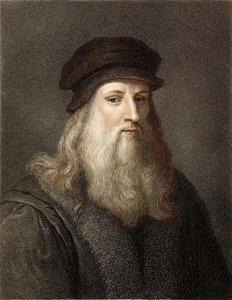
1452 - 1519 , 意大利


第一时间获取最新的艺术新闻、独家优惠及装饰灵感。
向我们介绍您的项目需求,我们的艺术专家将为您提供 3 个个性化的艺术品推荐。
由我们的专家为您精选 3 款心仪之作 —— 完全免费!


 效果预览
效果预览
 购买印刷品
购买印刷品 分享
分享 分享
分享
 详情
详情

 下载
下载
 相似作品
相似作品 X射线
X射线 幻灯片播放
幻灯片播放


 展开详情
展开详情


