x
从与原作比例一致的预设尺寸中进行选择。

您可以输入自定义尺寸,以适配特定的画框或空间。如果您选择的尺寸与原图比例不符,我们将对作品进行裁剪,或通过镜像填充/纯色填充边缘的方式来扩展图像。在开始制作之前,我们会向您发送一份数字效果图供您确认。
请注意,屏幕上的预览并不能反映实际的裁剪或扩展效果。只有效果图才能准确展示最终的构图。
虽然我们提供定制尺寸,但为了保持原图比例,我们建议您从预设列表中选择尺寸。

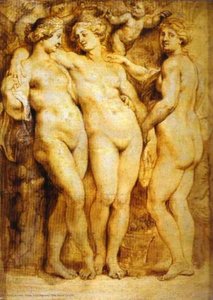
The Three Graces
复制品尺寸
To stand before this depiction of The Three Graces is to step into a moment suspended between earthly beauty and divine contemplation. These three figures, rendered in the evocative medium of wood, do not merely occupy space; they breathe narrative. They embody an idealized vision of feminine harmony, yet within their collective poise lies a beautiful tension—a dialogue enacted through gesture and gaze. The craftsmanship speaks immediately to the viewer, revealing the meticulous skill required to capture such ephemeral qualities in solid material.
The work dates from 1650, placing it squarely within the vibrant, emotionally charged atmosphere of the late Baroque period. Leonhard Kern, the master sculptor behind this piece, was a figure whose career navigated the tumultuous waters of the Thirty Years' War. His ability to channel profound human emotion into wood, particularly in his smaller-scale works, marks him as a sensitive interpreter of the era’s spiritual and dramatic currents. Observe the material itself: carved from limewood, the sculptor has utilized variations in tone across the three statues, lending an immediate visual richness that prevents any single figure from dominating the composition. This careful handling of wood grain and color variation is a testament to Kern's technical mastery.
The grouping of three figures—the quintessential triad in Western art—is rarely accidental. In classical tradition, the Graces symbolized beauty, charm, and pleasure. Here, however, Kern elevates this symbolism by assigning distinct emotional vectors to each statue. The figure on the left, with her hands clasped near her chest, suggests piety or contained devotion. The central figure, gazing downward, invites introspection, perhaps contemplating a secret or a moment of quiet realization. Finally, the figure on the right, lifting her gaze toward an unseen zenith, points toward aspiration, divine connection, or future hope. Together, they map out a complete emotional spectrum—from humility to contemplation to transcendence.
For the collector or designer seeking an object that transcends mere decoration, this reproduction offers profound depth. The Three Graces are not simply decorative accents; they are conversation starters and sources of quiet meditation. Their inherent drama allows them to anchor a room, whether placed in a formal salon where classical echoes are desired, or within a more intimate setting that appreciates narrative artistry. Owning this piece is acquiring a tangible link to the Baroque pursuit of capturing the soul’s most delicate movements.


1588 - 1662 , Germany

Explore the profound history of sculpture, from classical realism to modern abstraction. Discover the mastery of form, texture, and medium through an expert art-historical lens designed for discerning collectors and enthusiasts.

Explore the profound differences between Baroque drama and Rococo elegance. Our expert guide delves into art history, chiaroscuro, and the evolution of European masterpieces for collectors and enthusiasts seeking deep historical context.

Explore the profound elegance of Baroque Classicism. Discover how 17th-century masters synthesized dramatic emotion with classical order through the lens of the Counter-Reformation and the works of legends like Carlo Maratta and Andrea Sacchi.


第一时间获取最新的艺术新闻、独家优惠及装饰灵感。
向我们介绍您的项目需求,我们的艺术专家将为您提供 3 个个性化的艺术品推荐。
由我们的专家为您精选 3 款心仪之作 —— 完全免费!


 切换至手工绘画版
 分享
分享 分享
分享
 详情
详情

 下载
下载
 相似作品
相似作品 幻灯片播放
幻灯片播放


 展开详情
展开详情






































 玻璃选项仅适用于110厘米以下的尺寸。