


x
 Acrylic On CanvasWallArtSpatialism
 191.0 x 115.0 cm
 都灵市立现代与当代艺术馆
购买高分辨率增强版数字图像,其品质远超在线预览。
每一份文件都由我们的内部专家使用先进工具与专业的后期润色技术精心打造。我们确保每一张图像都具备卓越的清晰度、精准的色彩还原度以及细腻的细节表现。
最终文件将在 72 小时内通过电子邮件交付,并针对专业、编辑及印刷用途进行了优化。其品质与顶级设计工作室、出版社和画廊所信赖的标准完全一致。
选择 Most-Famous-Paintings.com,您获得的不仅仅是一张图像——您收到的是经过专业级增强、精雕细琢的数字艺术作品,并享有满意保证。以下是您的订单中自动包含的所有内容:

您的高分辨率数字图像文件将在下单后 72 小时内通过电子邮件发送给您 —— 即可立即使用。

您的艺术品经过专业优化,结合先进的 AI 技术与人工修饰,确保呈现极致的细节、清晰度与色彩准确度。

不小心删除了文件或找不到了?没关系——我们将随时为您免费重发。

即刻拥有您的艺术作品,无需支付任何关税、税费或运费——数字下载始终免税。

我们通过专业工具与色彩管理技术,确保您的数字图像尽可能真实地还原原作色彩。

如果您对所购买的数字图像不满意,我们将在60天内为您进行修改或退还100%的款项——无需任何解释。

如果不满意?在收到数字文件后的60天内,我们为您提供全额退款——无需任何理由。

购买 3 张图片可享 10% 折扣 - 购买 5 张可享 15% 折扣 - 购买 10+ 张可享 20% 折扣。非常适合创意项目、画廊和机构使用。
Lucio Fontana's "Spatial Concept, Waiting," painted in 1960, isn’t merely a canvas bearing cuts; it’s an invitation – a deliberate disruption of the established boundaries between painting and space. Born in Rosario, Argentina, in 1899, Fontana embarked on a lifelong quest to redefine artistic expression, ultimately founding Spatialism, a movement that sought to liberate art from the constraints of traditional two-dimensionality. This particular work embodies the core tenets of his philosophy: a radical rejection of illusion, an embrace of the tangible, and a profound exploration of the infinite.
The painting itself is deceptively simple – a pristine white canvas, seemingly untouched until you examine it closely. A series of precisely executed cuts, arranged in a dynamic, almost organic pattern, traverse the surface. These aren’t random gestures; they are meticulously planned interventions, often described by Fontana as “buchi” (holes) or “tagli” (slashes). The technique involved using a utility knife to create these incisions, a method that deliberately introduced an element of controlled violence – a forceful assertion against the static nature of conventional painting. The cuts aren’t uniformly spaced; instead, they cluster and disperse, creating a sense of movement and suggesting a hidden depth beyond the visible surface.
Fontana's journey to this groundbreaking style began in the late 1940s. Frustrated with the limitations he perceived in traditional painting – its reliance on illusion and representation – he sought a new language for art, one that engaged directly with space. This pursuit led him to develop the concept of “Spatialism,” articulated in his 1946 Manifesto Bianco (White Manifesto). He envisioned an art form that transcended the flat plane of the canvas, incorporating elements of color, sound, movement, and time into a unified whole. The "buchi" and "tagli" were not simply decorative; they were fundamental to this vision – a way of revealing the underlying structure of space and inviting the viewer to participate in its creation.
The historical context surrounding this work is crucial to understanding its significance. Post-World War II Europe was grappling with profound shifts in perspective, questioning established norms and seeking new ways to interpret reality. Fontana’s art resonated deeply with this spirit of experimentation and a desire for radical change. His work mirrored the broader cultural currents of the time – a fascination with technology, a growing interest in psychology, and a yearning for something beyond the confines of the familiar.
The symbolism embedded within “Spatial Concept, Waiting” is layered and complex. The cuts themselves represent a rupture – a breaking through of the surface to reveal an unseen space. Fontana described this act as "creating a new dimension," suggesting that the painting wasn’t simply depicting reality but actively constructing it. The use of gauze behind the canvas further enhances this sense of mystery, creating an illusion of depth and inviting the viewer to contemplate what lies beyond.
The title, “Waiting,” adds another layer of interpretation. It suggests a suspension, a pause before revelation – a feeling of anticipation as if something profound is about to emerge. Fontana’s intention wasn't to provide answers but to pose questions, prompting the viewer to engage in a dialogue with the artwork and their own perceptions of space and reality. The work evokes a sense of both vulnerability and exhilaration, reflecting the sublime – that paradoxical experience of awe and terror that lies at the heart of Fontana’s vision.
Lucio Fontana's influence on 20th-century art is undeniable. His radical approach to painting paved the way for countless artists who followed, challenging conventional notions of form and pushing the boundaries of artistic expression. Today, high-quality reproductions of “Spatial Concept, Waiting” offer a unique opportunity to experience this groundbreaking work firsthand, bringing its profound ideas into any interior space.
When selecting a reproduction, consider the detail and accuracy with which the cuts are rendered – a crucial element in capturing the essence of Fontana’s vision. Most-Famous-Paintings offers meticulously hand-painted reproductions that faithfully recreate the texture, depth, and emotional impact of the original painting, allowing you to bring this iconic work into your home or studio.

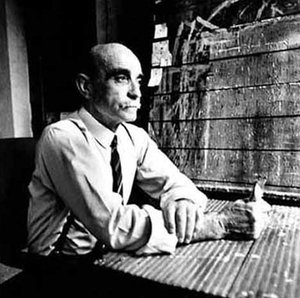
1899 - 1968 , 阿根廷


第一时间获取最新的艺术新闻、独家优惠及装饰灵感。
向我们介绍您的项目需求,我们的艺术专家将为您提供 3 个个性化的艺术品推荐。
由我们的专家为您精选 3 款心仪之作 —— 完全免费!


 效果预览
效果预览
 购买印刷品
购买印刷品 分享
分享 分享
分享
 详情
详情

 下载
下载
 相似作品
相似作品 X射线
X射线 幻灯片播放
幻灯片播放 展开详情
展开详情


