


x
购买高分辨率增强版数字图像,其品质远超在线预览。
每一份文件都由我们的内部专家使用先进工具与专业的后期润色技术精心打造。我们确保每一张图像都具备卓越的清晰度、精准的色彩还原度以及细腻的细节表现。
最终文件将在 72 小时内通过电子邮件交付,并针对专业、编辑及印刷用途进行了优化。其品质与顶级设计工作室、出版社和画廊所信赖的标准完全一致。
选择 Most-Famous-Paintings.com,您获得的不仅仅是一张图像——您收到的是经过专业级增强、精雕细琢的数字艺术作品,并享有满意保证。以下是您的订单中自动包含的所有内容:

您的高分辨率数字图像文件将在下单后 72 小时内通过电子邮件发送给您 —— 即可立即使用。

您的艺术品经过专业优化,结合先进的 AI 技术与人工修饰,确保呈现极致的细节、清晰度与色彩准确度。

不小心删除了文件或找不到了?没关系——我们将随时为您免费重发。

即刻拥有您的艺术作品,无需支付任何关税、税费或运费——数字下载始终免税。

我们通过专业工具与色彩管理技术,确保您的数字图像尽可能真实地还原原作色彩。

如果您对所购买的数字图像不满意,我们将在60天内为您进行修改或退还100%的款项——无需任何解释。

如果不满意?在收到数字文件后的60天内,我们为您提供全额退款——无需任何理由。

购买 3 张图片可享 10% 折扣 - 购买 5 张可享 15% 折扣 - 购买 10+ 张可享 20% 折扣。非常适合创意项目、画廊和机构使用。
Marc Chagall's "The Drunkard," painted in 1914, isn’t merely a depiction of a man lost to intoxication; it’s a profound exploration of vulnerability, societal pressure, and the enduring power of memory. Emerging from his formative years in Vitebsk, Belarus—a city steeped in both Jewish tradition and Russian Orthodox influence—the painting embodies Chagall's signature style: a vibrant collision of dreamlike imagery and stark emotional honesty. The work immediately arrests the viewer with its dramatic simplicity – a near-monochromatic palette dominated by black, white, and shades of grey, punctuated only by subtle tonal shifts that sculpt form and convey mood. This deliberate restriction forces us to focus on the core elements: the slumped figure of the drunkard and the outstretched hand offering support.
The composition itself is a masterclass in controlled imbalance. A forceful diagonal line, created by the supporting figure’s arm, pulls the eye downwards and slightly to the right, mirroring the downward trajectory of the man's head and body. This instability isn’t accidental; it speaks to the precariousness of his situation, both physical and emotional. The geometric background—a network of simplified shapes reminiscent of buildings or urban structures—adds another layer of complexity. These forms aren’t merely decorative; they suggest a confining environment, perhaps representing the societal pressures that contribute to the man's plight, or even the weight of tradition and expectation.
“The Drunkard” firmly situates itself within the burgeoning Expressionist movement, though Chagall’s unique perspective quickly distinguishes it. Like many Expressionists, Chagall prioritized conveying raw emotion over realistic representation. However, he achieves this through a remarkably controlled technique—likely lithography or a similar printmaking process. The bold, thick outlines defining the figures are characteristic of this medium, lending an almost graphic quality to the scene. The flatness of the image, devoid of traditional shading and texture, further emphasizes the work’s emotional intensity. This deliberate simplification allows the viewer to project their own feelings onto the subject, fostering a deeply personal connection with the artwork.
The use of line is particularly significant. It's not used to meticulously render form but rather to delineate edges and create a sense of movement. The lines are dynamic and slightly distorted, contributing to the overall feeling of unease and disorientation. This stylistic choice aligns perfectly with the painting’s thematic concerns – the man’s loss of control and the unsettling nature of his predicament.
Beyond its formal elements, “The Drunkard” is rich in symbolic meaning. The supporting figure, often interpreted as a caregiver or perhaps even a representation of faith, offers assistance but also bears the visible weight of that support. His posture suggests a quiet resignation, hinting at the burden of responsibility and the difficulty of truly helping someone lost to their own demons. The drunkard’s slumped form embodies vulnerability and isolation – he is both physically supported and emotionally distanced from connection. The tilted head and averted gaze further reinforce this sense of detachment.
Considering Chagall's personal history, rooted in the Hasidic Jewish community, it’s not surprising that themes of faith, tradition, and the struggle between individual desire and societal expectations permeate his work. “The Drunkard” can be seen as a meditation on these complex dynamics, offering a poignant glimpse into the human condition.
“The Drunkard,” completed just before World War I, resonates with an enduring power. It’s a work that transcends its specific historical context to speak to universal themes of suffering, compassion, and the search for meaning in a chaotic world. Chagall's masterful use of color, line, and composition creates a visually arresting image that simultaneously evokes empathy and contemplation. Reproductions of this iconic painting continue to captivate audiences today, serving as a potent reminder of our shared humanity and the importance of offering support to those who stumble along life’s difficult path.

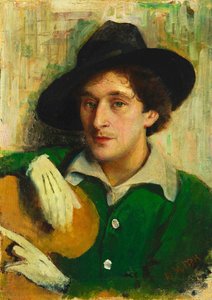
1887 - 1985 , 白俄罗斯


第一时间获取最新的艺术新闻、独家优惠及装饰灵感。
向我们介绍您的项目需求,我们的艺术专家将为您提供 3 个个性化的艺术品推荐。
由我们的专家为您精选 3 款心仪之作 —— 完全免费!


 效果预览
效果预览
 购买印刷品
购买印刷品 分享
分享 分享
分享
 详情
详情

 下载
下载
 相似作品
相似作品 X射线
X射线 幻灯片播放
幻灯片播放

 展开详情
展开详情


