x
 Baroque
 25.0 x 34.0 cm
从与原作比例一致的预设尺寸中进行选择。

您可以输入自定义尺寸,以适配特定的画框或空间。如果您选择的尺寸与原图比例不符,我们将对作品进行裁剪,或通过镜像填充/纯色填充边缘的方式来扩展图像。在开始制作之前,我们会向您发送一份数字效果图供您确认。
请注意,屏幕上的预览并不能反映实际的裁剪或扩展效果。只有效果图才能准确展示最终的构图。
虽然我们提供定制尺寸,但为了保持原图比例,我们建议您从预设列表中选择尺寸。

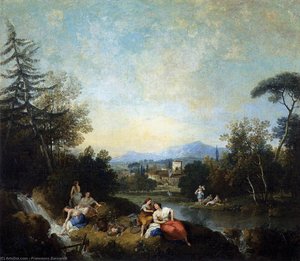
Classical Landscape
复制品尺寸

Michele Pagano (1697-1732) emerges from the vibrant, bustling artistic landscape of late Baroque Naples as a captivating figure – a landscape painter who skillfully blended classical influences with a distinctly local sensibility. His life, tragically cut short in his mid-thirties, nonetheless left behind a body of work that reveals a keen eye for detail, an understanding of atmospheric perspective, and a profound connection to the natural world. Pagano’s story is intertwined with the artistic lineage of Naples, beginning with his training under the esteemed Raimondo di Dominici, known as “il Maltese,” and later benefiting from the tutelage of Bernardo de Dominici – both masters who shaped the visual vocabulary of the city.
Di Dominici's influence instilled in Pagano a foundational knowledge of classical composition and technique. However, it was his subsequent association with Bernardo de Dominici that proved pivotal, exposing him to the work of Franz Joachim Beich, a German landscape painter whose style emphasized dramatic lighting and atmospheric effects. This exposure significantly broadened Pagano’s artistic horizons, equipping him with the tools necessary to develop his own unique voice. He quickly distinguished himself as a “vedutista,” a term denoting a landscape artist specializing in depictions of urban scenes and topographical views – a genre particularly favored in Naples during this period.
Pagano’s most celebrated works are his “vedute” – meticulously rendered depictions of Naples and its surrounding environs. These paintings aren't merely topographical records; they are imbued with a palpable sense of atmosphere, capturing the city’s energy, its light, and its inherent drama. He skillfully employed techniques such as aerial perspective—reducing detail and lightening colors in the distance—to create an illusion of depth and space. His compositions often feature grand vistas of the Bay of Naples, framed by imposing castles and churches, interwoven with bustling streets teeming with life.
Notable amongst his works are depictions of the Castel Nuovo (New Castle), the Duomo (Cathedral), and various views along the waterfront. These scenes aren’t idealized representations; Pagano doesn't shy away from portraying the city’s imperfections – its crumbling walls, its crowded streets, and its inherent chaos. Instead, he presents a nuanced portrait of Naples—a city of contrasts, beauty, and resilience. His ability to capture the interplay of light and shadow, particularly during the golden hours of dawn and dusk, is truly remarkable.
Despite his burgeoning success, Pagano’s life was tragically cut short at the age of thirty-five. Contemporary accounts suggest that he succumbed to complications arising from a treatment for venereal disease – a common affliction during the era, often involving the use of mercury. This grim detail adds a poignant layer to his biography, underscoring the precariousness of life in 18th-century Naples and the toll it could take on even the most talented artists.
The circumstances surrounding his death have fueled speculation about a possible familial connection to Francesco Pagano, a prominent painter from the 15th century. While this remains unconfirmed, it highlights the enduring legacy of the family name within the Neapolitan artistic community. His premature demise robbed the art world of a promising talent and left behind a relatively small but significant body of work that continues to fascinate and inspire.
Michele Pagano’s contribution to the development of Neapolitan landscape painting is undeniable. He stands as a key figure in the “veduta” genre, demonstrating a masterful command of technique and an exceptional ability to capture the essence of his subject matter. His work influenced subsequent generations of artists who followed in his footsteps, shaping the visual identity of Naples and contributing to the city’s rich artistic heritage.
Today, Pagano's paintings are housed in prominent museums throughout Italy, including the San Michele Museum in Bologna and Lucca, offering visitors a glimpse into the world of a talented artist whose life was tragically brief but whose legacy endures through his captivating landscapes. His art serves as a testament to the enduring power of observation, skill, and artistic vision.

1697 - 1732

Discover the art of commissioning bespoke oil paintings blending classical techniques with modern digital precision. Expert artists, personalized service & museum-quality results. Invest in a timeless masterpiece today.

Explore the rich history of river scenes in painting! From Renaissance masters to Impressionist visions, discover renowned artists & movements. Find your perfect serene escape with Most-Famous-Paintings.

Journey through art history with our guide to 10 legendary oil on canvas masterpieces! Explore iconic works by Van Gogh, Monet & Rembrandt. Find museum-quality reproductions and elevate your home decor at . Discover all masterpieces online.

Journey through art history with our Top 10 oil paintings! Explore iconic works by Van Gogh, Monet & Rembrandt. Discover timeless masterpieces and find museum-quality reproductions for your home at .

Explore the captivating history of pastoral art, from classical Arcadia to 19th-century masterpieces. Discover key artists like Millet & Cole and find serene landscape paintings for your home at Most-Famous-Paintings.


第一时间获取最新的艺术新闻、独家优惠及装饰灵感。
向我们介绍您的项目需求,我们的艺术专家将为您提供 3 个个性化的艺术品推荐。
由我们的专家为您精选 3 款心仪之作 —— 完全免费!


 效果预览
效果预览
 购买手绘画作
 分享
分享 分享
分享
 详情
详情

 下载
下载
 相似作品
相似作品 X射线
X射线 幻灯片播放
幻灯片播放 展开详情
展开详情






































 玻璃选项仅适用于110厘米以下的尺寸。