x
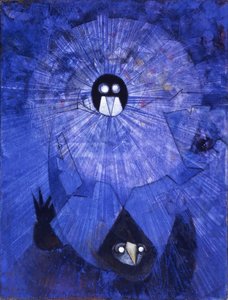
 1982
1982 42.0 x 57.0 cm
从与原作比例一致的预设尺寸中进行选择。

您可以输入自定义尺寸,以适配特定的画框或空间。如果您选择的尺寸与原图比例不符,我们将对作品进行裁剪,或通过镜像填充/纯色填充边缘的方式来扩展图像。在开始制作之前,我们会向您发送一份数字效果图供您确认。
请注意,屏幕上的预览并不能反映实际的裁剪或扩展效果。只有效果图才能准确展示最终的构图。
虽然我们提供定制尺寸,但为了保持原图比例,我们建议您从预设列表中选择尺寸。

Untitled
复制品尺寸

Born in Copenhagen, Denmark, on September 1st, 1938, Per Kirkeby emerged from a world steeped in both scientific rigor and artistic yearning. His early life, marked by his father's engineering career and his mother’s background in education, provided a foundation for an intellectual curiosity that would profoundly shape his multifaceted artistic practice. Initially pursuing studies in natural history at the University of Copenhagen, Kirkeby’s fascination with geology quickly became central to his identity as both a scientist and an artist. This intersection – the meticulous observation of geological processes and the expressive rendering of those observations – is arguably the defining characteristic of his unique oeuvre.
Kirkeby's artistic journey began in 1962, joining the influential “eks-skolen” (Experimental Art School) in Copenhagen. This environment, characterized by a spirit of experimentation and a rejection of traditional art conventions, proved to be fertile ground for his development. He quickly embraced diverse mediums – painting, graphic arts, film, performance pieces – demonstrating an early willingness to push boundaries and explore unconventional approaches. The Fluxus movement’s emphasis on conceptualism and its blurring of the lines between art and life resonated deeply with Kirkeby's own desire to integrate observation and experience into his work.
Kirkeby’s artistic vision was fundamentally rooted in his deep engagement with geology, particularly the landscapes of Greenland. His expeditions to Peary Island during the late 1950s provided a transformative experience, imbuing him with a profound appreciation for the immense timescales involved in geological processes – the slow, relentless forces that shape our planet’s surface. This awareness translated into his art through layered compositions and evocative imagery, reflecting the sedimentation of time and the interplay of erosion and formation.
His early paintings, produced during the 1960s, are often characterized by a vibrant, almost Pop Art-influenced aesthetic. Utilizing techniques like oil paint layering and cut-outs, he created dynamic compositions that drew inspiration from comic books and other popular visual forms. However, beneath this surface vibrancy lay a deeper engagement with geological principles – a desire to capture the essence of natural structures and processes. The influence of artists such as Piet Mondrian and Mark Rothko can be seen in his early work, but Kirkeby quickly developed a distinct style that combined abstraction with a tangible connection to the natural world.
As Kirkeby’s artistic practice evolved, he expanded beyond painting into sculpture, film, poetry, and writing. His sculptural work, particularly his brick structures inspired by Mayan architecture and traditional Danish housing, demonstrated a fascination with form, structure, and the relationship between human creation and natural processes. The house-like forms on Læsø Island, for example, served as both a meditation on shelter and a commentary on the enduring presence of geological forces.
Kirkeby’s foray into film further solidified his commitment to interdisciplinary exploration. He collaborated with filmmaker Lars von Trier on several projects, contributing visual elements that underscored the thematic concerns of the films. His poetry and essays explored themes of landscape, time, and human experience, offering a more intimate perspective on his artistic vision.
Per Kirkeby’s work gained international recognition throughout his career, with exhibitions held at prestigious institutions such as the Tate in London, the Metropolitan Museum of Art and MoMA in New York, and the Centre Pompidou in Paris. He was awarded numerous accolades, including the Art Prize of NORD/LB in 1990 and the Coutts Contemporary Art Foundation Award in 1996. In 1982 he became a member of the Danish Academy.
Despite a serious brain injury sustained in 2013 that ultimately led to his decision to cease painting, Per Kirkeby’s legacy endures. His work continues to be exhibited and studied worldwide, celebrated for its unique synthesis of geological observation, artistic expression, and conceptual exploration. He remains a pivotal figure in contemporary art, demonstrating the power of art to engage with fundamental questions about our place within the natural world. He died on May 9th, 2018, leaving behind a body of work that continues to inspire awe and contemplation.

1938 -


第一时间获取最新的艺术新闻、独家优惠及装饰灵感。
向我们介绍您的项目需求,我们的艺术专家将为您提供 3 个个性化的艺术品推荐。
由我们的专家为您精选 3 款心仪之作 —— 完全免费!


 效果预览
效果预览
 购买手绘画作
 分享
分享 分享
分享
 详情
详情

 下载
下载
 相似作品
相似作品 X射线
X射线 幻灯片播放
幻灯片播放 展开详情
展开详情






































 玻璃选项仅适用于110厘米以下的尺寸。