x
 Contemporary Realism
 2000Contemporary
 63.0 x 3.0 cm
 Central Goldfields Art Gallery
购买高分辨率增强版数字图像,其品质远超在线预览。
每一份文件都由我们的内部专家使用先进工具与专业的后期润色技术精心打造。我们确保每一张图像都具备卓越的清晰度、精准的色彩还原度以及细腻的细节表现。
最终文件将在 72 小时内通过电子邮件交付,并针对专业、编辑及印刷用途进行了优化。其品质与顶级设计工作室、出版社和画廊所信赖的标准完全一致。
选择 Most-Famous-Paintings.com,您获得的不仅仅是一张图像——您收到的是经过专业级增强、精雕细琢的数字艺术作品,并享有满意保证。以下是您的订单中自动包含的所有内容:

您的高分辨率数字图像文件将在下单后 72 小时内通过电子邮件发送给您 —— 即可立即使用。

您的艺术品经过专业优化,结合先进的 AI 技术与人工修饰,确保呈现极致的细节、清晰度与色彩准确度。

不小心删除了文件或找不到了?没关系——我们将随时为您免费重发。

即刻拥有您的艺术作品,无需支付任何关税、税费或运费——数字下载始终免税。

我们通过专业工具与色彩管理技术,确保您的数字图像尽可能真实地还原原作色彩。

如果您对所购买的数字图像不满意,我们将在60天内为您进行修改或退还100%的款项——无需任何解释。

如果不满意?在收到数字文件后的60天内,我们为您提供全额退款——无需任何理由。

购买 3 张图片可享 10% 折扣 - 购买 5 张可享 15% 折扣 - 购买 10+ 张可享 20% 折扣。非常适合创意项目、画廊和机构使用。
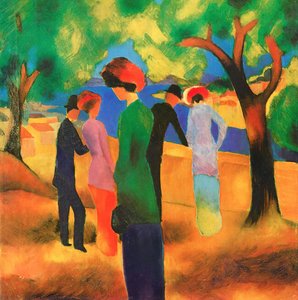
In the evocative piece titled Conversation, the renowned Australian master Ray Austin Crooke invites us into a moment of profound stillness. This work, captured with a delicate sensitivity to form and atmosphere, presents a black and white study of two figures positioned within a lush, wooded landscape. On the left, a man stands in quiet contemplation, while on the right, a woman completes the intimate pairing. The composition is anchored by the rhythmic verticality of surrounding trees, which frame the subjects and draw the eye toward the distant, shimmering presence of water. There is an undeniable sense of peace found in this meeting; it is as if time itself has paused to allow these two souls to share a wordless connection amidst the breathing forest.
The technique employed here speaks to Crooke’s legendary ability to manipulate light and shadow, even within a monochromatic palette. By stripping away color, the artist forces the viewer to focus on the textures of the landscape—the rough bark of the trees, the soft drapery of the woman's long dress, and the ethereal quality of the light filtering through the canopy. This mastery of tonal range creates a depth that feels almost tactile, making the scene feel less like a flat image and more like a window into a memory. The way the distant water reflects the sky adds a layer of luminosity, preventing the dark woods from feeling heavy and instead imbuing them with a serene, dreamlike quality.
To understand the emotional weight of Conversation, one must consider the broader context of Ray Austin Crooke’s illustrious career. As an Archibald Prize winner, Crooke possessed a unique gift for capturing the essence of his subjects, whether they were portraits of notable figures or the sweeping vistas of the Australian tropics. His experiences during World War II and his time in Northern Australia deeply informed his artistic soul, instilling in him a reverence for the quiet, untouched corners of the world. In this particular work, we see the echoes of that reverence; the painting serves as a testament to the beauty found in solitude and the sacredness of human connection within the natural realm.
For the discerning collector or interior designer, this reproduction offers more than just a visual element for a room; it provides an emotional anchor. The monochromatic elegance of the piece allows it to integrate seamlessly into sophisticated, modern interiors, acting as a focal point that encourages reflection and calm. It is a work that does not shout for attention but rather commands it through its understated grace. Bringing Conversation into a living space means inviting the tranquil spirit of the Australian landscape and the timeless beauty of a shared moment into the heart of the home.

The art of Ray Austin Crooke stands as a profound testament to the enduring beauty of the Australian landscape and the quiet, rhythmic pulse of island life. Born in 1922 in Auburn, Victoria, Crooke’s journey was one defined by movement, from the structured environments of his youth to the sun-drenched, expansive horizons of the tropics. His work does more than merely replicate scenery; it captures a specific atmospheric essence—a sense of tranquility that feels both timeless and deeply personal. As an artist, he possessed a rare ability to translate the warmth of the equatorial sun and the gentle movement of ocean vistas into a visual language that resonates with peace and nostalgia.
The foundations of his artistic sensibility were laid long before he achieved national acclaim. Growing up in Melbourne, Crooke was nurtured by a family deeply connected to the arts and the broader Australian experience. His father, Gordon Crooke, instilled in him an early appreciation for visual expression, while his mother’s background—having grown up on Aboriginal missions—provided a subtle, empathetic lens through which he viewed the world. This early exposure to diverse cultural narratives and the natural beauty of the continent would later become the heartbeat of his landscapes, imbuing his paintings with a soulful depth that transcends simple topography.
The trajectory of Crooke’s life and art was irrevocably altered by the shadows of World War II. Enlisting in the Victorian Scottish Regiment in 1941, his service took him far from the temperate landscapes of Victoria to the rugged coastal bases of Western Australia and Northern Queensland. This period of upheaval served as a transformative crucible; the displacement and exposure to new environments ignited a lifelong fascination with the tropics. The vibrant light, the lush vegetation, and the unique cultural tapestries of places like Townsville and Cape York became the primary muses for his developing style.
Following his military service, Crooke sought formal refinement at Swinburne Technical College, honing the technical skills that would allow him to masterfully manipulate light and color. His travels through New Guinea, Tahiti, and Fiji further expanded his artistic vocabulary, drawing inspiration from the legendary vision of Paul Gauguin. Much like the French master, Crooke found a profound connection in the depiction of islander communities and the lush, emotive landscapes of the Pacific. His work began to reflect a sophisticated interplay of color and form, where the boundaries between land, sea, and sky seemed to dissolve into a singular, harmonious atmosphere.
The pinnacle of Crooke’s professional recognition arrived in 1969, when he was awarded the prestigious Archibald Prize. This achievement, earned with his portrait of George Johnston, solidified his standing within the upper echelons of Australian art history. While his portraits demonstrated a keen ability to capture human character, it was his landscapes and oceanscapes that truly defined his legacy. His paintings often feature:
Throughout his long and productive career, which spanned from his early days in Melbourne to his final years in Palm Cove, Queensland, Ray Austin Crooke remained a dedicated observer of the world's quietest moments. His ability to blend the technical rigor of his training with an emotive, almost spiritual connection to his subjects has ensured that his work remains a vital part of the Australian artistic canon. He leaves behind a body of work that serves as a window into a world of profound stillness, inviting every viewer to find their own moment of tranquility amidst his painted horizons.

1922 - 2015 , Australia


第一时间获取最新的艺术新闻、独家优惠及装饰灵感。
向我们介绍您的项目需求,我们的艺术专家将为您提供 3 个个性化的艺术品推荐。
由我们的专家为您精选 3 款心仪之作 —— 完全免费!


 效果预览
效果预览
 购买印刷品
购买印刷品 分享
分享 分享
分享
 详情
详情

 下载
下载
 相似作品
相似作品 X射线
X射线 幻灯片播放
幻灯片播放 展开详情
展开详情