


x





























从与原作比例一致的预设尺寸中进行选择。

您可以输入自定义尺寸,以适配特定的画框或空间。如果您选择的尺寸与原图比例不符,我们将对作品进行裁剪,或通过镜像填充/纯色填充边缘的方式来扩展图像。在开始制作之前,我们会向您发送一份数字效果图供您确认。
请注意,屏幕上的预览并不能反映实际的裁剪或扩展效果。只有效果图才能准确展示最终的构图。
虽然我们提供定制尺寸,但为了保持原图比例,我们建议您从预设列表中选择尺寸。

Untitled
复制品尺寸

In the quiet, unsettling intersection where the domestic meets the uncanny, the work of Robert Gober resides. An American sculptor whose presence in the contemporary art landscape is both profound and haunting, Gober possesses a singular ability to transform the most mundane objects of our daily lives into vessels of deep psychological resonance. Born in Wallingford, Connecticut, in 1954, his journey into the heart of sculptural mastery was not immediate. After studying literature and fine art at Middlebury College and the Tyler School of Art in Rome, Gober arrived in New York in 1976. His early years were defined by a tactile relationship with materials; working as a carpenter crafting stretchers for other artists and renovating lofts, he developed a profound intimacy with wood, structure, and the physical essence of construction.
This foundational period of craftsmanship became the bedrock of his artistic evolution. While he initially focused on painting—even engaging in experimental processes such as the creation of 89 sequential slides depicting a single, mutating painting—it was in the 1980s that Gober pivoted toward sculpture. This transition allowed him to explore the sculptural potential of the familiar. His work began to center on objects that inhabit our most private spaces: sinks, doors, and even human limbs. These are not merely replicas; they are meticulously handcrafted re-creations that demand a second, more careful look. Through layers of plaster, wood, wire lath, and semi-gloss enamel, Gober breathes a strange, sentient life into the inanimate, making the viewer question the boundary between the object and the observer.
To encounter a Gober sculpture is to enter a space of profound ambiguity. His work often navigates the complex territories of sexuality, religion, nature, and politics, using the language of the domestic to speak of the universal. One of his most iconic contributions to contemporary sculpture is his series of increasingly eccentric sinks. These objects, though appearing as common household fixtures, possess an unsettling quality that suggests a hidden history or a latent biological presence. By manipulating the familiar, Gober taps into the "uncanny"—that psychological state where something deeply known becomes suddenly, strangely foreign.
This exploration of the body reached new heights in 1989, when Gober began casting beeswax into sculptures of men's legs. These works, often completed with shoes, trouser legs, and even real human hair inserted into the wax, evoke a sense of vulnerability and visceral presence. The use of beeswax—a material that is both organic and transformative—serves as a metaphor for the malleability of identity and memory. Through these anatomical fragments, Gober touches upon themes of gender, hermaphrodism, and the fragility of the human form, creating a dialogue that is as much about the biological self as it is about the social construct.
Beyond his individual practice, Robert Gober has played a vital role in shaping the discourse of contemporary art through his curatorial endeavors. His ability to interpret the legacies of other artists demonstrates a deep understanding of art history and thematic continuity. Notable achievements include:
Today, Robert Gober remains a pivotal figure in the sculptural canon. His work does not merely sit in a gallery; it haunts the periphery of our consciousness. By elevating the sink, the door, and the limb to the status of high art, he forces us to confront the profound mysteries hidden within the very fabric of our everyday existence. His legacy is one of meticulous craftsmanship and an unwavering commitment to exploring the shadows cast by the light of the familiar.

1954 - , United States of America

Explore the captivating world of Jim Dine – Pop Art pioneer & master of autobiographical expression. Discover his iconic tools, robes, and hearts. Expert insights for art collectors.

Explore the captivating world of Hiro Yamagata’s innovative sculptures & paintings. Discover his pioneering use of laser technology, immersive installations, and abstract forms – a must-read for discerning art collectors.
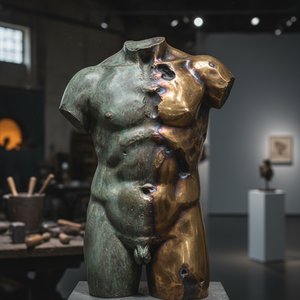
探索青铜雕塑的千年魅力,本文由资深艺术史学者撰写,深入解析古代铸造技术与现代收藏价值。为高端藏家提供专业鉴定、保养指南和投资建议,让您在信任与品质中发现珍贵艺术品。

Explore the captivating history of marble sculpture from ancient Greece to modern art. Discover renowned artists like Canova & Michelangelo, carving techniques, and investment insights at Most-Famous-Paintings.

Explore the evolution of civic art & its powerful role in shaping national identity. From Rembrandt to Monet, discover how masterpieces reflect community values and historical narratives. Learn more at Most-Famous-Paintings.


第一时间获取最新的艺术新闻、独家优惠及装饰灵感。
向我们介绍您的项目需求,我们的艺术专家将为您提供 3 个个性化的艺术品推荐。
由我们的专家为您精选 3 款心仪之作 —— 完全免费!


 效果预览
效果预览
 购买手绘画作
 分享
分享 分享
分享
 详情
详情

 下载
下载
 相似作品
相似作品 X射线
X射线 幻灯片播放
幻灯片播放
 展开详情
展开详情









 玻璃选项仅适用于110厘米以下的尺寸。


