x





























从与原作比例一致的预设尺寸中进行选择。

您可以输入自定义尺寸,以适配特定的画框或空间。如果您选择的尺寸与原图比例不符,我们将对作品进行裁剪,或通过镜像填充/纯色填充边缘的方式来扩展图像。在开始制作之前,我们会向您发送一份数字效果图供您确认。
请注意,屏幕上的预览并不能反映实际的裁剪或扩展效果。只有效果图才能准确展示最终的构图。
虽然我们提供定制尺寸,但为了保持原图比例,我们建议您从预设列表中选择尺寸。

Wimpy (Tweet)
复制品尺寸
In the annals of twentieth-century art, few images possess the jarring, immediate power of Roy Lichtenstein’s 1961 masterpiece, "Wimpy (Tweet)." At first glance, the viewer is confronted with a scene of profound disorientation: a figure sprawled upon the ground, seemingly undone by an invisible force. While the aesthetic may initially suggest the playful detachment of a comic strip, a deeper gaze reveals a hauntingly modern metaphor for the fragmentation of the human spirit. The painting serves as an arresting visual commentary on the overwhelming pressures of contemporary existence—a precursor to our modern era of digital saturation. Through the depiction of a man whose very consciousness seems to be bursting under immense strain, Lichtenstein captures the precise moment where external stimuli overwhelm internal stability.
The emotional resonance of the piece lies in its ability to evoke both chaos and a strange, clinical stillness. The background, scattered with shimmering stars, provides an unsettling grandeur that contrasts sharply with the visceral distress of the subject. This juxtaposition creates a sense of cosmic indifference; the universe continues its silent, sparkling rotation while the individual undergoes a psychological collapse. For collectors and enthusiasts, this tension makes the work an incredibly provocative centerpiece, capable of sparking deep conversation about the boundaries between mass media consumption and personal mental well-being.
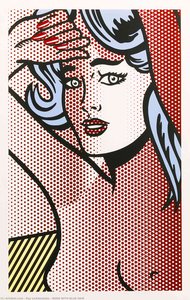
Lichtenstein’s technical execution in "Wimpy (Tweet)" is a masterclass in the deliberate use of Pop Art aesthetics to convey complex psychological states. Eschewing the thick, emotive brushstrokes of Abstract Expressionism, Lichtenstein utilized the cold, mechanical language of commercial printing. His signature use of Ben-Day dots—those tiny, rhythmic patterns used in newspaper and comic book production—creates a flattened, graphic surface that denies the viewer the comfort of traditional depth. This technique is profoundly symbolic; by reducing a moment of intense human suffering to a series of standardized dots and bold, black outlines, Lichtenstein mirrors how mass media strips away the nuance of individual experience, turning tragedy into a digestible, two-dimensional commodity.
The color palette is equally calculated, employing vibrant, primary tones that feel both energetic and artificial. This "illusion of precision" forces the eye to confront the subject matter without the buffer of artistic subtlety. There is no soft shading to hide the violence of the imagery; instead, the starkness of the lines emphasizes the rupture of the figure's mind. For an interior designer, this piece offers a striking graphic element that commands attention through its high-contrast composition and clean, iconic silhouettes, making it an ideal choice for modern, avant-garde spaces that celebrate bold, intellectual statements.
Emerging during the zenith of the Pop Art movement, "Wimpy (Tweet)" stands as a critique of the burgeoning mass culture of the mid-twentieth century. As television and advertising began to reshape the collective consciousness, Lichtenstein was among the first to interrogate how these new media forms would impact the human psyche. Though painted decades before the advent of modern social media, the painting’s themes of information overload and the "bursting" of the self feel eerily prophetic in our current digital age. It captures the anxiety of a world where the boundaries between reality and representation are increasingly blurred.
Owning a high-quality reproduction of this work is more than an acquisition of fine art; it is an invitation to contemplate the intersection of technology, culture, and identity. Whether placed in a curated gallery setting or as a bold statement in a contemporary living space, "Wimpy (Tweet)" serves as a timeless reminder of the fragility of the human mind in an era of relentless stimulation. It remains a cornerstone for any serious collection focused on the transformative power of the Pop movement and the enduring relevance of Lichtenstein’s visionary gaze.

1923 - 1997 , 美国

Explore the psychological depth of Roy Lichtenstein's color theory. An expert analysis for art students and collectors on Ben-Day dots, primary palettes, and the intersection of Pop Art with mass media history.

Explore the profound evolution of digital collage, where art history meets modern technology. Discover how contemporary masters merge classical techniques with digital innovation to create breathtaking new masterpieces for the modern collector.

Explore the industrial secrets of 1960s Pop Art. Discover how Ben-Day dots and silk screening transformed mass media into masterpieces by Roy Lichtenstein. An in-depth look at the intersection of mechanical printing and fine art history for students and collectors.
Unlock your creative potential with Most-Famous-Paintings Digital Licensing. Transform your digital masterpieces into global royalty streams through our prestigious marketplace, bridging modern innovation with classical legacy for the visionary artist.

Explore the provocative world of Aggressive Pop Art. Discover how confrontational imagery, bold saturated hues, and mass media deconstruction redefined modern aesthetics through an expert art-historical lens.


第一时间获取最新的艺术新闻、独家优惠及装饰灵感。
向我们介绍您的项目需求,我们的艺术专家将为您提供 3 个个性化的艺术品推荐。
由我们的专家为您精选 3 款心仪之作 —— 完全免费!


 效果预览
效果预览
 购买手绘画作
 分享
分享 分享
分享
 详情
详情

 下载
下载
 相似作品
相似作品 X射线
X射线 幻灯片播放
幻灯片播放

 展开详情
展开详情









 玻璃选项仅适用于110厘米以下的尺寸。