x





























从与原作比例一致的预设尺寸中进行选择。

您可以输入自定义尺寸,以适配特定的画框或空间。如果您选择的尺寸与原图比例不符,我们将对作品进行裁剪,或通过镜像填充/纯色填充边缘的方式来扩展图像。在开始制作之前,我们会向您发送一份数字效果图供您确认。
请注意,屏幕上的预览并不能反映实际的裁剪或扩展效果。只有效果图才能准确展示最终的构图。
虽然我们提供定制尺寸,但为了保持原图比例,我们建议您从预设列表中选择尺寸。

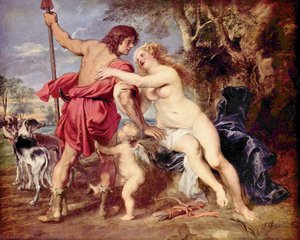
Venus and Adonis
复制品尺寸
Simon Vouet’s “Venus and Adonis,” painted in 1642, is a striking example of French Baroque art, showcasing the artist’s mastery of color, composition, and his assimilation of Italian artistic trends. This evocative scene depicts the poignant moment from Ovid's *Metamorphoses* where the mortal Adonis, captivated by hunting, rejects Venus’s advances, foreshadowing his tragic demise. The painting isn't merely a depiction of mythology; it's an exploration of love, desire, and mortality rendered with remarkable sensitivity.
Vouet, having spent over a decade in Italy (particularly Rome), was instrumental in introducing the dynamic energy and dramatic lighting characteristic of Italian Baroque painting to France. This work exemplifies that influence. Observe how Vouet utilizes tenebrism – the strong contrast between light and dark – to heighten the emotional intensity of the scene. The figures emerge from a shadowy forest setting, illuminated by strategically placed light sources that emphasize their forms and expressions. His brushwork is fluid and graceful, particularly evident in the rendering of Venus’s flowing drapery and Adonis' muscular physique. Vouet’s technique demonstrates a keen understanding of anatomy and perspective, hallmarks of his training within the Italian artistic milieu.
The 17th century was a period of significant artistic transition in France. While earlier French art often leaned towards Mannerism, Vouet’s work signaled a shift toward the more dynamic and emotionally charged style of the Baroque. His return to Paris in 1627 as “Premier Peintre du Roi” (First Painter to the King) marked a pivotal moment in French artistic history. The painting reflects the aristocratic tastes of the time, with its focus on mythological subjects and refined elegance. Vouet drew inspiration from masters like Caravaggio for his dramatic lighting and Paolo Veronese for his vibrant color palette and compositional complexity. The presence of animals—birds and dogs—adds a touch of naturalism and further enriches the scene's narrative.
Beyond its surface beauty, “Venus and Adonis” is rich in symbolism. Venus, the goddess of love and beauty, represents desire and passion. Adonis, the hunter, embodies youthful vigor and a preoccupation with earthly pursuits. His rejection of Venus foreshadows his tragic death by a wild boar – a symbol of uncontrolled passions and mortality. The surrounding forest setting contributes to the painting’s melancholic atmosphere, hinting at the fleeting nature of beauty and love. The overall emotional impact is one of poignant longing and impending loss; a sense of bittersweet beauty permeates the scene, inviting contemplation on the ephemeral qualities of life and affection.
Simon Vouet’s “Venus and Adonis” offers a captivating glimpse into 17th-century French Baroque art. Its masterful technique, rich symbolism, and emotional depth make it an enduring masterpiece. A hand-painted reproduction of this artwork will bring a touch of classical elegance and dramatic flair to any interior space—whether adorning a grand salon or adding sophistication to a more intimate setting. It’s a conversation starter, a source of inspiration, and a testament to the power of art to evoke profound emotions.
西蒙·武埃是法国绘画从风格主义向巴洛克风格过渡时期的一位关键人物。他出生于一个艺术家庭——他的父亲洛朗是一位画家,他的兄弟奥班也投身于艺术领域——武埃接受了早期训练,这为他未来的成功奠定了基础。他的孙子路多维科·多里尼将延续这个家族的艺术血脉。
在意大利的流放期间,武埃吸收了各种各样的影响。他学习了卡拉瓦乔开创的戏剧性光影技巧,采纳了意大利风格主义的元素,并细致分析了帕奥洛·维罗内塞所采用的调色板和di sotto in su(仰视透视法)。他还从卡拉奇、圭尔奇诺、兰弗兰科和圭多·雷尼的作品中汲取灵感,将这些不同的风格综合成了一种独特的艺术视野。
西蒙·武埃的遗产在于他作为意大利艺术与法国艺术之间一座关键桥梁的作用。他成功地引入了意大利巴洛克的活力和宏大,并将其转化为一种与法国宫廷和贵族品味产生共鸣的风格。他在17世纪法国绘画的发展中留下的影响是不可否认的,他的贡献至今仍受到艺术史学家的认可。

1590 - 1649 , 法国

Explore the profound elegance of Baroque Classicism. Discover how 17th-century masters synthesized dramatic emotion with classical order through the lens of the Counter-Reformation and the works of legends like Carlo Maratta and Andrea Sacchi.

Explore the dramatic power of Baroque art through an expert guide to light, shadow, and emotion. Discover how the Counter-Reformation shaped 17th-century masterpieces and learn about the profound techniques used by the Old Masters to inspire awe.

Explore the dramatic evolution from Mannerist distortion to Baroque grandeur. Discover how light, shadow, and emotion redefined art history through a masterclass in technical mastery and religious fervor.

Explore the profound beauty of Greek mythology through art history. From Baroque masterpieces to Renaissance classics, discover how gods and heroes have inspired the world's greatest painters in this expert guide for collectors and history lovers.

Explore the profound differences between Baroque drama and Rococo elegance. Our expert guide delves into art history, chiaroscuro, and the evolution of European masterpieces for collectors and enthusiasts seeking deep historical context.


第一时间获取最新的艺术新闻、独家优惠及装饰灵感。
向我们介绍您的项目需求,我们的艺术专家将为您提供 3 个个性化的艺术品推荐。
由我们的专家为您精选 3 款心仪之作 —— 完全免费!


 效果预览
效果预览
 购买手绘画作
 分享
分享 分享
分享
 详情
详情

 下载
下载
 相似作品
相似作品 X射线
X射线 幻灯片播放
幻灯片播放


 展开详情
展开详情









 玻璃选项仅适用于110厘米以下的尺寸。