


x
从与原作比例一致的预设尺寸中进行选择。

您可以输入自定义尺寸,以适配特定的画框或空间。如果所选尺寸与原图比例不符,我们将通过裁剪作品或添加手绘元素来扩展画面。数字样稿将在制作开始前发送给您确认。
请注意,屏幕预览无法准确反映实际的裁剪或扩展效果,只有样稿才能真实呈现最终的构图。
虽然我们提供定制尺寸服务,但为了保留原作比例,建议您从预设列表中选择尺寸。

Crabbes Historical Dictionary
复制品尺寸

The history of British landscape art is often told through the sweeping, dramatic canvases of the giants who followed him, yet the foundation of this Romantic tradition was laid with exquisite precision by Thomas Hearne. Born in 1744 in the quiet village of Marshfield, Gloucestershire, Hearne’s early life was shaped by a profound sense of loss and movement. The death of his father when Thomas was only five years old forced him and his mother to relocate to Brinkworth, Wiltshire. This early exposure to the changing landscapes of the English countryside, coupled with the looming presence of architectural marvels like Malmesbury Abbey, would later manifest in his work as a deep, scholarly fascination with Gothic structures and the enduring spirit of antiquity.
Hearne’s path to artistic mastery was far from conventional. His initial apprenticeship was not in a studio, but in the kitchen of his uncle, a pastry cook in Covent Garden. However, fate intervened through the simple proximity of a print shop next door. The influence of Miller, an engraver, provided the young man with a gateway into the world of fine art, transforming a culinary apprenticeship into a lifelong devotion to line and light. This early training in the meticulous details of engraving would become the hallmark of his style, allowing him to marry the precision of a draftsman with the atmospheric soul of a painter.
As Hearne’s talent matured, he moved beyond simple topographical recording toward a more nuanced, emotive expression of nature. His technique became legendary among his contemporaries for its delicate balance; he possessed a unique ability to apply a wash of subtle, subdued colours over a clear, unwavering outline rendered in fine brush, pen, or pencil. This method created a sense of luminous clarity that felt both grounded in reality and elevated by a poetic atmosphere. His work did not merely depict a place; it captured the very air and light that inhabited it.
The development of his skill was significantly accelerated through his association with the celebrated engraver William Woollett. Under Woollett’s mentorship, Hearne spent six years refining his ability to translate complex landscapes into print, a period during which Woollett himself came to regard him as the preeminent landscape engraver of the era. This rigorous training in tonal depth and structural integrity prepared Hearne for his later explorations, where he would combine the architectural precision of an antiquarian with the burgeoning sensibilities of the Romantic movement.
Thomas Hearne occupies a vital position in art history as a bridge between the topographical accuracy of the mid-eighteenth century and the emotive landscapes of the nineteenth. His influence was not merely retrospective; it was foundational for the next generation of masters. The techniques he pioneered in watercolor were studied closely by J.M.W. Turner and Thomas Girtin, two artists who would eventually push the boundaries of the medium into even more sublime and tempestuous territories. Hearne provided the structural vocabulary that allowed these later artists to explore the infinite.
His career was marked by significant professional milestones and adventurous travels that expanded his artistic horizons:
Ultimately, the work of Thomas Hearne remains a testament to the power of observation. Whether capturing the weathered stone of a Gothic ruin or the soft light filtering through a woodland canopy, his art invites the viewer into a world of quiet contemplation and historical reverence. He remains an essential figure for anyone seeking to understand the roots of the English landscape tradition.

1744 - 1817 , United Kingdom

深入探索18世纪洛可可风格艺术:起源、大师作品赏析、核心特征解读及收藏价值。Most-Famous-Paintings提供专业艺术咨询,助您鉴赏与投资精品艺术。

Journey through art history with our Top 10 Legendary Engravings! Explore masterpieces by Dürer, Rembrandt & Goya. Discover the stories behind these iconic prints and find museum-quality reproductions for your home at Most-Famous-Paintings.com.
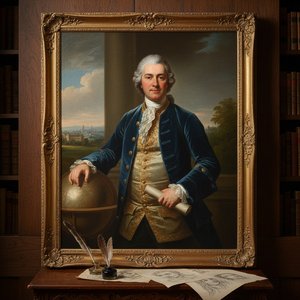
Explore the life & work of Thomas Hudson, a leading 18th-century British portraitist. Discover his mastery of the 'Grand Manner,' influential style, and lasting impact on British art. Learn about his notable portraits like Judge William Noel & Alexander Van Aken.

Explore the world of 18th-century portraiture with Most-Famous-Paintings. Discover symbolism, artistic innovation & societal values reflected in masterpieces by Reynolds, Hogarth & more. Expert insights for collectors.

Explore the rich history & artistic power of black and white photography. From early techniques to iconic masters like Ansel Adams, discover why monochrome continues to captivate art lovers today. Expert insights for collectors.


第一时间获取最新的艺术新闻、独家优惠及装饰灵感。
向我们介绍您的项目需求,我们的艺术专家将为您提供 3 个个性化的艺术品推荐。
由我们的专家为您精选 3 款心仪之作 —— 完全免费!


 效果预览
效果预览
 购买印刷品
购买印刷品 分享
分享 分享
分享
 详情
详情

 下载
下载
 相似作品
相似作品 X射线
X射线 幻灯片播放
幻灯片播放
 展开详情
展开详情






































 玻璃选项仅适用于110厘米以下的尺寸。


