x
 39.0 x 55.0 cm
 Northumbria University Gallery
从与原作比例一致的预设尺寸中进行选择。

您可以输入自定义尺寸,以适配特定的画框或空间。如果您选择的尺寸与原图比例不符,我们将对作品进行裁剪,或通过镜像填充/纯色填充边缘的方式来扩展图像。在开始制作之前,我们会向您发送一份数字效果图供您确认。
请注意,屏幕上的预览并不能反映实际的裁剪或扩展效果。只有效果图才能准确展示最终的构图。
虽然我们提供定制尺寸,但为了保持原图比例,我们建议您从预设列表中选择尺寸。

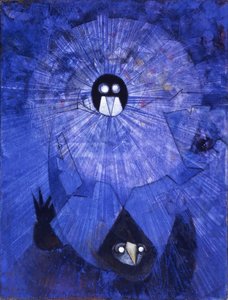
The Bay
复制品尺寸

In the vast, often turbulent landscape of postwar American art, few figures cast a shadow as profound or as geometrically precise as Tony Smith. Born in South Orange, New Jersey, in 1912, Smith’s journey toward becoming a cornerstone of Minimalist sculpture was not a linear ascent through academic halls, but rather a complex weaving of architectural discipline, industrial fascination, and an intuitive connection to the unconscious. His early life was shaped by a profound encounter with physical fragility; a bout of tuberculosis in his youth instilled in him a deep reverence for the transformative power of structure and the way built environments can respond to human limitations. This early exposure to innovative building techniques—witnessed through his family’s use of prefabricated housing—planted the seeds for an artistic language that would eventually bridge the gap between the organic spirit and the industrial machine.
Smith’s path to creative mastery was marked by a restless, experiential intellect. Eschewing the rigid confines of traditional academia, he sought knowledge through direct engagement with the masters of his era. At the Art Students League of New York, he immersed himself in the meticulous disciplines of anatomy and drawing under figures such as George Bridgman and George Groszek. His pursuit of architectural truth led him to the New Bauhaus in Chicago and, most pivotally, to an apprenticeship with the legendary Frank Lloyd Wright. Working on the Ardmore Project and spending time at Taliesin, Smith absorbed a philosophy where form and function were inseparable. Yet, as he matured, a certain disillusionment began to take root. The domestic restrictions of client-driven architecture—the demand for comfort over pure form—began to feel like a cage, prompting him to seek a medium that offered the permanence and monumental presence he craved.
The transition from architect to sculptor in the early 1960s represented one of the most radical shifts in modern art history. Smith did not merely abandon architecture; he translated its principles into a new, sculptural vocabulary. He began to view his works not as mere objects, but as presences—entities that occupied space with a spiritual and physical weight. This period saw the birth of his iconic large-scale, modular works, characterized by their geometric abstraction and industrial rigor. One of his most revolutionary innovations was the decision to have his sculptures industrially fabricated. By utilizing steel and other industrial materials, Smith stripped away the "hand of the artist" in the traditional sense, allowing the raw, unyielding power of the material to speak for itself.
His work during this era was a masterful synthesis of seemingly contradictory forces:
The legacy of Tony Smith extends far beyond the steel monoliths that bear his name. He was a bridge-builder between generations, a teacher at institutions like NYU and Cooper Union who mentored future icons of the New York School. His influence can be traced through the lineage of contemporary art, even reaching into the work of his daughter, the renowned artist Kiki Smith, whose sensitivity to the human form carries a different, yet equally profound, resonance. Smith’s ability to infuse industrial geometry with an almost primordial sense of mystery ensured that his work would never be dismissed as mere mathematical exercise.
Today, the significance of Smith’s oeuvre is recognized through major retrospectives at The Museum of Modern Art, the Menil Collection, and the Los Angeles County Museum of Art. He remains a vital figure for anyone studying the intersection of art and architecture, reminding us that even within the most rigid structures, there exists a profound capacity for human expression and spiritual depth. His sculptures remain as they were intended: powerful, silent presences that continue to challenge our perception of space, weight, and the very essence of existence.

1912 - 1980 , United States of America


第一时间获取最新的艺术新闻、独家优惠及装饰灵感。
向我们介绍您的项目需求,我们的艺术专家将为您提供 3 个个性化的艺术品推荐。
由我们的专家为您精选 3 款心仪之作 —— 完全免费!


 效果预览
效果预览
 购买手绘画作
 分享
分享 分享
分享
 详情
详情

 下载
下载
 相似作品
相似作品 X射线
X射线 幻灯片播放
幻灯片播放 展开详情
展开详情






































 玻璃选项仅适用于110厘米以下的尺寸。