愿望清单 购物车 Cart
PreviewPreview 购买版画 购买版画定制手绘复刻品 定制手绘复刻品 分享分享
详情详情 加入收藏 加入收藏 下载下载 相似作品相似作品 X射线X射线 幻灯片播放幻灯片播放

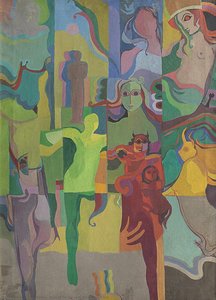
Study for Kites

A lively watercolor scene of people flying colorful kites captures a sense of joyful movement in this 1966 masterpiece by British artist William Roberts, inviting you to bring this vibrant moment into your collection.

Discover William Roberts, a pivotal Australian Impressionist artist. Explore his evocative landscapes & 'national narratives' – Shearing the Rams & more! A key figure in the Heidelberg School.

购买高分辨率增强版数字图像,其品质远超在线预览。

每一份文件都由我们的内部专家使用先进工具与专业的后期润色技术精心打造。我们确保每一张图像都具备卓越的清晰度、精准的色彩还原度以及细腻的细节表现。

最终文件将在 72 小时内通过电子邮件交付,并针对专业、编辑及印刷用途进行了优化。其品质与顶级设计工作室、出版社和画廊所信赖的标准完全一致。

数字图像

下载高分辨率文件,用于个人展示、打印及创意项目。

最终价格

$9.99

每份数字图像订单均包含

专业数字图像交付,品质保障

选择 Most-Famous-Paintings.com,您获得的不仅仅是一张图像——您收到的是经过专业级增强、精雕细琢的数字艺术作品,并享有满意保证。以下是您的订单中自动包含的所有内容:

shipping_icon
邮件快速送达

您的高分辨率数字图像文件将在下单后 72 小时内通过电子邮件发送给您 —— 即可立即使用。

canvas_icon
AI 增强型数字文件

您的艺术品经过专业优化,结合先进的 AI 技术与人工修饰,确保呈现极致的细节、清晰度与色彩准确度。

insurance_icon
终身免费重发服务

不小心删除了文件或找不到了?没关系——我们将随时为您免费重发。

tax_icon
无需进口费用,始终如一

即刻拥有您的艺术作品,无需支付任何关税、税费或运费——数字下载始终免税。

color_icon
色彩精准保证

我们通过专业工具与色彩管理技术,确保您的数字图像尽可能真实地还原原作色彩。

return_icon
60天满意保证

如果您对所购买的数字图像不满意,我们将在60天内为您进行修改或退还100%的款项——无需任何解释。

guarantee_icon
100% 退款保证

如果不满意?在收到数字文件后的60天内,我们为您提供全额退款——无需任何理由。

discount_icon
批量订单优惠

购买 3 张图片可享 10% 折扣 - 购买 5 张可享 15% 折扣 - 购买 10+ 张可享 20% 折扣。非常适合创意项目、画廊和机构使用。

作品概览

  • Artistic style: English Cubism
  • Year: 1966
  • Artist: William Roberts
  • Title: Study for Kites
  • Subject or theme: People flying kites on a beach
  • Notable elements or techniques: Grid transfer method, geometric shapes

藏品详情

William Roberts is a British painter of figure compositions and portraits. He was a pioneer of abstract art before the First World War. Roberts worked outside the mainstream. Later in his career he would describe himself as an English Cubist. In 1914 Roberts joined the short-lived art movement the Vorticists, founded by the artist and writer Wyndam Lewis. The Vorticists believed that British art at this time was in a decayed state. Their aesthetic combined the geometrical fragmentation of Cubism with Futurist machine-like imagery. During the First World War, Roberts was a gunner on the Western Front. Later he became a war artist, a position he held in both world wars. He is best remembered for his large complex and colourful compositions.Roberts has marked this reference picture with a grid to help him to transfer it to canvas. The canvas is marked with a corresponding grid allowing the picture to be enlarged and transferred one square at a time.

艺术家简介

William Roberts (painter) – A Pioneer of British Impressionism

William Patrick Roberts (5 June 1895 – 20 January 1980) was a British artist who stands as one of the most significant figures in the Heidelberg School, an Australian Impressionist movement that profoundly shaped the visual landscape of the early 20th century. Born into a working-class family in London’s East End, Roberts possessed an innate talent for drawing from a young age—a passion nurtured by his parents and educators—that would propel him to become a celebrated painter and a pivotal voice in British art history. His artistic journey began with formal training at Saint Martin's School of Art and the Slade School of Art, where he absorbed the stylistic innovations championed by Henry Tonks and Wilson Steer, establishing a foundation for his distinctive approach to painting.
  • Early Influences: Roberts’s formative years were marked by exposure to Impressionist ideas circulating in Europe, particularly through his travels in France and Italy. These experiences instilled within him an appreciation for capturing fleeting moments of light and color—a core principle that would underpin his artistic endeavors throughout his career.
  • The Heidelberg School: Roberts joined the Heidelberg School in 1914, alongside fellow artists like Frank Auerbach, Karel Appel, Cedric Vivian, and Roger Fry, establishing a collaborative environment dedicated to exploring expressive abstraction. This group sought to liberate painting from representational constraints, prioritizing emotional intensity and textural richness over precise depiction.
  • Cubist Explorations: Embracing the influence of Cubism—particularly championed by Picasso and Braque—Roberts experimented with geometric forms and multiple perspectives in his paintings during World War I. His work reflected a fascination with intellectual rigor alongside an impulse toward artistic innovation, resulting in canvases that challenged conventional notions of visual perception.

Major Works & Artistic Style

Roberts’s oeuvre is characterized by monumental canvases imbued with vibrant hues and textured surfaces—a hallmark of his Heidelberg School style. His most iconic paintings include “Shearing the Rams” (1936), a depiction of rural Australian life rendered in bold brushstrokes and layered pigments, and “National Narratives” (1937), which captures the spirit of the British Isles with evocative color palettes and dynamic compositions. These works exemplify Roberts’s commitment to conveying emotion through visual language—a stylistic decision that distinguishes him from many of his contemporaries. His technique involved applying paint thickly onto canvas, creating palpable impasto textures that heighten the impact of color and form. He deliberately avoided blending colors, preferring instead to juxtapose them in ways that created optical illusions and stimulated the viewer’s imagination.
  • “Shearing the Rams” – This monumental painting exemplifies Roberts's masterful use of color and texture to convey a sense of immediacy and vitality. The depiction of shepherds tending their flocks is rendered with sweeping brushstrokes and luminous hues, capturing the essence of rural Australian life.
  • “National Narratives” – Roberts’s exploration of British landscape and folklore—particularly evident in this painting—demonstrates his ability to distill complex ideas into visually arresting images. The canvas pulsates with color and movement, reflecting Roberts's conviction that art should engage the viewer emotionally and intellectually.

Legacy & Influence

William Roberts’s artistic legacy extends far beyond his own lifetime—inspiring subsequent generations of painters and cementing his place as a cornerstone of British Impressionism. His pioneering approach to abstraction—characterized by geometric forms, textural richness, and expressive color palettes—influenced artists across Europe and solidified the Heidelberg School's reputation as a vanguard of modernist art. Roberts’s unwavering dedication to artistic integrity and his profound engagement with the visual world continue to resonate today, ensuring that his work remains a testament to the transformative power of painting. His retrospective at Tate Gallery in 1965 served as a pivotal moment in recognizing his contribution to British art history, establishing him as an artist whose vision transcended stylistic trends and cemented his enduring significance within the canon of modern art.

基本信息

  • Artistic Movement Or Style: Heidelberg School
  • Artists Or Movements Influenced By This Artist: ['Cubism']
  • Artists Who Influenced This Artist: ['Tom Roberts']
  • Date Of Birth: June 5, 1895
  • Date Of Death: January 20, 1980
  • Full Name: William Patrick Roberts
  • Nationality: British
  • Notable Artworks:
    • Shearing the Rams
    • National Narratives
  • Place Of Birth: London, England