Wishlist Shopping Cart Cart
Buy print Buy printBuy Image Buy Image SendSend
DetailsDetails Add to favorites Add to favorites DownloadDownload SimilarsSimilars X-RayX-Ray DiaporamaDiaporama

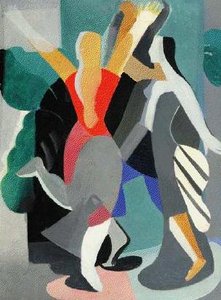
Woman with fish

Discover Aleksandra Ekster’s ‘Woman with Fish,’ a stunning Art Deco oil painting. Explore this 1934 masterpiece featuring fantasy & reality, perfect for art lovers and collectors.

Discover Aleksandra Ekster (1882-1949), a pioneering Russian avant-garde artist! Explore her vibrant Cubo-Futurist, Suprematist & Constructivist paintings and stage designs – a true innovator bridging art & life.

Hand Made Oil Reproduction

Hand-painted oil on canvas in your size and frame, made to order by our artists.

Standard
custom
CM
INCH

Pick from our preset sizes that match the artwork's original proportions.

width
height

You may enter your own dimensions to fit a specific frame or space. If your selected size does not match the original image's proportions, we will either crop the artwork or extend the painting with additional hand-painted elements. A digital mockup will be sent for your approval before production begins.
Please note that the on-screen preview does not reflect the actual cropping or extension. Only the mockup will accurately show the final composition.
While custom sizes are available, we recommend selecting a dimension from the predefined list to preserve the original proportions.

Examples of what can be changed: Replace face with customer photo; Add pet (e.g., replace cat with dog); Include hidden message in background; Change background landscape or elements.
After order, Most-Famous-Paintings.com team will email client for instructions and provide a mockup preview

Worldwide Delivery () in 3/4 weeks instead of standard 5 weeks. (18 July). No compromise on quality.

why_choose_icon
Free Worldwide Express Shipping
why_choose_icon
High-Quality Linen Canvas
why_choose_icon
Full Shipping Insurance
why_choose_icon
Customs Tax Refund Guarantee
why_choose_icon
True Color Matching Guarantee
why_choose_icon
60-Day Return Policy (Defects Only)
why_choose_icon
100% Money-Back Guarantee
why_choose_icon
Bulk Discount Offer

Total Price

-

reproduction

Woman with fish

Reproduction Medium

Reproduction Size

-

Total Price

-

Artwork Description

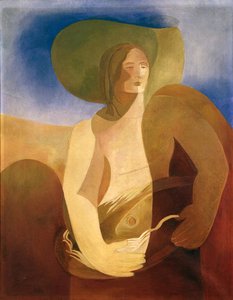
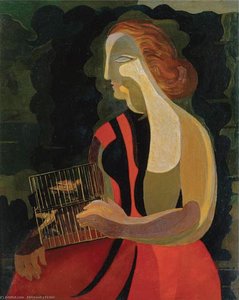
The Woman with Fish painting by Aleksandra Ekster is a stunning example of Art Deco style, created in 1934. This oil on canvas piece measures 93 x 74 cm and is a testament to the artist's skill in blending fantasy and reality. The painting features a woman holding a large fish, with two other people visible in the background.

Artist Background

Aleksandra Ekster was a Ukrainian painter born in 1882 and died in 1949. She is known for her unique style, which combines elements of Art Deco, Cubism, and Futurism. Her works often feature bold colors and geometric shapes, making them highly distinctive.

The Painting: A Serene Composition

The Woman with Fish painting is a serene composition that showcases the artist's use of color and form. The woman in the foreground is dressed in a elegant outfit, with a large fish draped over her shoulder. The background features a blue sky with clouds, adding depth and atmosphere to the scene. Key Features:
  • Oil on canvas, 93 x 74 cm
  • Art Deco style, created in 1934
  • Features a woman holding a large fish, with two other people visible in the background
The Moscow Museum of Modern Art is one of the museums that features Aleksandra Ekster's works. You can find more information about the artist and her paintings on Most-Famous-Paintings.com. The website offers a wide range of art reproductions, including oil paintings, prints, and posters. Get Your Own Reproduction: You can purchase a handmade oil painting reproduction of Aleksandra Ekster's Woman with Fish on Most-Famous-Paintings.com. The website offers a variety of sizes and formats to choose from, making it easy to find the perfect piece for your home or office.
For more information about Aleksandra Ekster and her works, you can visit Wikipedia.

Artist Biography

A Life Bridging Worlds: The Artistic Odyssey of Aleksandra Ekster

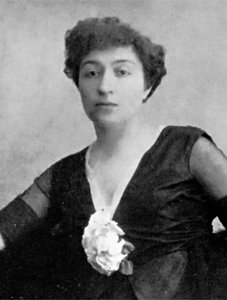
Aleksandra Ekster, a name synonymous with the dynamism of the early 20th-century avant-garde, was far more than simply a painter; she was a cultural architect, seamlessly connecting artistic currents between Russia and Europe. Born Aleksandra Aleksandrovna Grigorovich on January 6, 1882, in Białystok – then part of the Russian Empire, now Poland – Ekster’s life unfolded against a backdrop of immense social and artistic upheaval. Her upbringing within a prosperous Belarusian family afforded her a privileged education, nurturing an early aptitude for languages, music, and crucially, art. These formative years instilled not only a refined sensibility but also a cosmopolitan outlook that would define her career. The move to Kiev proved pivotal, as it was there she received formal artistic training at the Kyiv School of Art, encountering fellow burgeoning talents like Alexander Bogomazov and Alexander Archipenko – individuals who would become integral figures in the Russian avant-garde movement. Even early on, Ekster’s studio became a vibrant hub for intellectual exchange, attracting poets such as Anna Akhmatova and Osip Mandelstam, writers like Ilya Ehrenburg, and dancers including Bronislava Nijinska, solidifying her position at the heart of Kiev's cultural elite.

Embracing Innovation: From Cubo-Futurism to Constructivism

Ekster’s artistic journey was characterized by a relentless pursuit of innovation and an openness to diverse influences. A sojourn in Paris with her husband, Nikolai Evgenyevich Ekster, in 1907 proved transformative. Exposure to the avant-garde ferment at the Académie de la Grande Chaumière in Montparnasse ignited a passion for experimentation that would fuel her subsequent work. Returning to Russia, she became a key player in several groundbreaking artistic groups and exhibitions. Her early works demonstrate an assimilation of Cubist principles, evident in fractured forms and dynamic compositions, but Ekster quickly moved beyond mere imitation, infusing her paintings with a distinctly Russian sensibility. She forged connections with Pablo Picasso and Georges Braque, even being introduced to Gertrude Stein, further solidifying her place within the international art scene. Participation in exhibitions like the Salon des Indépendants alongside luminaries such as Kazimir Malevich and Sonia Delaunay-Terk underscored her commitment to pushing artistic boundaries. The influence of Futurism is also palpable in her work from this period, with its emphasis on movement, speed, and the energy of modern life. A pivotal moment arrived with her embrace of Suprematism in 1915, joining Malevich’s group and exploring geometric abstraction as a means of expressing pure artistic feeling. This led to collaborative artisan workshops where she worked alongside other prominent artists like Lyubov Popova and Olga Rozanova, fostering a spirit of collective creativity. Her involvement extended beyond painting; Ekster actively contributed to the revolutionary fervor sweeping Russia, designing abstract motifs for street decorations in Kiev and creating innovative costumes for Vadym Meller’s ballet studio, collaborating with Nijinska herself.

A Pedagogue of Form: VKhUTEMAS and Artistic Dissemination

Following the Russian Revolution, Ekster dedicated herself to art education, believing passionately in the power of artistic training to shape a new society. From 1921 to 1924, she served as director of the basic color course at VKhUTEMAS – the Higher Art and Technical Studios in Moscow – one of the most influential art schools of its time. Her pedagogical approach was revolutionary, emphasizing the fundamental principles of form, color, and composition. She sought to liberate students from traditional constraints, encouraging them to explore abstract concepts and develop their own unique visual languages. This period also saw her work featured in the 5x5=25 exhibition, a showcase for Constructivist artists, demonstrating her continued engagement with this evolving artistic movement. Ekster’s teaching philosophy wasn't merely theoretical; she believed in practical application, encouraging students to engage with design and production alongside painting. This holistic approach aimed to bridge the gap between art and industry, reflecting the Constructivist ideal of integrating art into everyday life.

Parisian Refinement and a Lasting Legacy

In 1924, Ekster embarked on a new chapter, emigrating to Paris with her husband. She continued to teach, establishing studios at the Académie de l'Art Moderne and later at the Académie d'Art Contemporain Fernand Léger, sharing her expertise with a new generation of artists. However, it was during this Parisian period that she developed a distinctive style characterized by delicate gouache illuminations – intricate compositions imbued with a lyrical quality. Her masterpiece from this time is widely considered to be the *Callimaque* manuscript (circa 1939), a stunning translation of Callimachus’ hymns into French, adorned with her exquisite illustrations. These works reveal a shift towards greater refinement and decorative elegance, while still retaining the underlying principles of abstraction that defined her earlier career. Despite facing challenges in gaining widespread recognition during her lifetime, Ekster's reputation has grown significantly posthumously. Her contributions to stage design, painting, and art education are now celebrated as pivotal moments in the development of modern art. However, the increasing demand for her work has unfortunately led to a proliferation of forgeries, highlighting the importance of careful authentication when acquiring pieces attributed to this remarkable artist. Aleksandra Ekster died in Fontenay-aux-Roses, France, on March 17, 1949, leaving behind a legacy as a true pioneer of the avant-garde – an artist who fearlessly embraced innovation and bridged cultural divides with her visionary art.

A Synthesis of Styles: Ekster’s Enduring Influence

Aleksandra Ekster's significance lies not in adherence to a single style, but rather in her ability to synthesize diverse artistic currents – Cubo-Futurism, Suprematism, and Constructivism – into a uniquely personal visual language. Her work embodies the spirit of experimentation and innovation that defined the Russian avant-garde, while simultaneously reflecting a cosmopolitan sensibility shaped by her travels and interactions with artists across Europe. She was a master colorist, employing bold hues and dynamic compositions to create works that are both intellectually stimulating and emotionally resonant. Her contributions to stage design were equally groundbreaking, transforming the theatrical experience through abstract sets and innovative costumes. Ekster’s legacy extends beyond her paintings; she was a dedicated educator who inspired countless students to embrace artistic freedom and explore new possibilities. Her influence can be seen in the work of subsequent generations of artists – her ideas continue to resonate with contemporary designers and thinkers. She remains a vital figure in the history of modern art, a testament to the power of creativity and the enduring allure of artistic innovation. Ekster’s ability to seamlessly blend diverse influences and consistently push boundaries cemented her position as one of the most important artists of her generation.
  • Key Movements: Cubo-Futurism, Suprematism, Constructivism, Art Deco
  • Significant Collaborations: Pablo Picasso, Georges Braque, Kazimir Malevich, Bronislava Nijinska
  • Major Contributions: Painting, stage design, art education, costume design.
Aleksandra Ekster

Aleksandra Ekster

1882 - 1949 , Belarus

Quick Facts

  • Artistic Movement Or Style: Cubo-Futurism, Constructivism
  • Artists Or Movements Influenced By This Artist:
    • Art Deco
    • Russian Avant-Garde
  • Artists Who Influenced This Artist:
    • Picasso
    • Braque
    • Malevich
  • Date Of Birth: Jan 6, 1882
  • Date Of Death: March 17, 1949
  • Full Name: Aleksandra Ekster
  • Nationality: Russian/French
  • Notable Artworks:
    • Woman with Fish
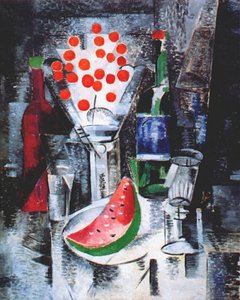
    • Still life, bowl cherries
    • Costume design Salome
  • Place Of Birth: Białystok, Poland
Explore artworks organized by themes, styles, and characteristics.