x


 PaintingSuprematism
 1912Modern
 89.0 x 89.0 cm
Hand-painted oil on canvas in your size and frame, made to order by our artists.





























Pick from our preset sizes that match the artwork's original proportions.

You may enter your own dimensions to fit a specific frame or space. If your selected size does not match the original image's proportions, we will either crop the artwork or extend the painting with additional hand-painted elements. A digital mockup will be sent for your approval before production begins.
Please note that the on-screen preview does not reflect the actual cropping or extension. Only the mockup will accurately show the final composition.
While custom sizes are available, we recommend selecting a dimension from the predefined list to preserve the original proportions.
Worldwide Delivery () in 3/4 weeks instead of standard 5 weeks. (18 July). No compromise on quality.


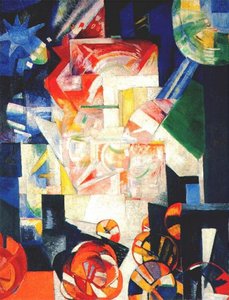
Color construction
Reproduction Size
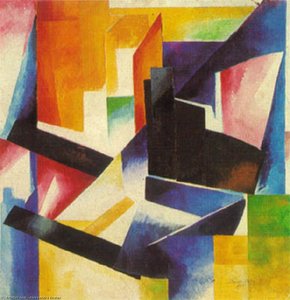
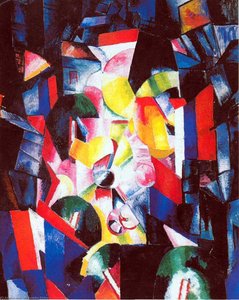
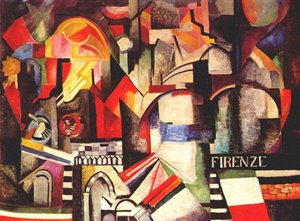
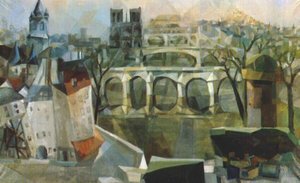
To stand before Aleksandra Ekster's Color construction is not merely to observe paint on canvas; it is to step into a vibrant, intellectual dialogue with the dawn of modern abstraction. Created in 1912, this seminal work stands as a breathtaking testament to the burgeoning power of geometric form and pure color. It captures a moment in art history when representation began to dissolve, giving way to an exhilarating exploration of what art could be purely for its own sake. The composition itself is a dazzling interplay—a carefully orchestrated dance between bold yellow squares and deep blue planes that seem to vibrate against each other across the canvas.
Ekster’s genius was deeply intertwined with the revolutionary spirit of the early 20th century avant-garde. While the movement known as Suprematism, championed by figures like Kazimir Malevich, sought to strip art down to its most fundamental elements—the square, the circle, the line—Ekster infused these strict geometric principles with a palpable sense of dynamic energy. This painting is not just an example of Suprematism; it is one of its most emotionally resonant expressions. The rejection of narrative and recognizable subject matter was a radical act, inviting the viewer to engage their intellect as much as their eye. It asks us to feel the structure, the tension, and the pure chromatic relationship between disparate shapes.
Examining the technique reveals Ekster's masterful hand. The application of paint, while abstract, possesses a clarity that speaks to meticulous planning beneath the apparent spontaneity. The interplay between the dominant yellow and blue elements creates an optical vibration; these colors do not simply sit next to each other, they seem to push against one another across the 89 x 89 cm expanse. This careful balancing act of contrasting hues and sharp angles generates a palpable sense of movement, making the static canvas feel alive with kinetic force. For those considering a reproduction, understanding this underlying structural integrity is key; it is the precision within the apparent chaos that gives the piece its enduring power.
What does this vibrant construction symbolize? Beyond any singular meaning, Color construction symbolizes liberation—the liberation of art from the constraints of depicting reality. The bold geometry suggests underlying universal laws or pure emotional states given visual form. Viewing it can be an intensely uplifting experience; the energy emanating from the colors feels both intellectual and deeply visceral. It is a piece that refuses to settle into one interpretation, instead inviting the collector or decorator to project their own sense of dynamism, optimism, or structured contemplation onto its surface. It serves as a powerful focal point, injecting a sophisticated, avant-garde spirit into any modern interior space.


1882 - 1949 , Belarus
Journey through Wassily Kandinsky's 25 most iconic abstract paintings. Explore his revolutionary use of color, form & spiritual expressionism. Find museum-quality Kandinsky reproductions and elevate your home decor with Most-Famous-Paintings.com. Discover all masterpieces on Most-Famous-Paintings.com!
Explore 25 iconic artworks by Kazimir Malevich, pioneer of Suprematism & abstract art. Discover the stories behind 'Black Square' and more! Find museum-quality prints & elevate your home decor with Most-Famous-Paintings.com.
Explore 25 iconic Fernand Léger paintings that defined the Machine Age & Cubism. Discover the stories behind his bold colors, geometric forms & avant-garde style. Find museum-quality art reproductions on Most-Famous-Paintings.com.
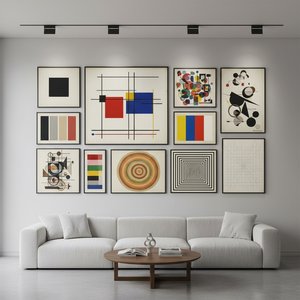
Explore 10 defining masterpieces of Geometric Abstraction! Discover Kandinsky, Mondrian & Malevich’s iconic works. Find museum-quality art reproductions and curated decor ideas to elevate your home at Most-Famous-Paintings.com.

Explore 25 iconic Georges Braque paintings that revolutionized Cubism & modern art. Discover the stories behind his masterpieces, from Fauvism to Analytical Cubism. Find museum-quality reproductions & elevate your home decor with Most-Famous-Paintings.com.


Stay updated with the latest art news, exclusive offers, and decoration ideas.
Tell us about your project and our art experts will provide you with 3 personalized art suggestions.
Let Us Curate 3 Options Just for You - Free!


 Buy print
 Send
Send Share
Share
 Details

 Download
 Similars
 X-Ray
X-Ray Diaporama
 Read More







 Glass option is only available in size under 110 CM