


x

Museum-quality giclée or canvas print with fast production and flexible finish options. ( Buy Hand Made Painting Buy Image)





























Pick from our preset sizes that match the artwork's original proportions.

You may enter your own dimensions to fit a specific frame or space. If your selected size does not match the original image's proportions, we will either crop the artwork or extend the image with a mirrored or solid-fill edge. A digital mockup will be sent for your approval before production begins.
Please note that the on-screen preview does not reflect the actual cropping or extension. Only the mockup will accurately show the final composition.
While custom sizes are available, we recommend selecting a dimension from the predefined list to preserve the original proportions.
Worldwide Delivery () in 2 weeks instead of standard 4/5 weeks. (23 August)


At the Garden Table
Reproduction Size
August Macke's At the Garden Table is a captivating oil on canvas painting created in 1914, offering a vibrant and intimate portrayal of everyday life through the lens of Fauvism. This artwork exemplifies Macke’s unique ability to distill complex scenes into elegant compositions characterized by bold colors and energetic brushstrokes. The piece, now residing within the esteemed collection of the Baltimore Museum of Art, invites viewers to step into a tranquil garden setting where two figures engage in quiet contemplation.
August Robert Ludwig Macke (1887-1914) was a pivotal figure in the German Expressionist movement. Born in Meschede, Germany, his artistic journey began at the Kunstakademie Düsseldorf. Initially influenced by Impressionism and Post-Impressionism, Macke's style underwent a significant transformation following his exposure to French Fauvism. A crucial turning point arrived with his encounter with Robert Delaunay in Paris (1912), which introduced him to Chromatic Cubism or Orphism – a style he incorporated into works like Shops Windows, blending it with the dynamism of Italian Futurism. As a member of Der Blaue Reiter (The Blue Rider) group, Macke sought to express inner emotions and spiritual experiences through color and form, departing from traditional representational art.
At the Garden Table showcases several defining characteristics of Macke’s artistic approach. The painting depicts two individuals seated at a table within a lush garden environment, surrounded by vibrant greenery and colorful flowers. Macke's masterful use of bold, saturated colors—ranging from striking greens and yellows to deep blues and reds—creates an immediate sense of energy and visual excitement. Geometric shapes are strategically employed to structure the composition, fostering a feeling of harmony and balance despite the seemingly spontaneous brushwork. The flattened perspective contributes to the painting’s immediacy, drawing the viewer into the scene. Macke's skillful manipulation of light and shadow adds depth and dimension, enhancing the overall sense of warmth and intimacy.
Created in 1914, just before the outbreak of World War I, At the Garden Table reflects a yearning for tranquility and beauty amidst growing societal unrest. The painting’s subject matter—a simple scene of everyday life—can be interpreted as a celebration of ordinary moments and human connection. While seemingly straightforward, the artwork also carries symbolic weight. The garden setting itself can represent paradise or an idyllic escape from the harsh realities of the world. Macke's vibrant color palette may symbolize joy, vitality, and optimism, offering a counterpoint to the impending darkness of war. The painting’s style is distinctly Expressionistic, characterized by distorted forms, heightened colors, and an emphasis on conveying inner emotions.
At the Garden Table stands as a testament to August Macke's artistic genius and his contribution to the development of modern art. His unique style continues to inspire artists today, demonstrating the enduring power of color, composition, and emotional expression. The painting’s ability to evoke a sense of warmth, intimacy, and quiet contemplation makes it a truly captivating piece—a timeless reflection on the beauty of everyday life.


1887 - 1914 , Germany

Explore 25 iconic Pierre-Auguste Renoir paintings! Discover the stories behind Impressionist masterpieces like 'Dance at Le Moulin de la Galette' & 'Luncheon of the Boating Party'. Find museum-quality art reproductions and elevate your home decor with Most-Famous-Paintings.com.

Explore the vibrant Expressionist paintings of August Macke (1887-1914). Discover his key role in Der Blaue Reiter, Fauvist influences, and captivating depictions of modern life. A comprehensive guide for art enthusiasts & collectors.

Explore the rich history of gardens in painting! Discover masterpieces from Renaissance to Impressionism & beyond. Learn about symbolism, artists like Monet & Klimt, and find your perfect artwork at Most-Famous-Paintings.
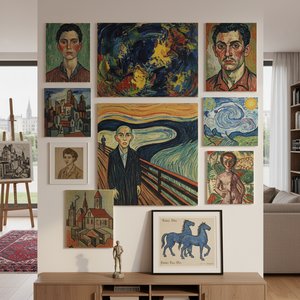
Journey into the soul of Expressionism! Explore 10 iconic paintings by Munch, Kirchner, Kandinsky & more. Discover their stories, bold colors & lasting impact. Find museum-quality art reproductions at .
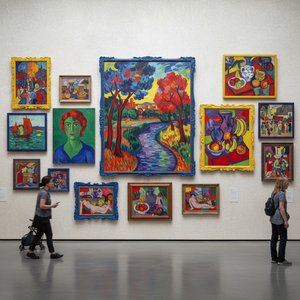
Explore the revolutionary world of Fauvism! Discover 10 masterpieces by Matisse, Derain & Vlaminck that defined this bold art movement. Find museum-quality reproductions and vibrant canvas prints to elevate your home decor at .


Stay updated with the latest art news, exclusive offers, and decoration ideas.
Tell us about your project and our art experts will provide you with 3 personalized art suggestions.
Let Us Curate 3 Options Just for You - Free!


 Preview
 Send
Send Share
Share
 Details

 Download
 Similars
 X-Ray
X-Ray Diaporama

 Read More







 Glass option is only available in size under 110 CM


