x


Hand-painted oil on canvas in your size and frame, made to order by our artists.
Pick from our preset sizes that match the artwork's original proportions.

You may enter your own dimensions to fit a specific frame or space. If your selected size does not match the original image's proportions, we will either crop the artwork or extend the painting with additional hand-painted elements. A digital mockup will be sent for your approval before production begins.
Please note that the on-screen preview does not reflect the actual cropping or extension. Only the mockup will accurately show the final composition.
While custom sizes are available, we recommend selecting a dimension from the predefined list to preserve the original proportions.
Worldwide Delivery () in 3/4 weeks instead of standard 5 weeks. (18 July). No compromise on quality.


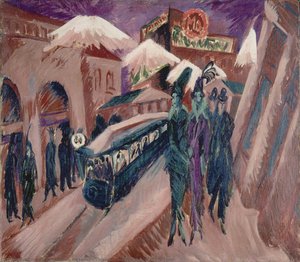
Leipziger Straße with Electric Tram
Reproduction Size
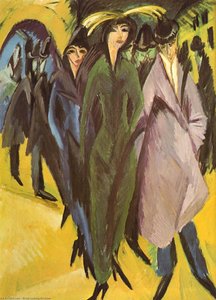
Ernst Ludwig Kirchner's "Leipziger Straße with Electric Tram" transports viewers to a bustling winter scene in 1914 Berlin. The painting depicts Leipziger Straße, a prominent thoroughfare known for its vibrant commercial activity and transportation hub. Snow blankets the street and buildings, creating a stark contrast between the cold urban environment and the figures navigating it. A striking electric tram dominates the composition, symbolizing modernity and rapid change—hallmarks of early 20th-century Berlin.
"Leipziger Straße" exemplifies Kirchner's signature Expressionist style. The painting is characterized by bold brushstrokes, distorted forms, and a heightened color palette designed to convey emotion rather than realistic representation. Kirchner employs impasto—thickly applied paint—to create texture and depth, adding physicality to the scene. Lines are thick and gestural, contributing to a sense of dynamism and movement. The perspective is somewhat flattened, pushing the scene forward and intensifying the feeling of urban density. This technique reflects the Expressionist desire to express inner feelings and subjective experiences through art.
Created in 1914, just before the outbreak of World War I, "Leipziger Straße" captures a pivotal moment in German history. The painting reflects the anxieties and uncertainties of a nation on the brink of war. The bustling street scene, with its electric tram and hurried figures, represents the rapid modernization and industrialization that characterized Germany at the time. However, the cold, snowy setting and the somewhat alienated expressions of the figures hint at an underlying sense of unease and impending doom. Kirchner's work serves as a visual document of a society poised on the edge of profound change.
The painting is rich in symbolic elements. The snow, while visually striking, can be interpreted as representing isolation and perhaps a sense of urgency. The electric tram symbolizes progress and modernity but also suggests a relentless pace of life that leaves little room for reflection. The figures themselves—waiting passengers, hurried pedestrians—appear somewhat detached and anonymous, reflecting the alienation often experienced in modern urban environments. Emotionally, "Leipziger Straße" evokes feelings of coldness, movement, and perhaps a hint of melancholy. Kirchner's masterful use of color and composition creates a powerful and evocative portrayal of life in early 20th-century Berlin.


1880 - 1938 , Germany

Explore the visceral power of German Expressionism. From Ernst Ludwig Kirchner to Die Brücke, discover how bold colors and distorted forms unmask raw human emotion in this expert art history guide for collectors and enthusiasts.


Stay updated with the latest art news, exclusive offers, and decoration ideas.
Tell us about your project and our art experts will provide you with 3 personalized art suggestions.
Let Us Curate 3 Options Just for You - Free!


 Buy print
 Send
Send Share
Share
 Details

 Download
 Similars
 X-Ray
X-Ray Diaporama


 Read More




































 Glass option is only available in size under 110 CM