


x


Hand-painted oil on canvas in your size and frame, made to order by our artists.





























Pick from our preset sizes that match the artwork's original proportions.

You may enter your own dimensions to fit a specific frame or space. If your selected size does not match the original image's proportions, we will either crop the artwork or extend the painting with additional hand-painted elements. A digital mockup will be sent for your approval before production begins.
Please note that the on-screen preview does not reflect the actual cropping or extension. Only the mockup will accurately show the final composition.
While custom sizes are available, we recommend selecting a dimension from the predefined list to preserve the original proportions.
Worldwide Delivery () in 3/4 weeks instead of standard 5 weeks. (18 July). No compromise on quality.


Young Drinker
Reproduction Size
Gerard van Honthorst's "Young Drinker," painted circa 1625, is more than a simple depiction of youth indulging in wine; it’s a carefully constructed tableau brimming with symbolism and bathed in the dramatic chiaroscuro that defined the artist’s signature style. This captivating portrait, now housed within the Centraal Museum in Utrecht, offers a glimpse into the complexities of 17th-century Dutch society – its burgeoning mercantile class, its fascination with pleasure, and its underlying tensions between piety and indulgence. Honthorst, a key figure in the Utrecht Caravaggisti School, expertly channels the influence of Caravaggio, particularly his masterful use of light and shadow to create an atmosphere of intense drama and psychological depth.
The painting immediately draws the eye to the young man seated at a table, seemingly lost in thought as he sips from a glass. His posture is relaxed yet alert, suggesting a moment of quiet contemplation amidst the bustle of daily life. The details are meticulously rendered: the delicate curve of his neck, the subtle flush on his cheeks, and the intricate folds of his blue garment all speak to Honthorst’s exceptional technical skill. However, it's not merely a study in realism; the artist employs a sophisticated system of visual cues to convey deeper meaning.
Honthorst’s mastery lies in his manipulation of light and shadow – a technique known as *tenebrism*. He doesn't simply illuminate the scene; he sculpts it with carefully placed pools of light that dramatically contrast with areas of deep darkness. This creates a powerful sense of depth, drawing the viewer into the intimate space of the room. The candle flame, positioned strategically to highlight the young man’s face and upper body, acts as a focal point, guiding our gaze and intensifying the emotional impact of the scene. The surrounding shadows are not merely absences of light; they contribute significantly to the painting's overall mood – suggesting mystery, introspection, and perhaps even a hint of melancholy.
Notice how the light subtly reveals details while obscuring others. The open book on the table, adorned with illustrations depicting classical scenes, hints at intellectual pursuits, yet these are overshadowed by the immediate pleasure of the drink. This juxtaposition speaks to the central theme of the painting: the tension between reason and desire, knowledge and indulgence.
Beyond the technical brilliance, “Young Drinker” is rich in symbolic detail. The young man’s attire – a blue hat adorned with a feather – subtly references status and perhaps even a hint of aristocratic aspiration. The book itself offers further clues: its illustrations depict scenes from mythology, suggesting an engagement with classical ideals but also hinting at the potential for these ideals to be corrupted by earthly pleasures. Crucially, the open book is juxtaposed against the young man’s enjoyment of wine – a potent symbol of both celebration and excess.
The inclusion of the small bird in his hand adds an element of surprise and perhaps even a touch of whimsy. Birds are often associated with freedom, hope, and spirituality, yet their presence here seems somewhat incongruous, suggesting a fleeting moment of innocence amidst a world increasingly dominated by worldly concerns.
“Young Drinker” provides a valuable window into the social and cultural landscape of 17th-century Holland. It reflects the growing prosperity of the merchant class, their embrace of luxury and pleasure, and their ongoing struggle to reconcile these desires with traditional values. Honthorst’s painting captures not just a portrait but an entire era – a time of artistic innovation, economic expansion, and profound social change. Reproductions of this compelling work offer a chance to bring this evocative scene into your own home, inviting contemplation and sparking conversation about the enduring themes of human experience.


1590 - 1656 , Netherlands
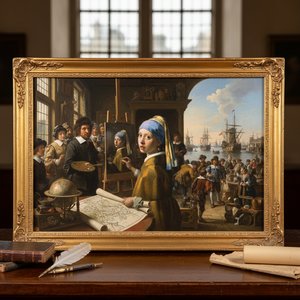
Explore the Dutch Golden Age of painting! Discover key artists like Vermeer & ter Borch, their innovative techniques, and the rich cultural context behind these Baroque masterpieces. Learn about collecting & appreciating this iconic art period.

Journey through art history with our guide to 10 legendary oil on canvas masterpieces! Explore iconic works by Van Gogh, Monet & Rembrandt. Find museum-quality reproductions and elevate your home decor at . Discover all masterpieces online.
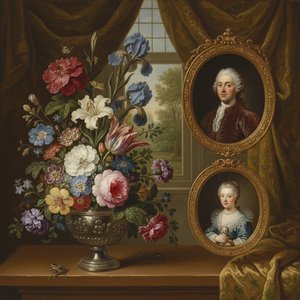
Discover the exquisite detail of Jan van Kessel the Elder's Baroque floral still lifes & captivating miniatures. Explore his artistic legacy, scientific precision, and lasting influence on 17th-century Flemish painting.

Journey through art history with our Top 10 oil paintings! Explore iconic works by Van Gogh, Monet & Rembrandt. Discover timeless masterpieces and find museum-quality reproductions for your home at .

Discover Cornelis van Poelenburch, a pivotal Dutch Baroque landscape painter bridging Mannerism & Italianate styles. Explore his life, key works, and lasting influence on 17th-century art with Most-Famous-Paintings.


Stay updated with the latest art news, exclusive offers, and decoration ideas.
Tell us about your project and our art experts will provide you with 3 personalized art suggestions.
Let Us Curate 3 Options Just for You - Free!


 Buy print
 Send
Send Share
Share
 Details

 Download
 Similars
 X-Ray
X-Ray Diaporama

 Read More







 Glass option is only available in size under 110 CM


