x


 Acrylic On CanvasWallArtArt Nouveau
 1907
1907 138.0 x 138.0 cm
Hand-painted oil on canvas in your size and frame, made to order by our artists.





























Pick from our preset sizes that match the artwork's original proportions.

You may enter your own dimensions to fit a specific frame or space. If your selected size does not match the original image's proportions, we will either crop the artwork or extend the painting with additional hand-painted elements. A digital mockup will be sent for your approval before production begins.
Please note that the on-screen preview does not reflect the actual cropping or extension. Only the mockup will accurately show the final composition.
While custom sizes are available, we recommend selecting a dimension from the predefined list to preserve the original proportions.
Worldwide Delivery () in 3/4 weeks instead of standard 5 weeks. (18 July). No compromise on quality.


Adele Bloch-Bauer I, oil on canvas,
Reproduction Size
Gustav Klimt’s Adele Bloch-Bauer I, painted in 1907, stands as a monumental achievement within the Austrian Symbolist movement and a cornerstone of his celebrated "Golden Period." This iconic portrait transcends mere representation; it is an exploration of identity, wealth, and the burgeoning anxieties of early 20th-century Vienna. Measuring 138 x 138 cm, this oil on canvas masterpiece captures Adele Bloch-Bauer, a prominent Viennese socialite and the wife of a wealthy banker, Ferdinand Bloch-Bauer, in a dazzling display of artistic innovation.
Klimt’s masterful use of gold leaf is immediately striking. The shimmering surface creates an ethereal glow around Adele, elevating her from a mere subject to an almost mythical figure. This extensive application of gold, inspired by Byzantine mosaics Klimt encountered during his travels, defines the "Golden Period" and imbues the painting with a sense of opulence and timelessness. The intricate patterns adorning Adele’s dress are not merely decorative; they form a complex visual language. Geometric shapes interweave with organic forms, creating a dynamic interplay that draws the viewer's eye across the canvas. Her gaze is distant and introspective, conveying a quiet strength and an enigmatic quality that has captivated audiences for over a century. The composition itself is carefully balanced – Adele’s central placement emphasizes her importance, while the surrounding patterns create a sense of depth and movement.
Adele Bloch-Bauer I emerged during a period of significant artistic upheaval in Vienna. Klimt was a leading figure within the Vienna Secession, a group of artists who rejected the conservative academic traditions of the time and sought to embrace modernity and experimentation. The Secession aimed to create a new aesthetic that reflected the changing social and cultural landscape of fin-de-siècle Europe. Klimt’s work, alongside contemporaries like Stanisław Wyspiański, challenged conventional artistic norms, incorporating elements of Art Nouveau, Symbolism, and Byzantine art into a unique and instantly recognizable style. The painting reflects this spirit of innovation, pushing the boundaries of portraiture and decorative art.
Beyond its aesthetic beauty, Adele Bloch-Bauer I is rich in symbolic meaning. The gold leaf can be interpreted as representing Adele’s wealth and social status, but also as a symbol of spiritual transcendence. The intricate patterns on her dress have been analyzed for their potential connections to ancient symbols and philosophical ideas. Some scholars suggest the geometric shapes represent societal structures, while the organic forms symbolize nature and femininity. Adele's distant gaze has fueled much speculation; is she contemplating her role in society? Is she lost in thought? The ambiguity of her expression contributes to the painting’s enduring mystique.
The history of Adele Bloch-Bauer I is as compelling as the artwork itself. Confiscated by the Nazis during World War II, it became a central piece in a protracted legal battle fought by Adele’s nephew, George Loftus Bruck, who eventually recovered the painting in 2006. This landmark case brought renewed attention to Klimt's masterpiece and its significance as a symbol of cultural heritage. Today, Adele Bloch-Bauer I resides at the Neue Galerie New York, where it continues to inspire awe and admiration. For those seeking to experience the beauty and historical weight of this iconic work, a meticulously crafted handmade oil painting reproduction allows you to bring a piece of Klimt’s genius into your own home.

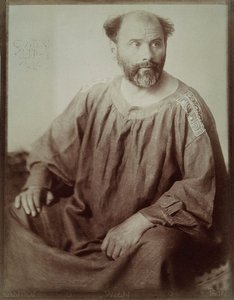
1862 - 1918 , Austria
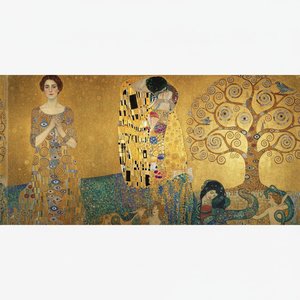
Delve into the world of Gustav Klimt with our top 25 masterpieces! Explore his iconic paintings – 'The Kiss,' 'Portrait of Adele,' and more. Discover museum-quality reproductions & curated decor ideas. Explore the full collection online at Most-Famous-Paintings.com.

Journey into Art Nouveau's golden age! Explore 10 masterpieces by Klimt, Mucha & more. Discover captivating stories behind iconic paintings, floral motifs & flowing lines. Find museum-quality art reproductions for your home at .

Journey through 25 iconic artworks at the Metropolitan Museum of Art! Explore Van Gogh, Monet, Rembrandt & more. Discover art history, inspiring stories, and museum-quality reproductions to elevate your home decor. Explore the full collection on Most-Famous-Paintings.com.
Explore 25 iconic artworks from Washington DC's National Gallery of Art! Discover masterpieces by Cézanne, Matisse & Picasso. Find museum-quality art reproductions and elevate your home decor with timeless paintings. Explore the full collection online at Most-Famous-Paintings.com.
Journey through 25 iconic James Abbott McNeill Whistler paintings! Explore his masterpieces of Aestheticism, from 'Nocturne in Black and Gold' to captivating portraits. Find museum-quality art reproductions & elevate your home decor with Most-Famous-Paintings.com. Discover the full collection online.


Stay updated with the latest art news, exclusive offers, and decoration ideas.
Tell us about your project and our art experts will provide you with 3 personalized art suggestions.
Let Us Curate 3 Options Just for You - Free!


 Buy print
 Send
Send Share
Share
 Details

 Download
 Similars
 X-Ray
X-Ray Diaporama
 Read More







 Glass option is only available in size under 110 CM